


Lazy Morning
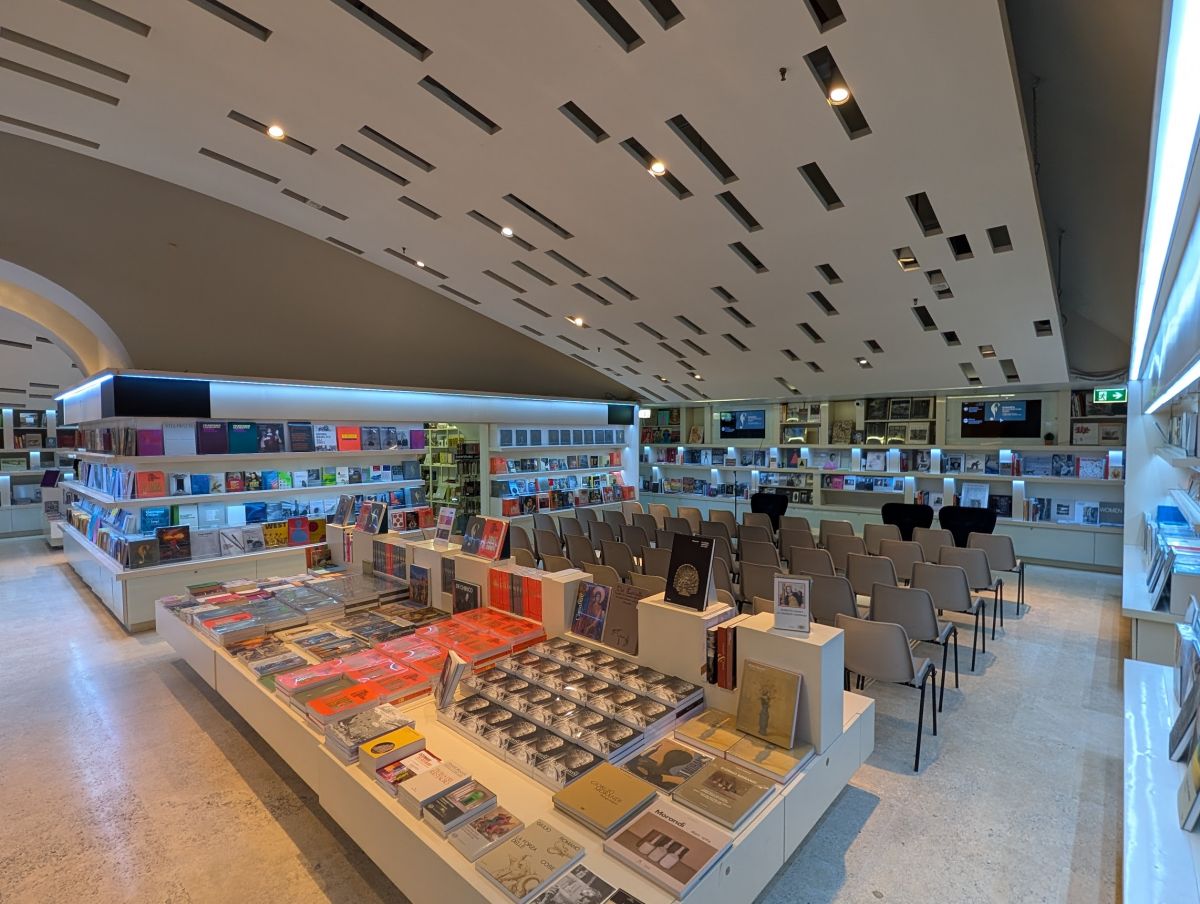
Since our timed tour of the Borghese Gallery wasn’t until 2pm, we had a lazy morning. After a late breakfast, we found a great bookstore connected to a palazzo, with a caffè as well! Libreria Palazzo Esposizioni is a lot bigger than it first appears, with multiple rooms in the back, including a dedicated area for author readings.
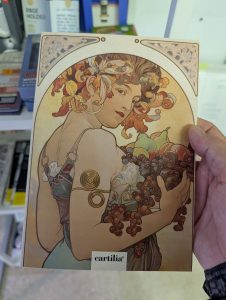
Most of the books are about art of some kind (including music, cooking, cocktails…anything than can be considered an art form), and all are in Italian (although a good number of coffee table type books with lots of pictures). They have a great selection of gifts, though, so don’t despair. We ended up buying several gifts (notebooks and some small nicknacks).
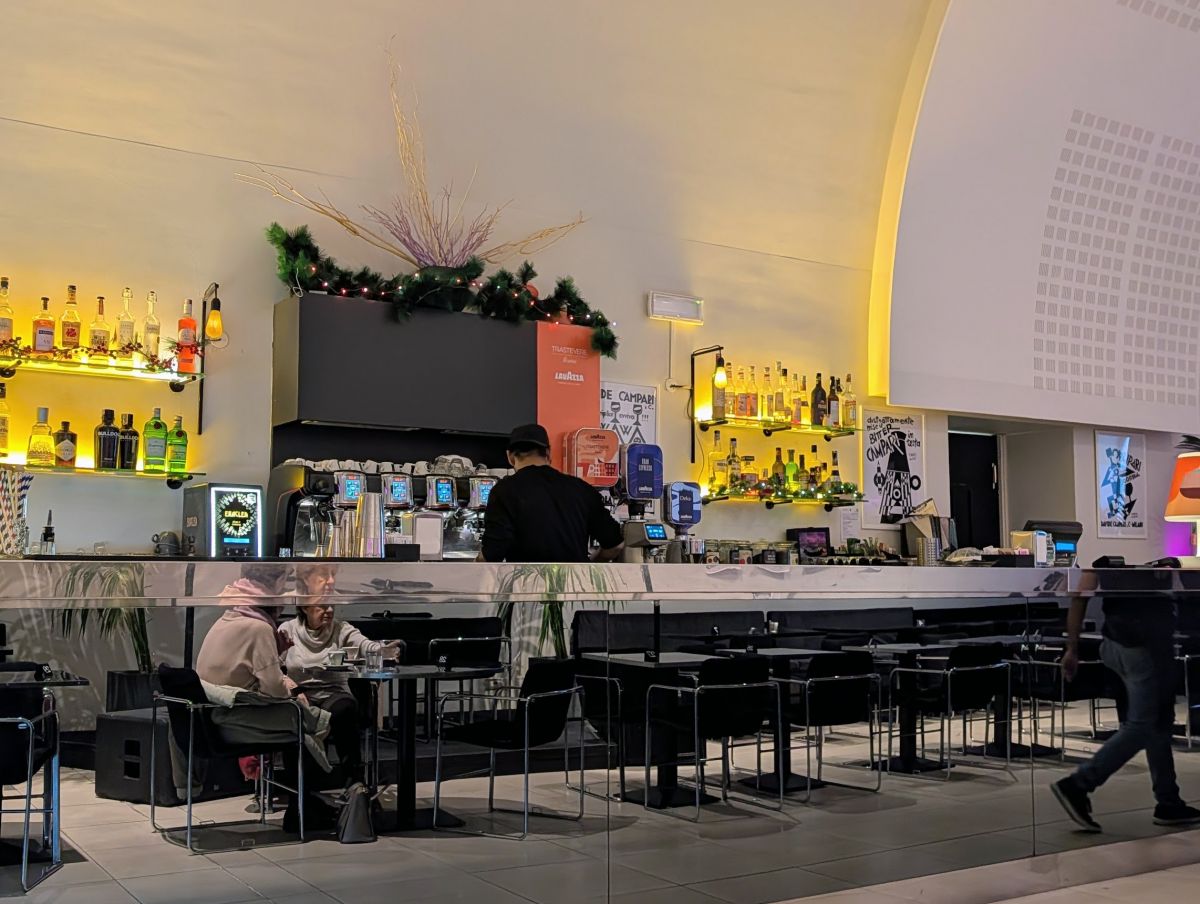
There’s also an attached caffè, accessible from the rear exit of the bookstore, or from the outside (down some stairs). We enjoyed mid-morning coffee at the caffè.
Spanish Steps
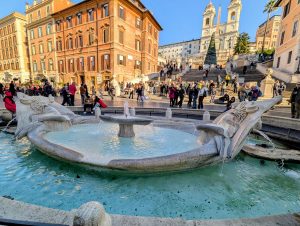
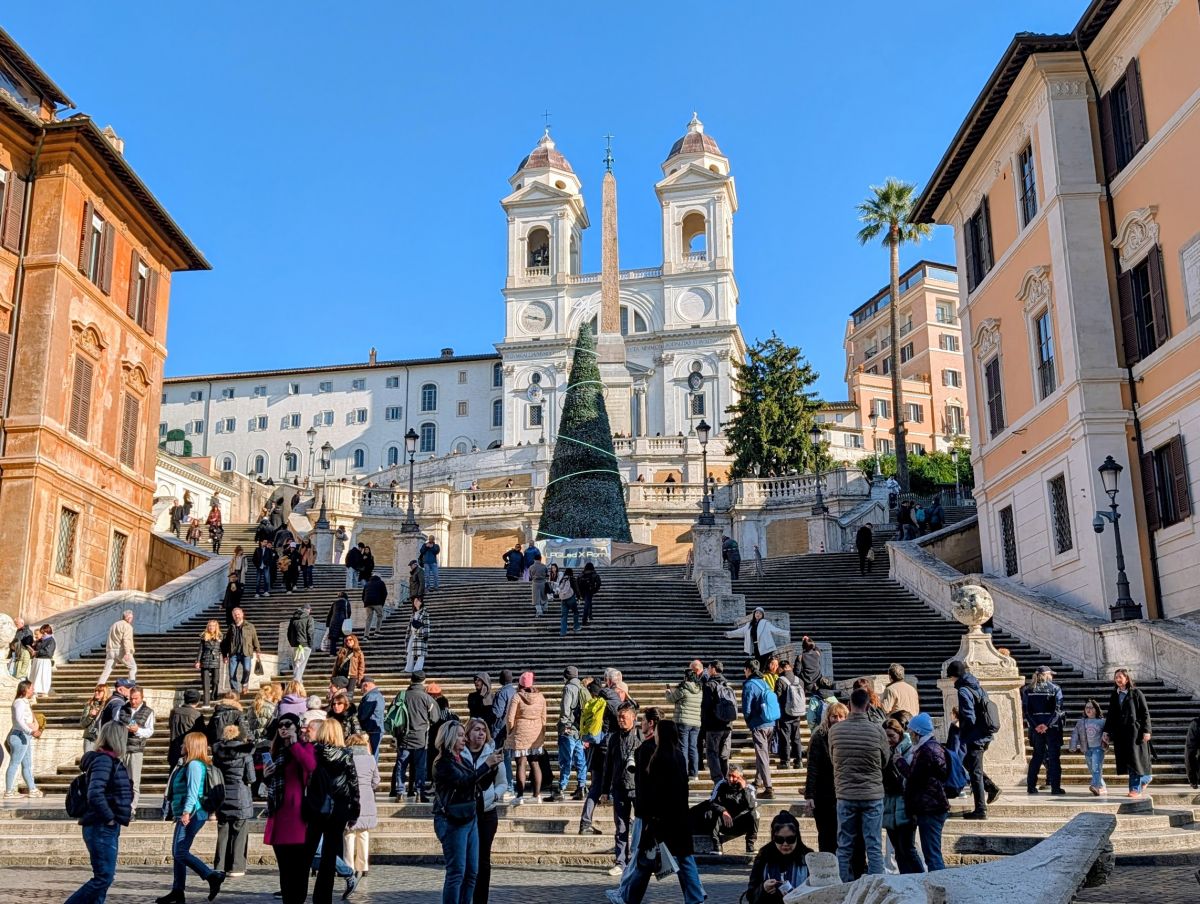
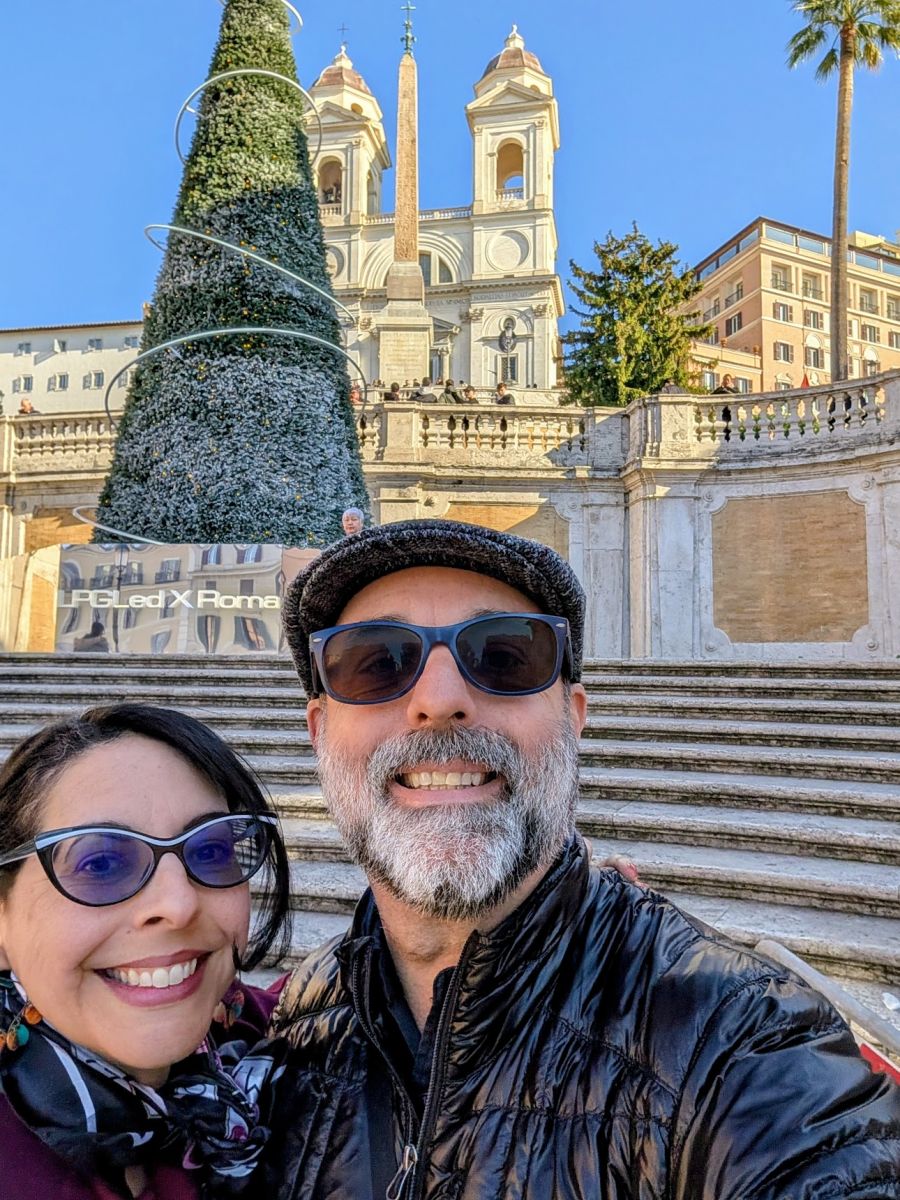
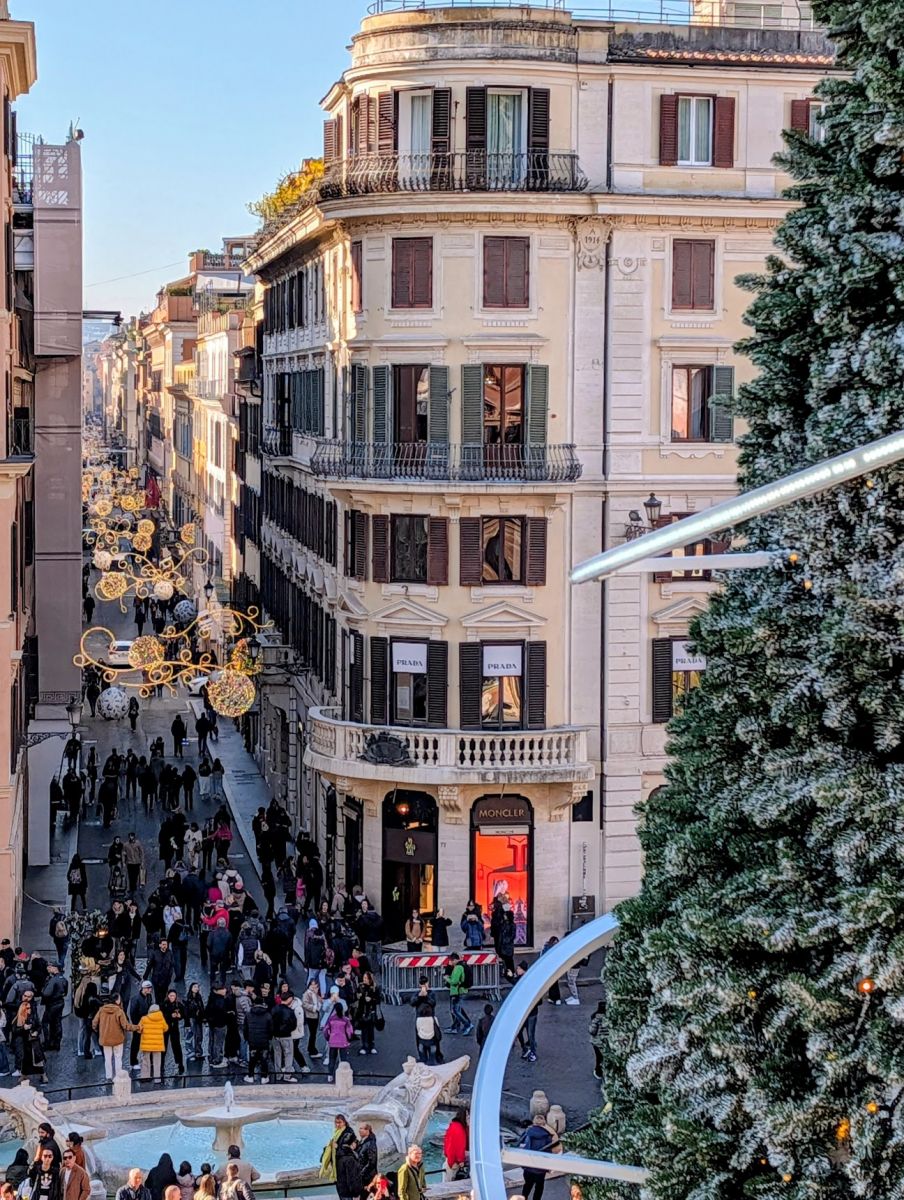
After our caffeine boost, we went to the Spanish Steps. The area had a decent crowd, but nowhere near as packed as Trevi Fountain or the Colosseum.
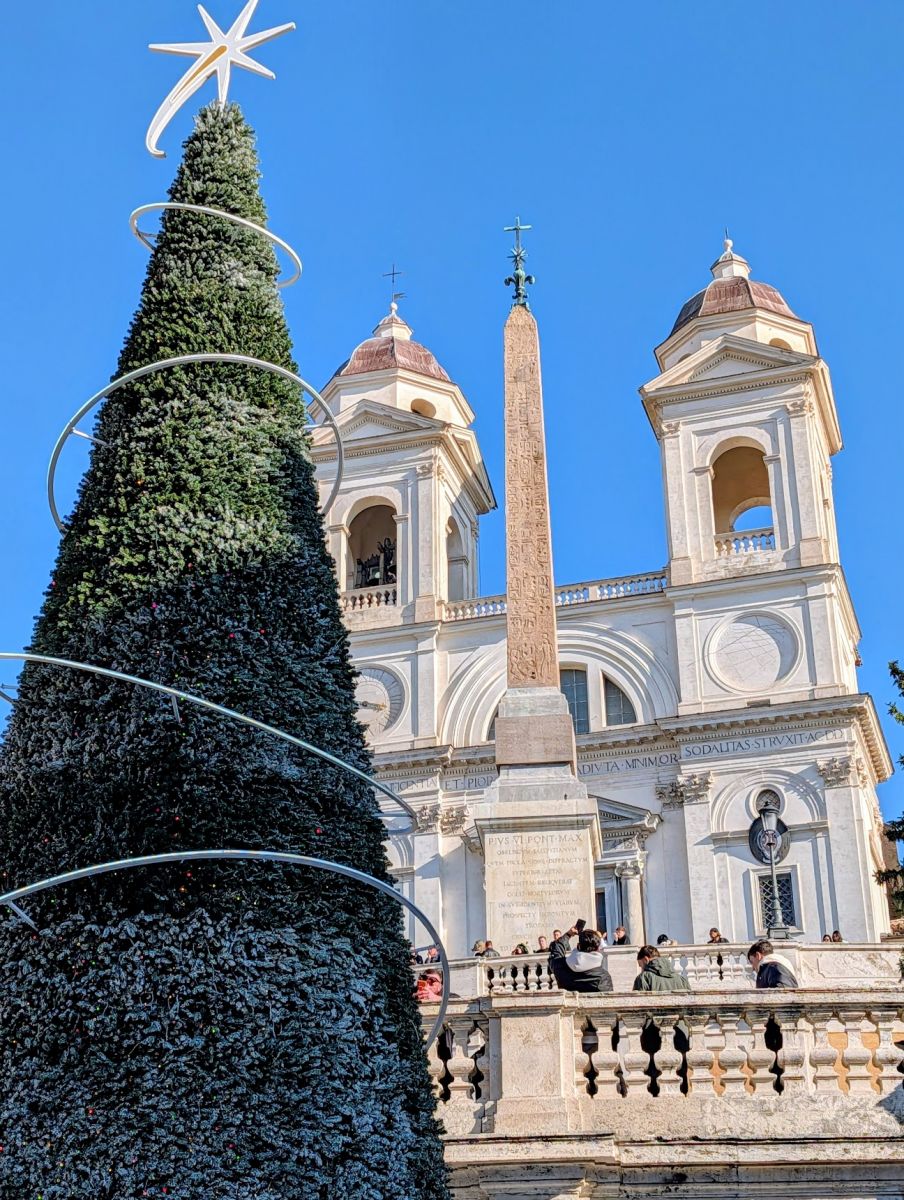
The Spanish Steps, officially known as the Scalinata di Trinità dei Monti, are a monumental staircase in Rome, Italy, connecting Piazza di Spagna at the base to Piazza Trinità dei Monti at the top, which is dominated by the Trinità dei Monti church. The name “Spanish Steps” derives from the Spanish Embassy to the Holy See, which was located in Piazza di Spagna at the time of their construction in 1723.
At the base of the steps, the Fontana della Barcaccia, a Baroque fountain often attributed to Pietro Bernini, features a boat-like sculpture inspired by a vessel stranded during a Tiber flood in 1598.
The steps have long been a gathering place for artists, poets, and intellectuals, including John Keats, who lived and died in a house nearby, now a museum dedicated to him. The steps are also a popular filming location, featured in movies such as Roman Holiday and The Talented Mr. Ripley.
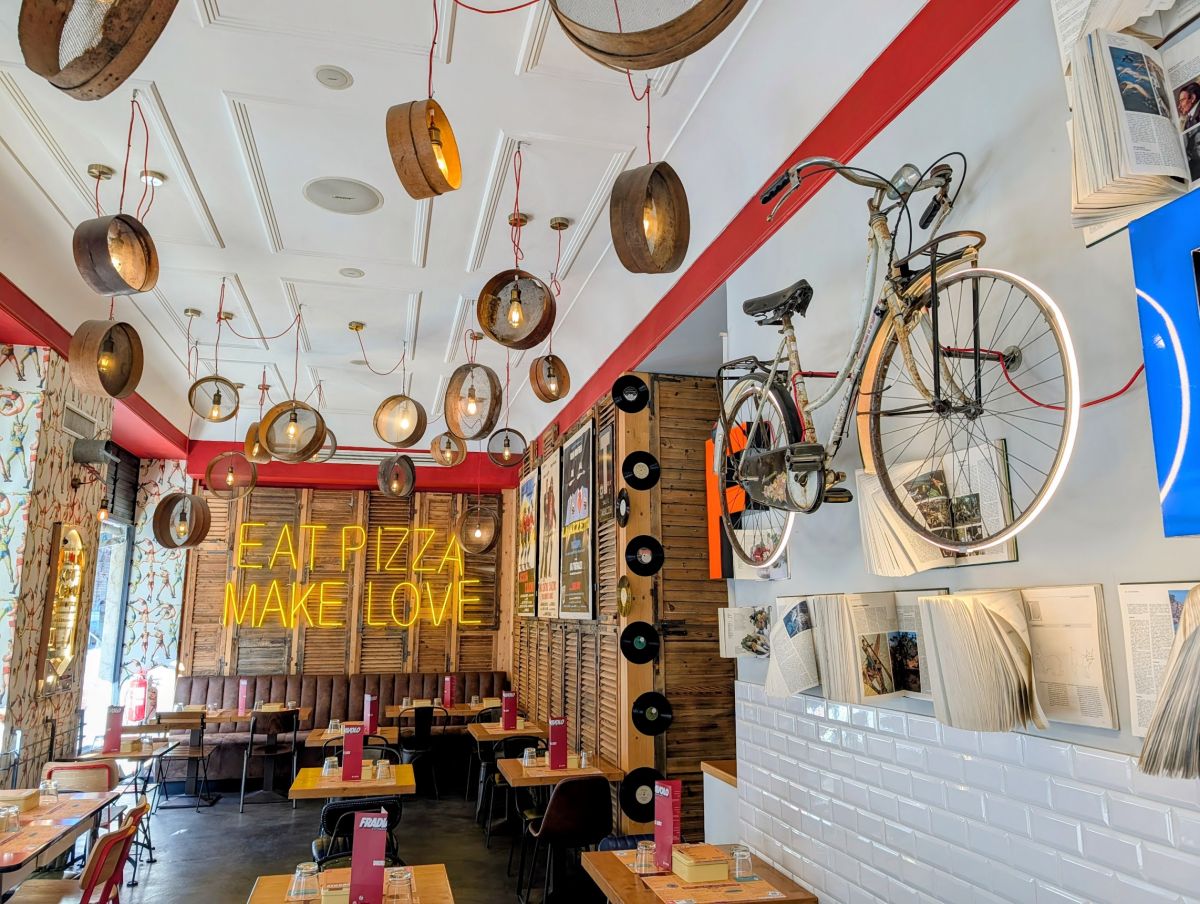
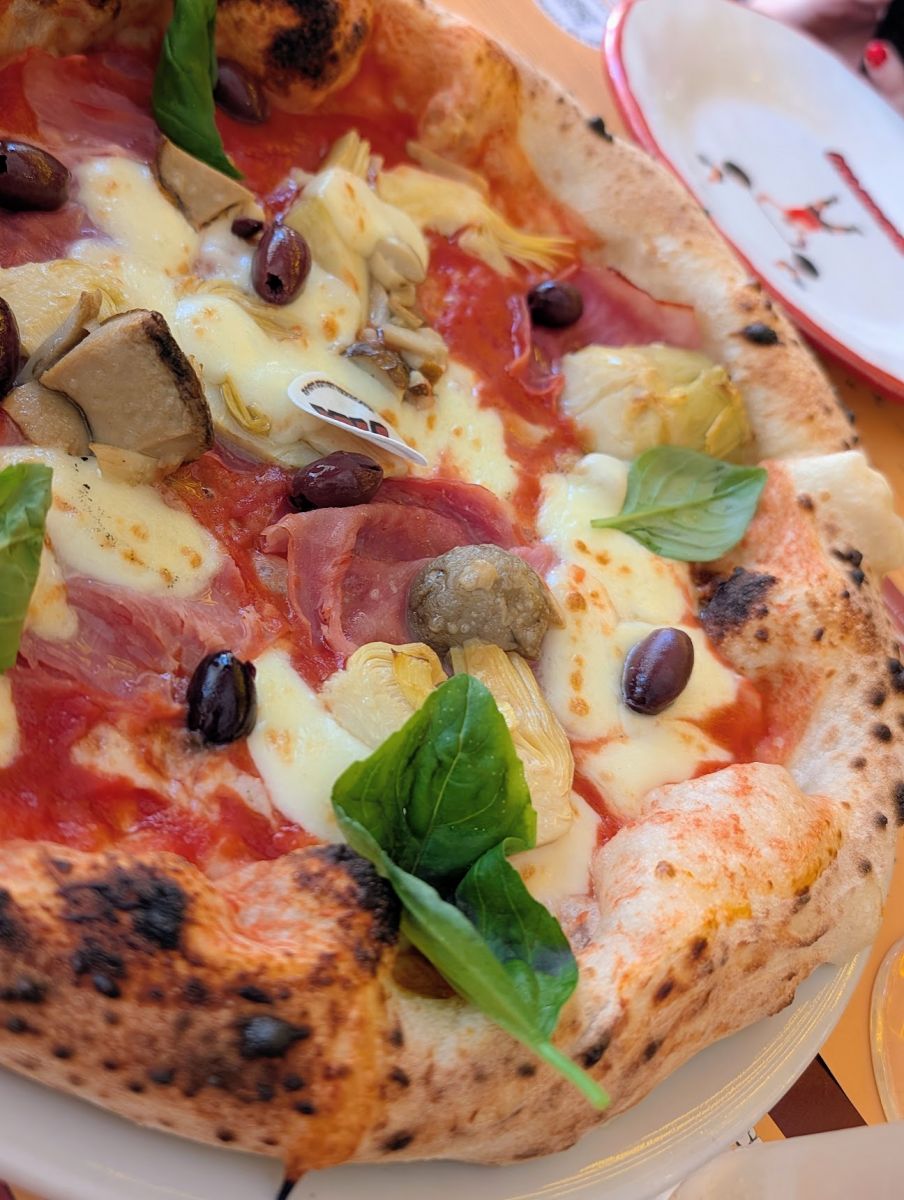
After the Spanish Steps we took a bus to the area near the Borghese Gallery to grab some lunch. We were walking to a restaurant when we happened upon Fra Diavolo, the pizza place we liked so much in Bologna, so we pivoted and ate there instead. I’ve said this before, but it bears repeating: don’t be turned off by the fact Fra Diavolo is a chain. They make a solid pizza. We got in just before the lunch rush—we were literally the only people in the restaurant when we placed our order, and by the time we were finished, it was completely packed with Italians in suits and business-casual attire. If it’s good enough for the locals, it’s good enough for me!
Borghese Gallery
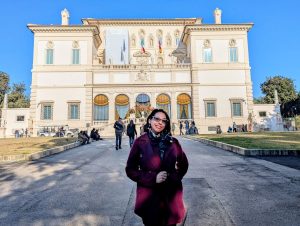
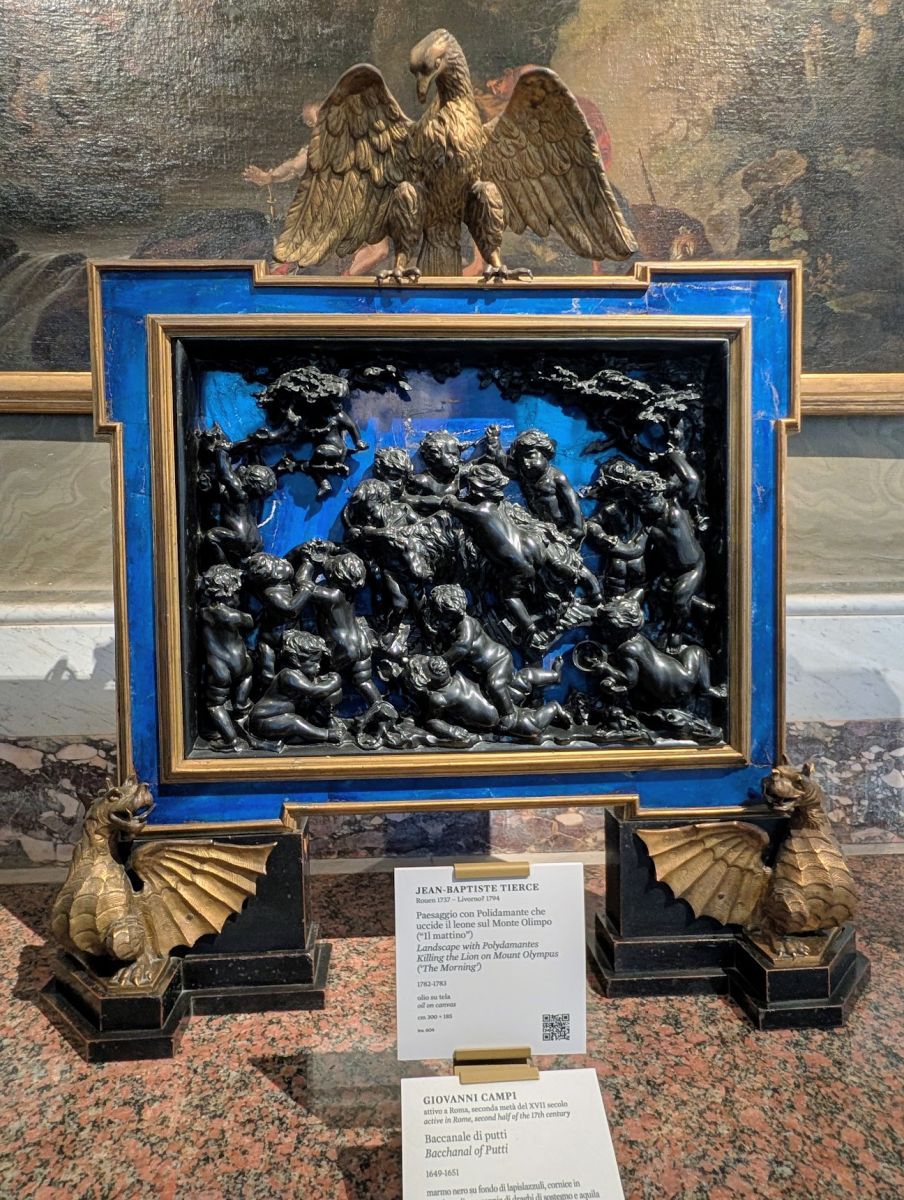
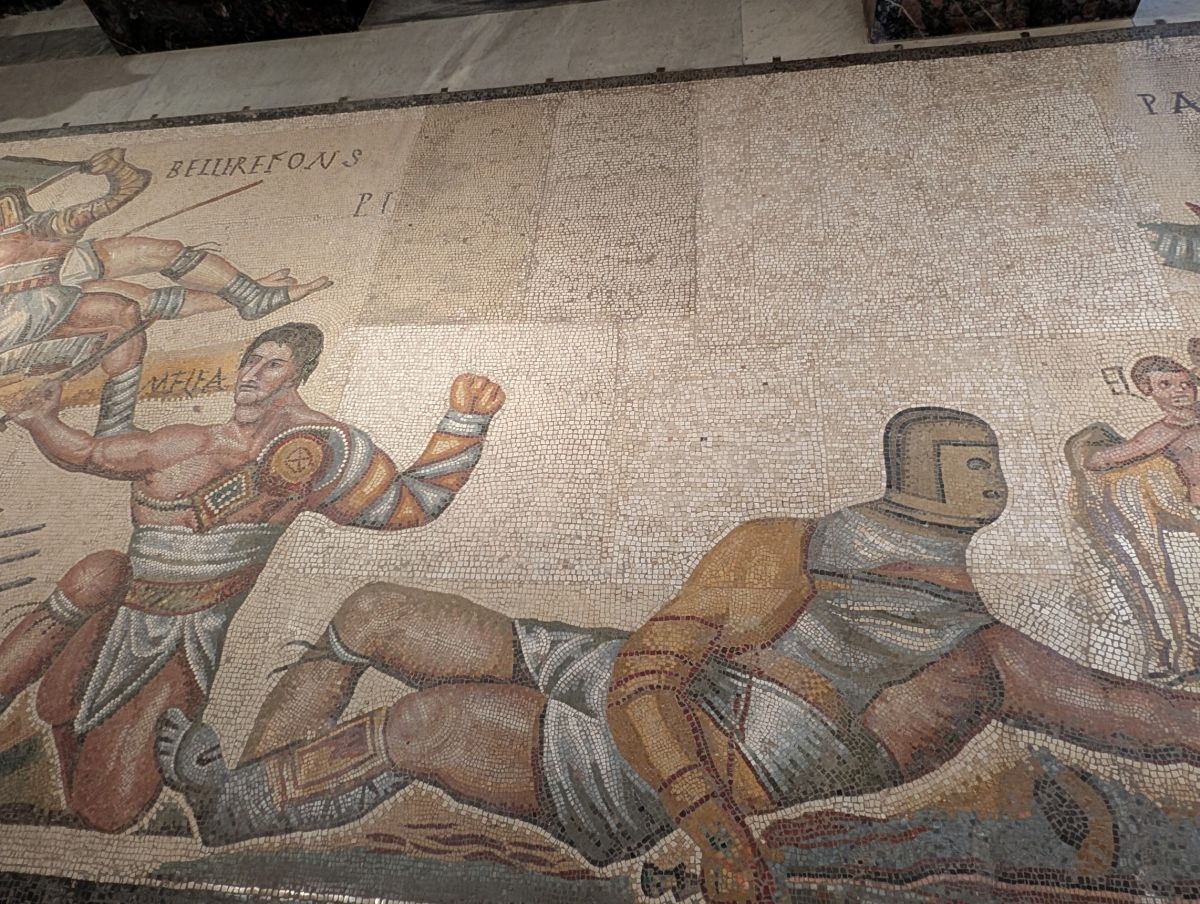
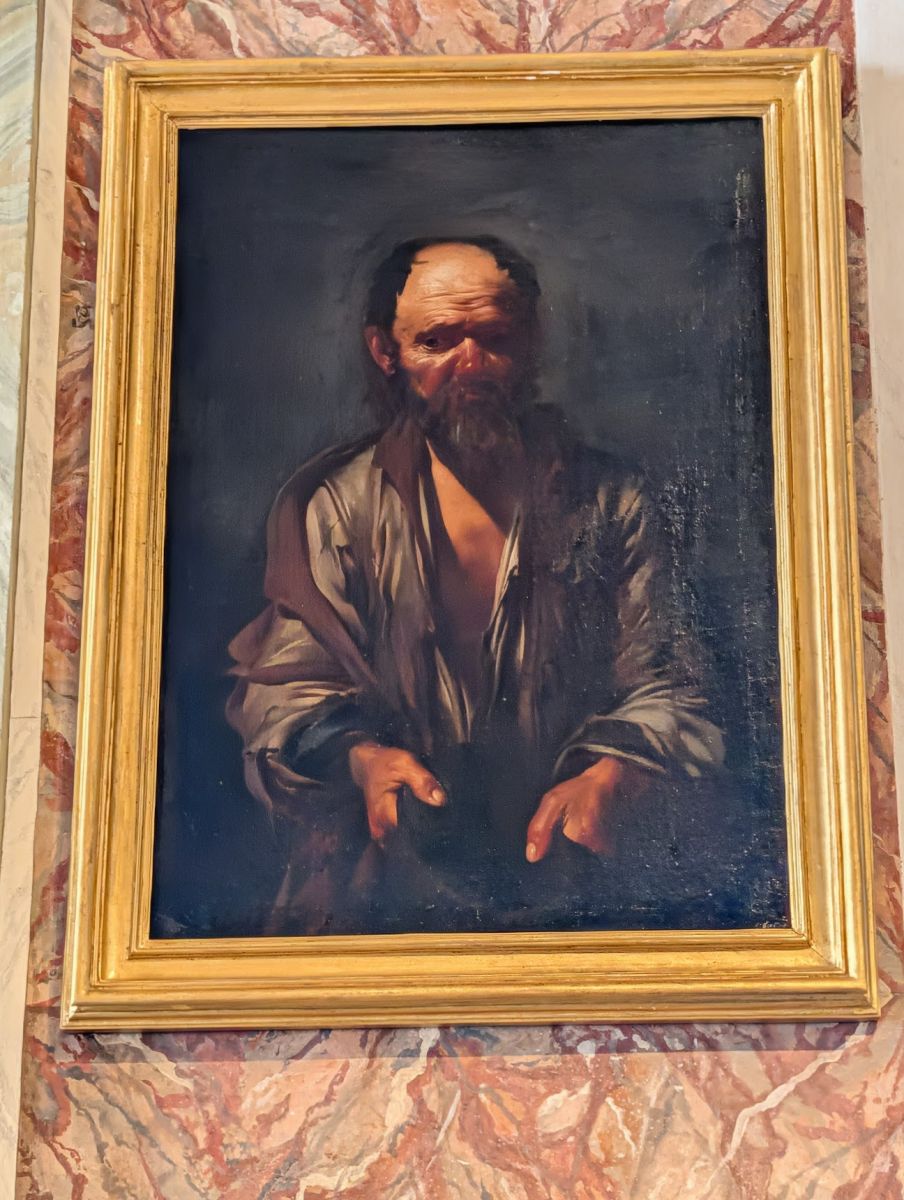
The Borghese Gallery is a must-do when visiting Rome. We did a small group tour (there were 6 or 7 of us), and it was wonderful. We learned so much about the history of the gallery itself as well as the works of art it houses. The gallery limits entrance to no more than 360 people at a time, and you’re allowed a maximum of 2 hours inside.
The building that houses the gallery was built by Cardinal Scipione Borghese (1579-1633), nephew of Pope Paul V, as both a summer house (mainly for entertaining) and to house is extensive art collection—so, it was purpose-built to house art from the beginning. Inside are paintings by Caravaggio, Raphael, Titian, Correggio, Antonello da Messina, and Giovanni Bellini and sculptures by Canova and Bernini. The Bernini sculptures are the main draw, in my opinion. Cardinal Borghese was a patron of Bernini, commissioning many of the works on display.
Much of what’s on display today was here in the 1600’s when the gallery was built, although a large number of pieces are now in the Louvre in Paris, essentially stolen by Napoleon. In the early 1800’s, after Camillo Borghese (great-grandnephew of Sciopone) married Napoleon’s sister, Napoleon “pressured” (forced) him to sell over 300 pieces of antiquity to France so that Napoleon could stock his the Louvre (which he had temporarily renamed Musée Napoléon). Still, what remains at Galleria Borghes is one of the finest collections in the world.
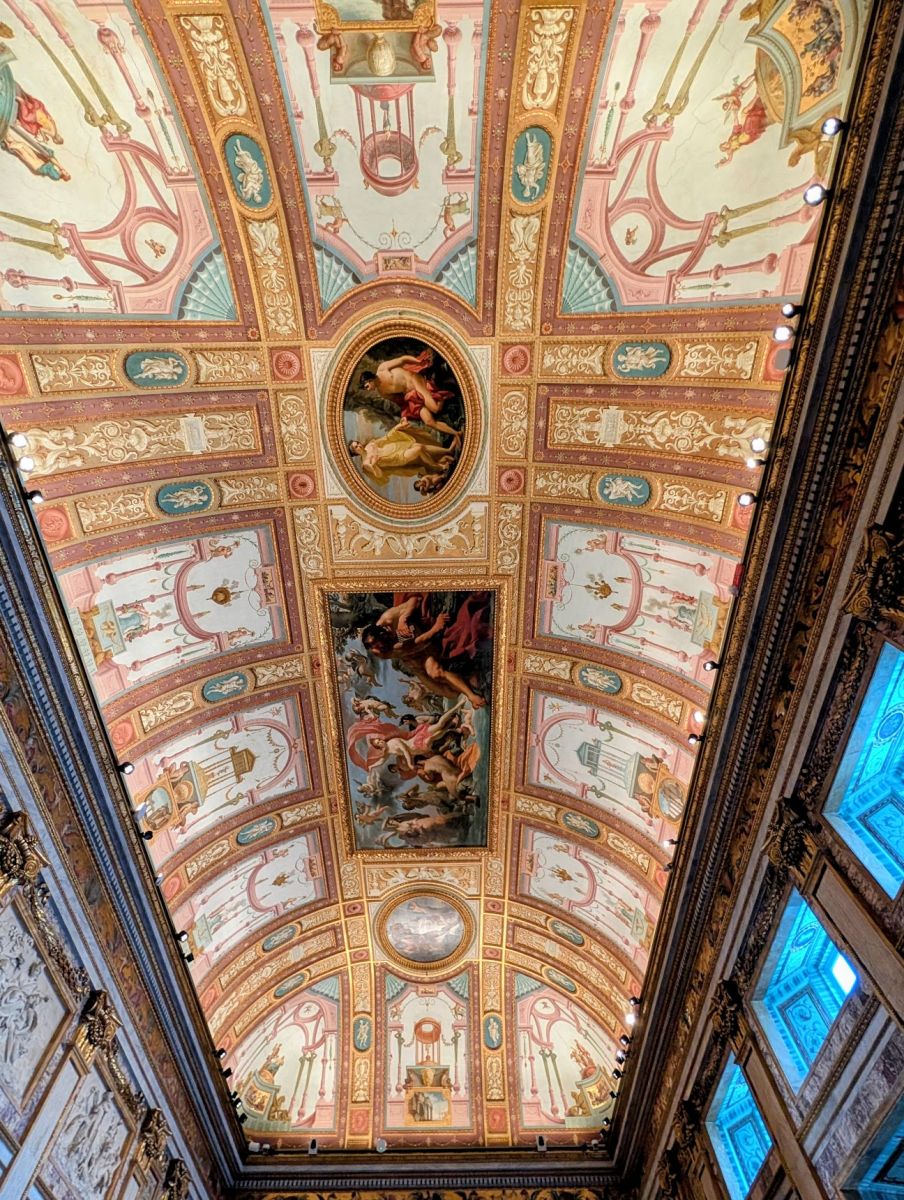
In the 1800’s, a Borghese descendent “renovated” the gallery, moving the baroque sculptures from ground level (as the artists intended them to be viewed) to raised platforms in the center of the rooms, and had neoclassical frescoes painted on the walls and ceilings. In 1901/1902, the family lost most of their fortunes and were forced to sell the gallery and surrounding park to the government, who opened both to the public.
If you visit, allow time to explore the surrounding park. Here’s a short video of an accordion player in the park:
A Bit About Baroque
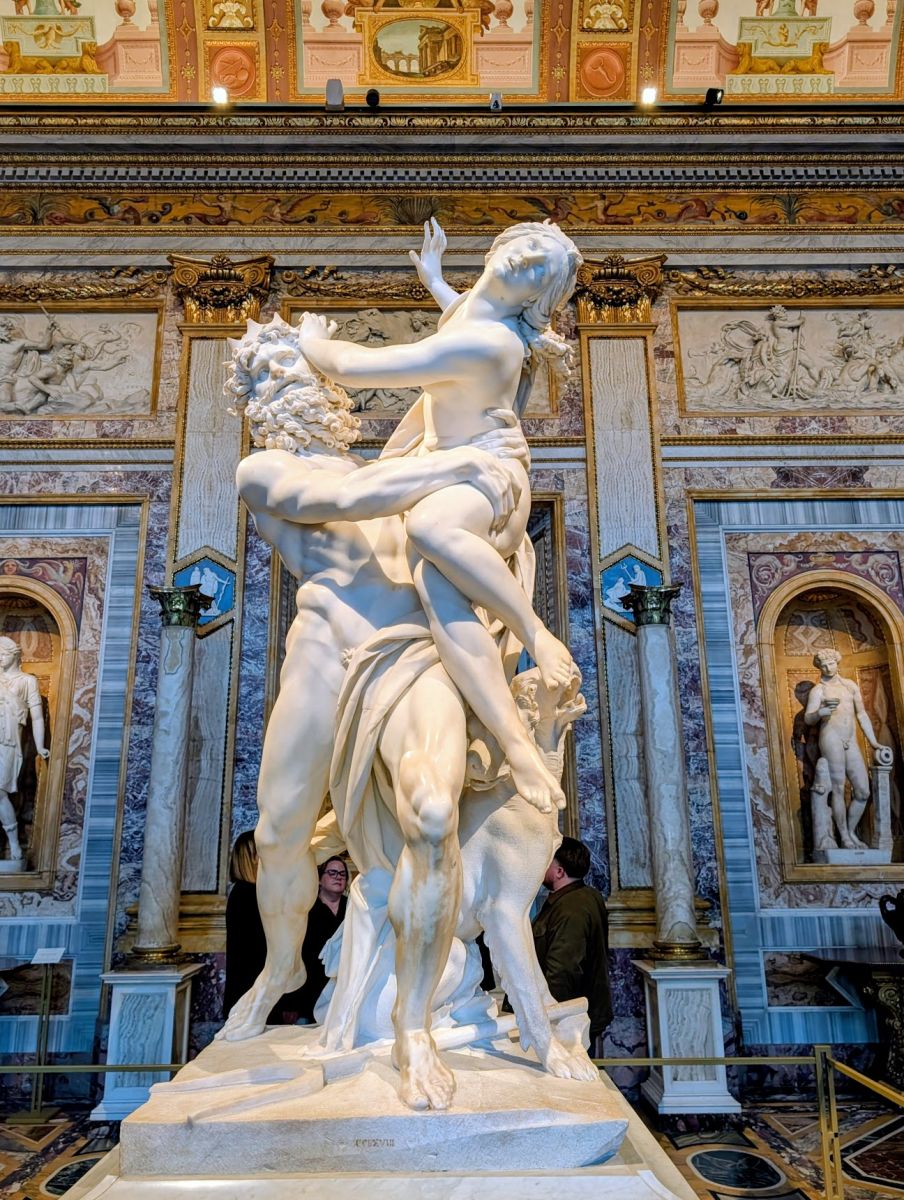
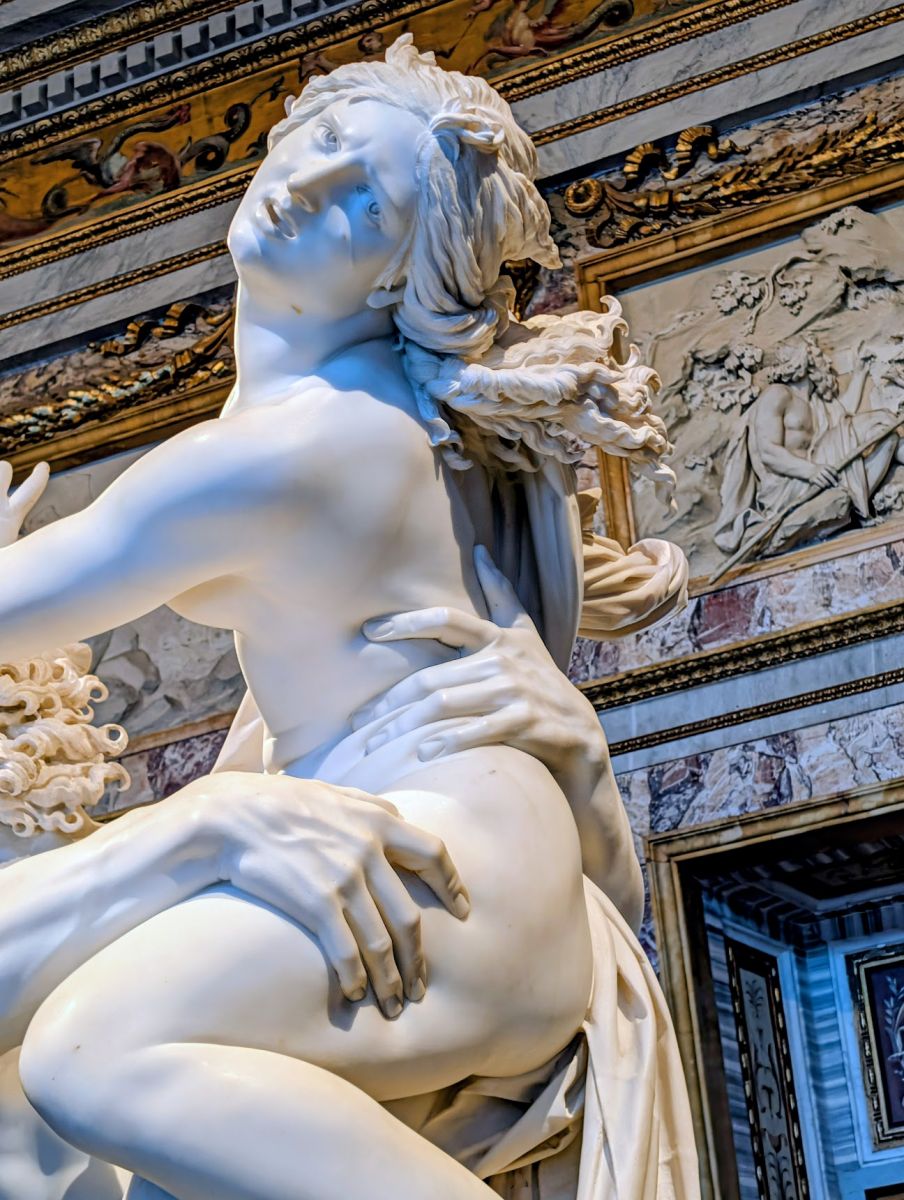
One thing you’ll notice about Bernini’s sculptures, as opposed to earlier Renaissance sculptures, is the sense of expression and movement. Bernini is considered a master of the Baroque style, which used contrast, movement, exuberant detail, grandeur, and surprise to achieve a sense of awe. A good example of this style is Bernini’s The Abduction of Proserpina (often referred to as The Rape of Proserpina, or Rape of Persephone, but abduction is a more apt translation).
The Abduction of Proserpina
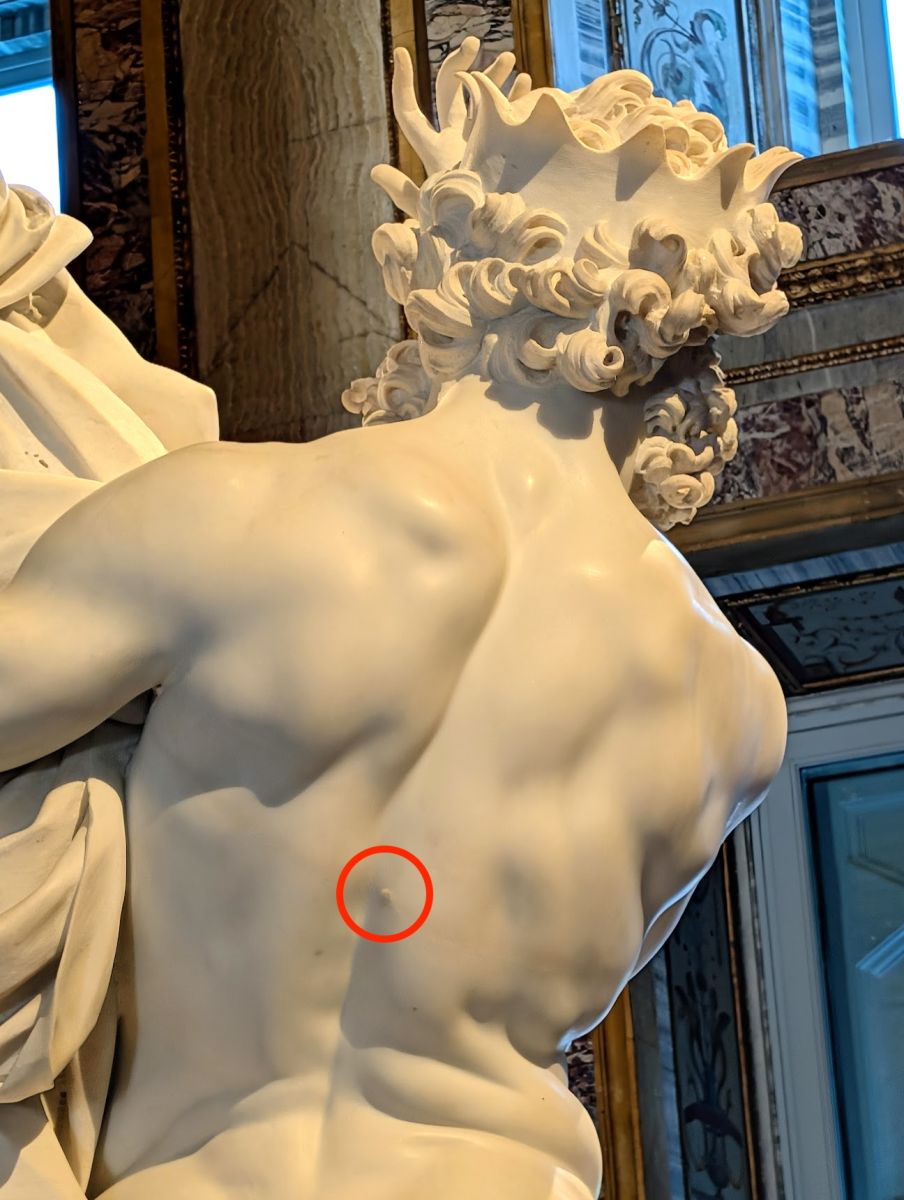
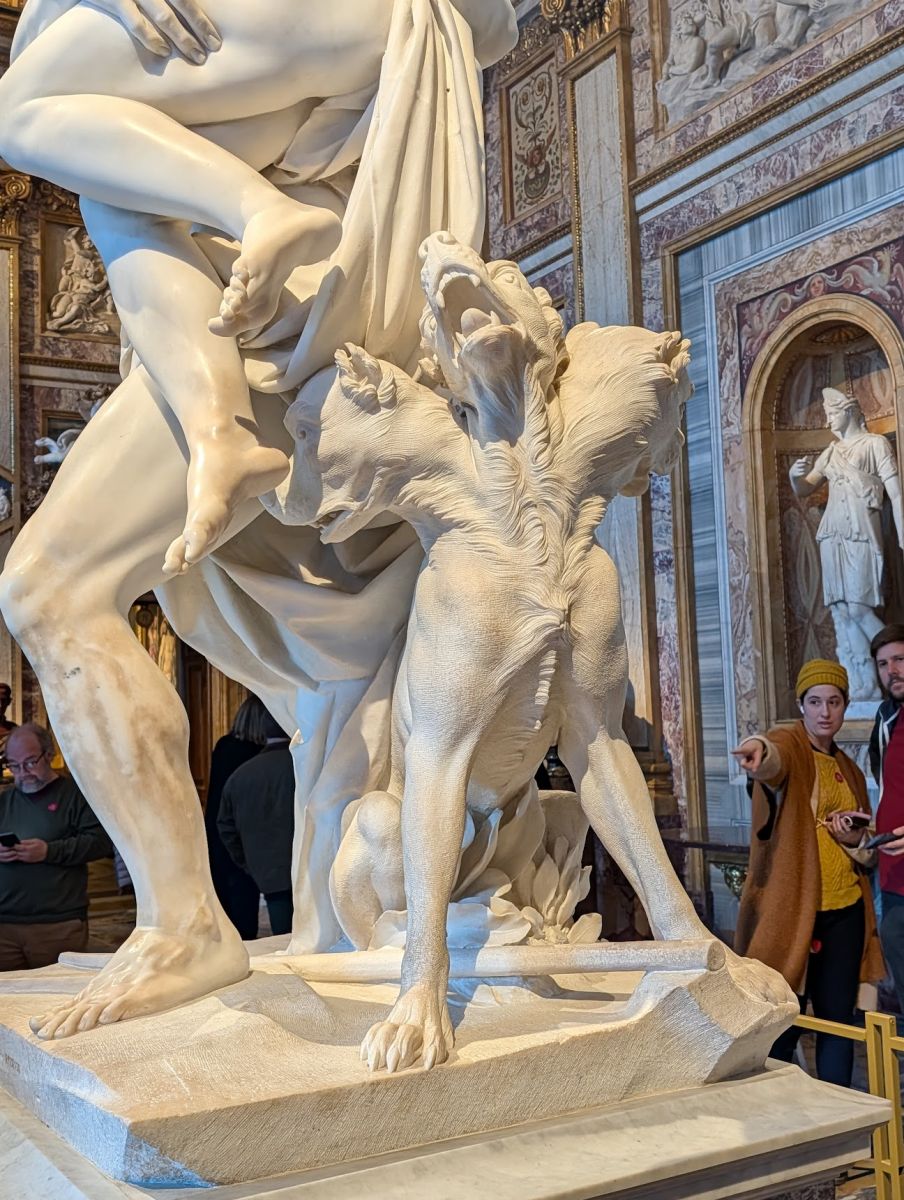
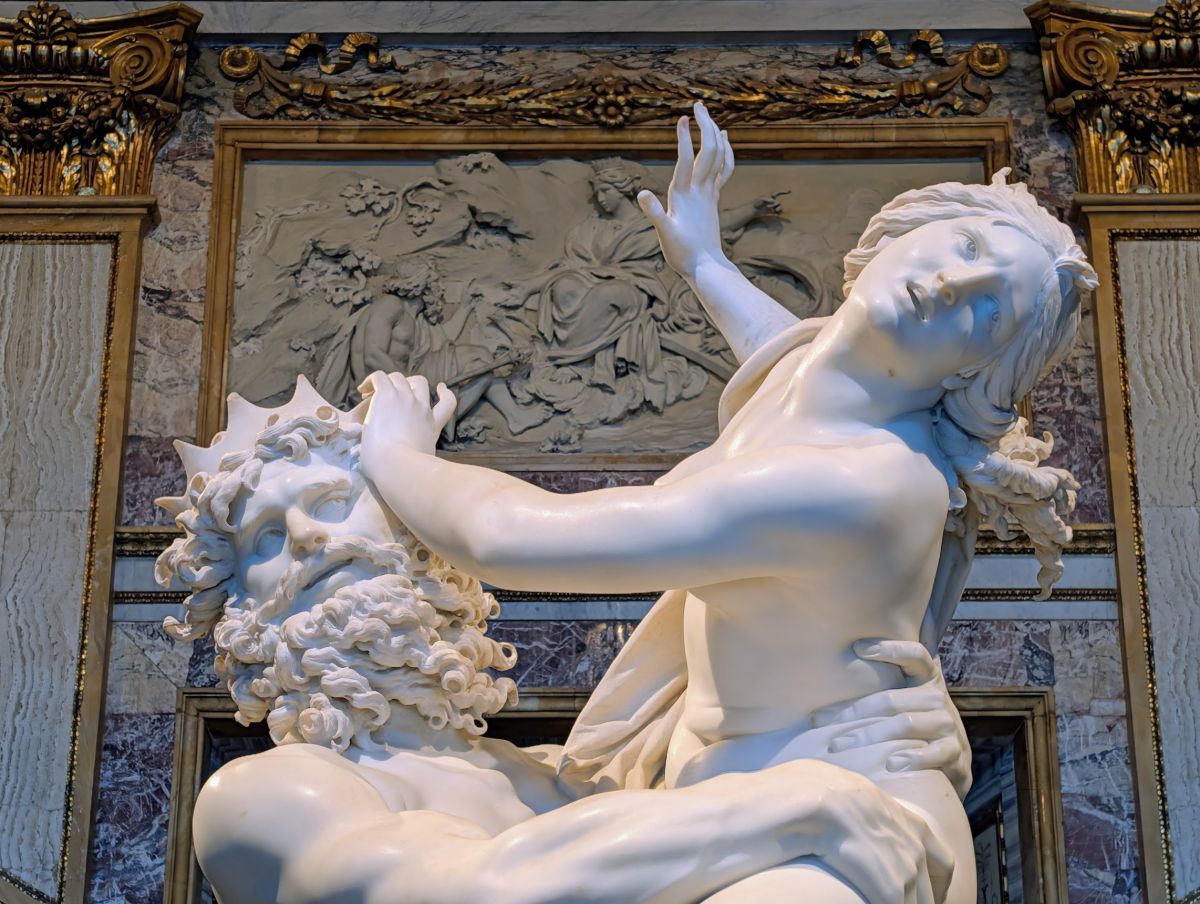
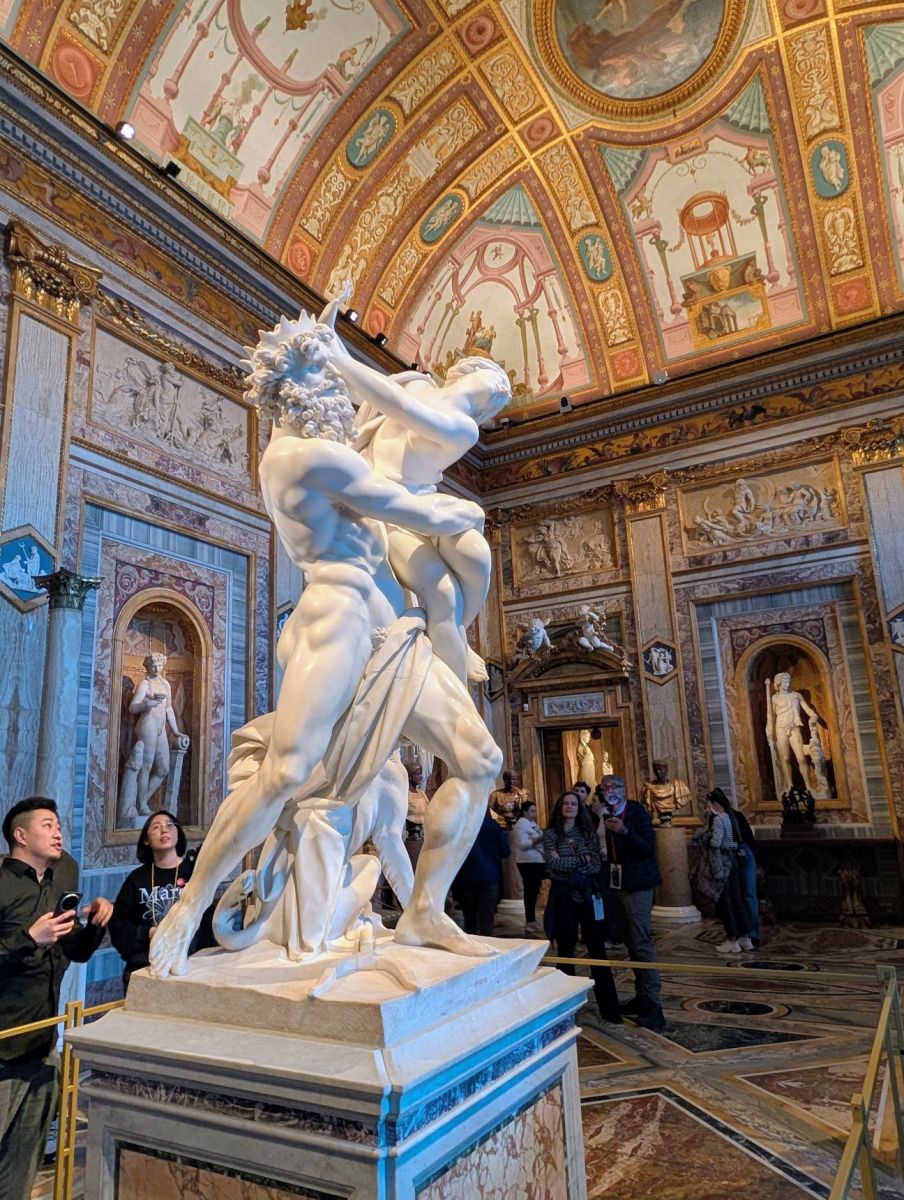
This statue by Bernini captures the myth of Prosperpina at the climactic moment when Pluto grabs Proserpina, who struggles against him as he carries her over the border of the underworld, symbolized by a marble Cerberus. The statue was commissioned by Cardinal Scipione Borghese. If you look closely at Prosperpina’s tortured face, you’ll see tears running down her cheek. Look closely at Pluto’s back, and you’ll see a wart. Also note the way Pluto’s hands sink into Proserpina’s flesh, a detail noted for its realism and expressive power.
Truth Unveiled by Time
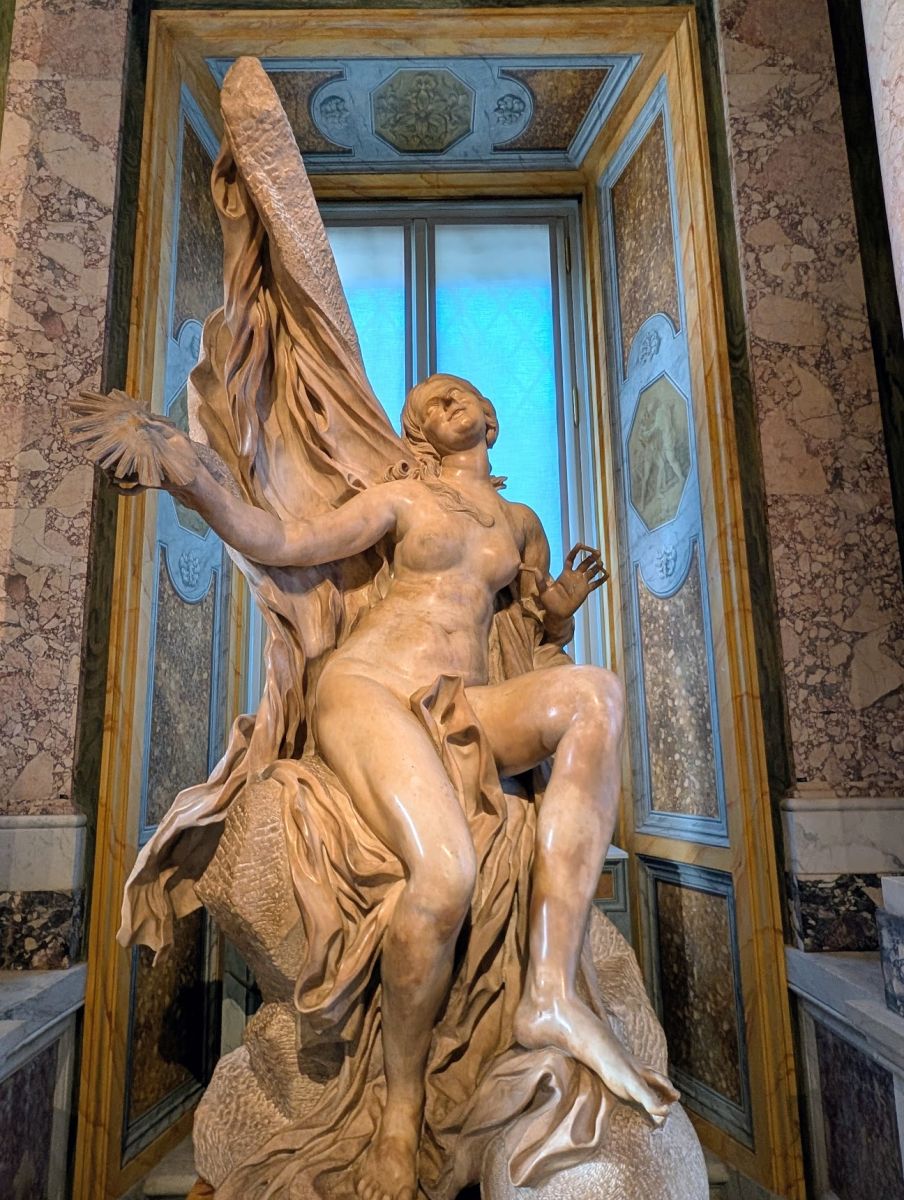
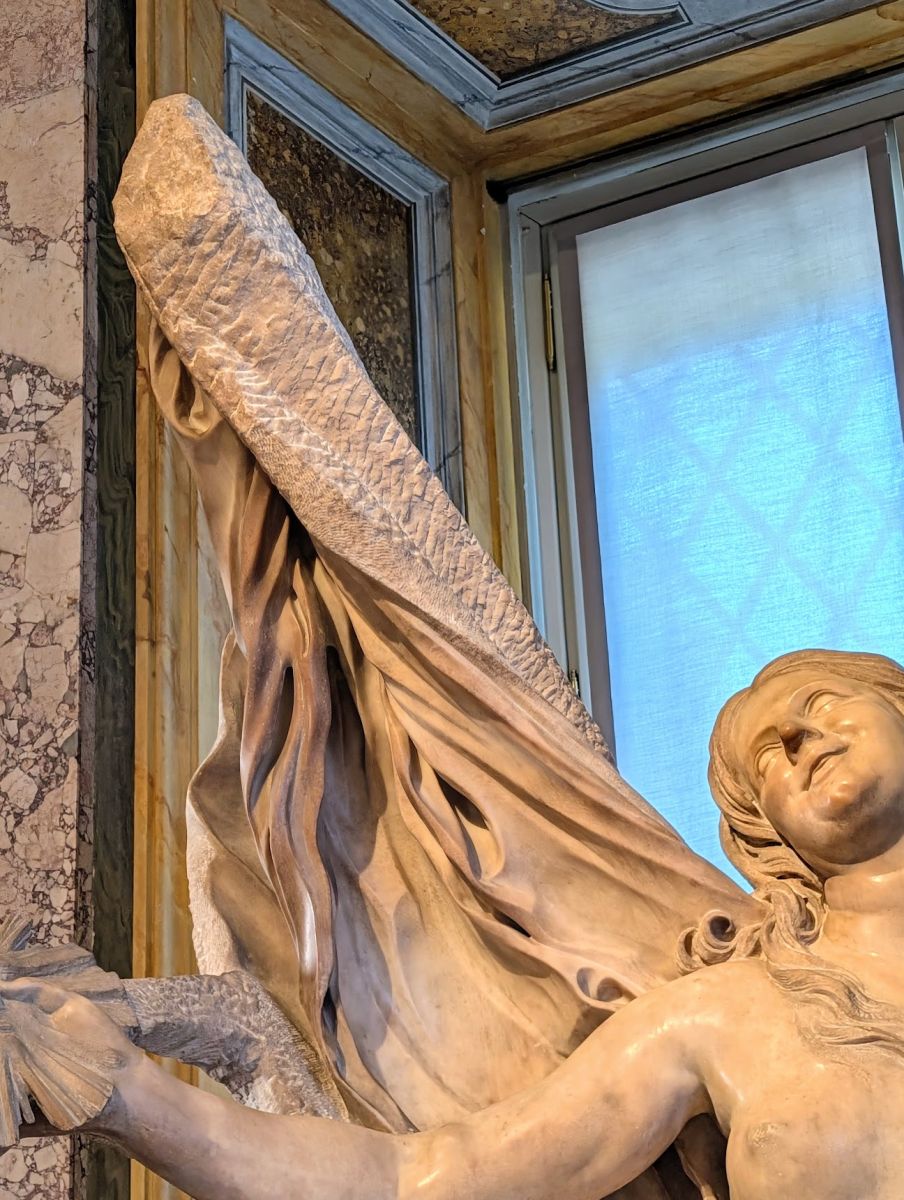
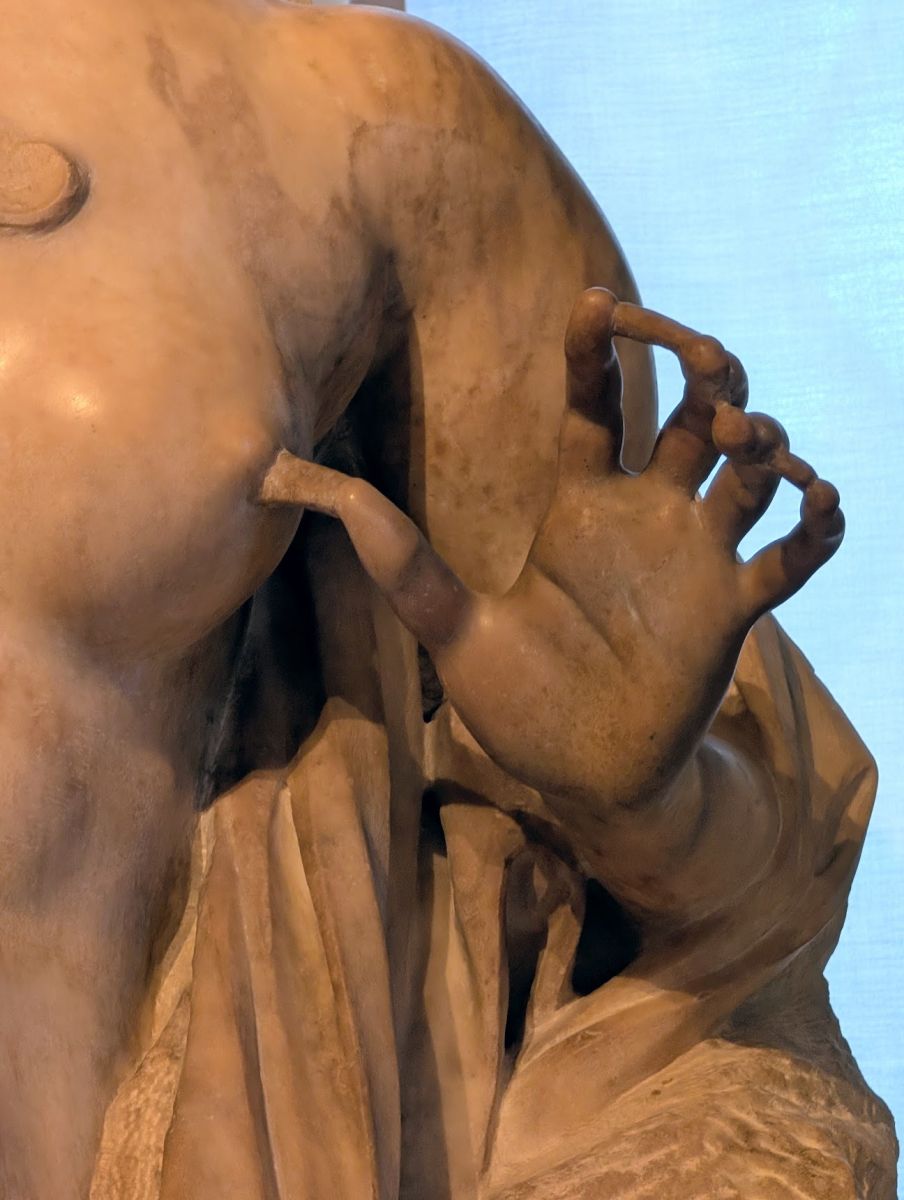
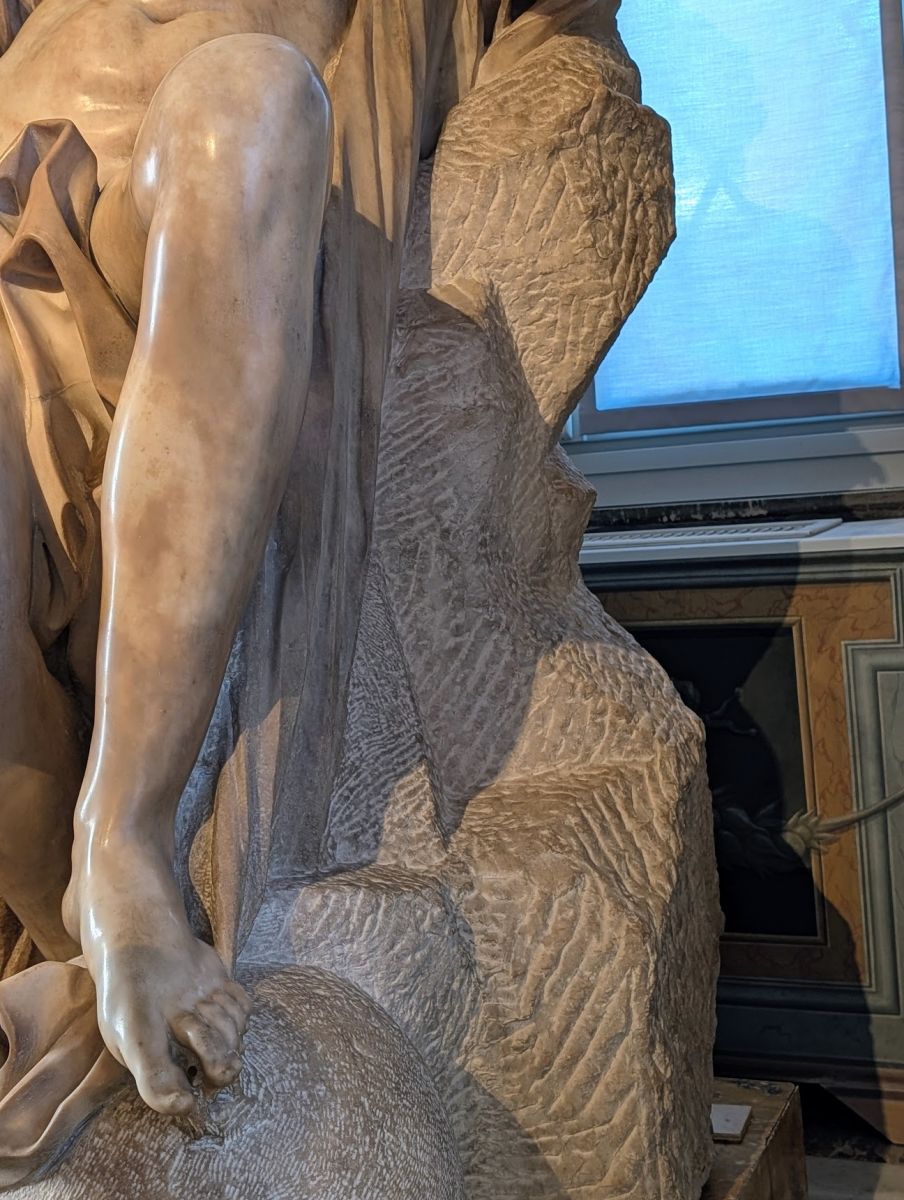
This Bernini sculpture is remarkable for the fact it was never finished, giving us a glimpse of how the artist chipped away at the marble block to reveal the intended sculpture. This was not a commissioned work, but one Bernini started (most historians believe) to express his belief he’s one day be vindicated for his failed project to build two towers onto the front of St. Peter’s Basilica. Although Bernini was blamed at the time, it was actually the previous architect, Carlo Maderno, who built foundations too weak for the intended purpose. With the sculpture, Bernini intended to show Truth allegorically as a naked young woman being unveiled by a figure of Time above her, but the figure of Time was never executed.
More Bernini Sculptures
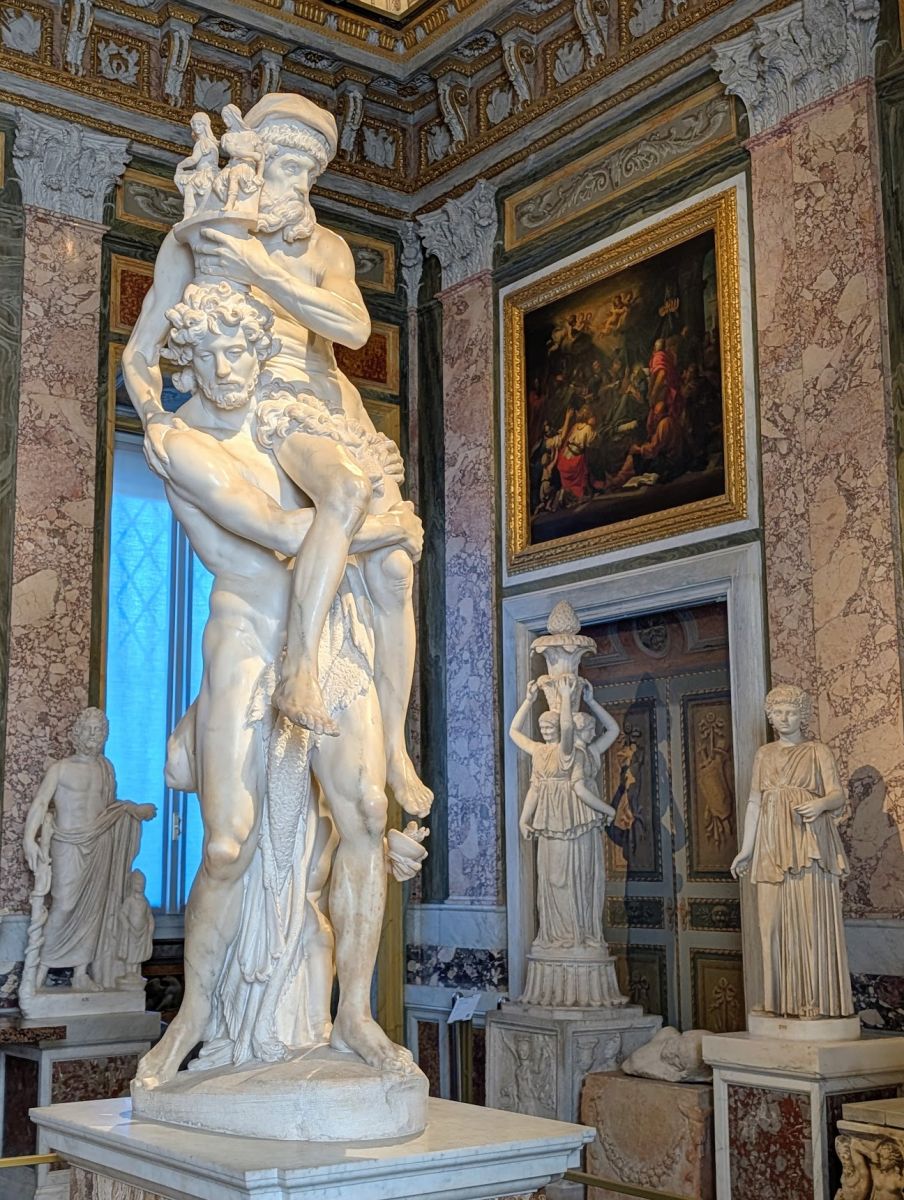
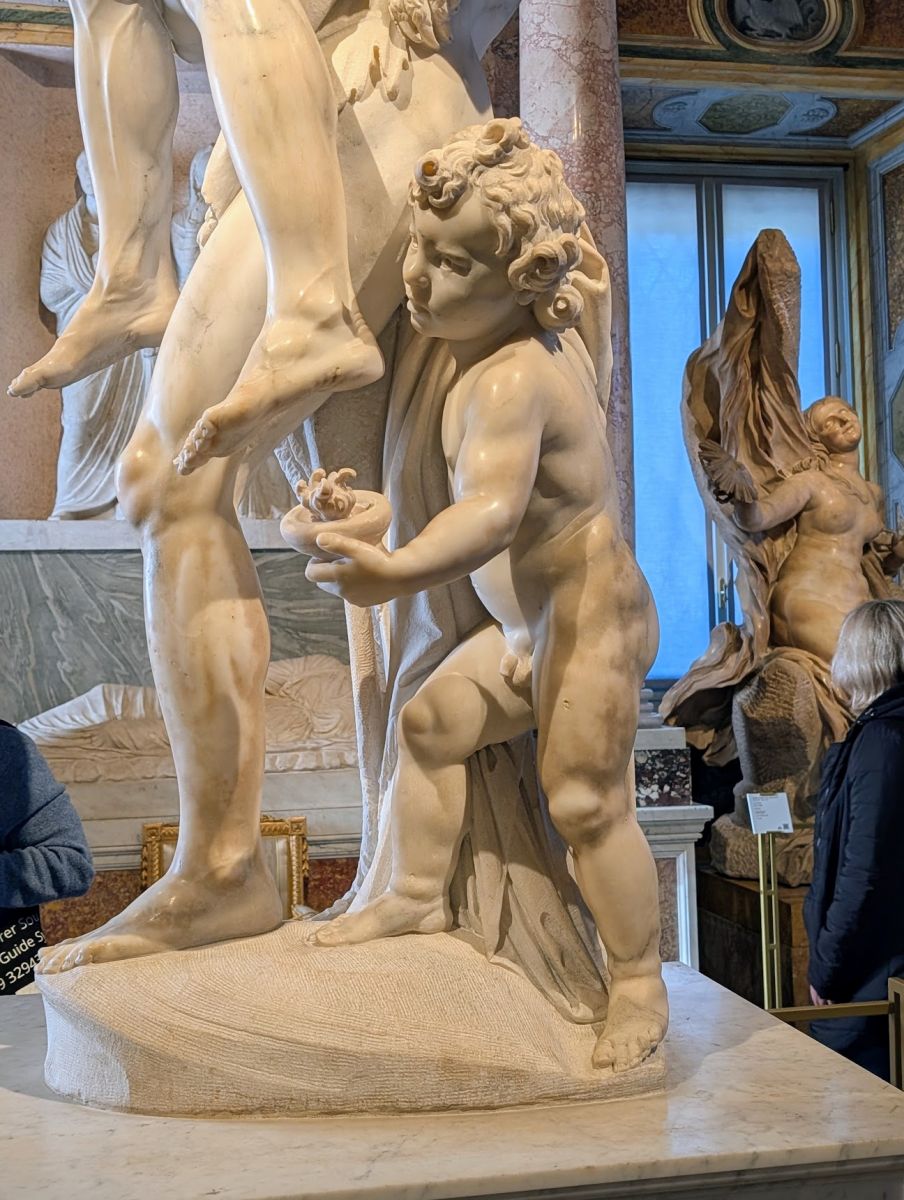
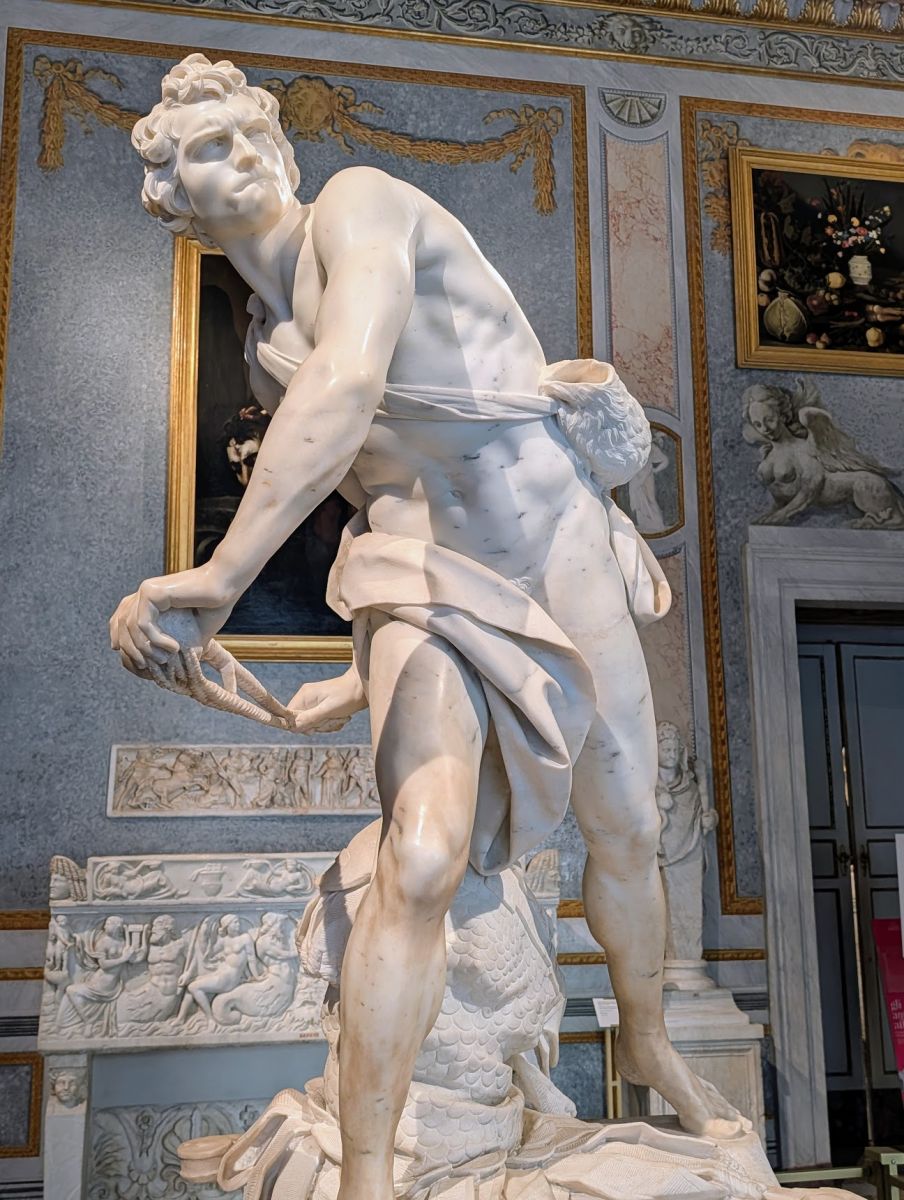
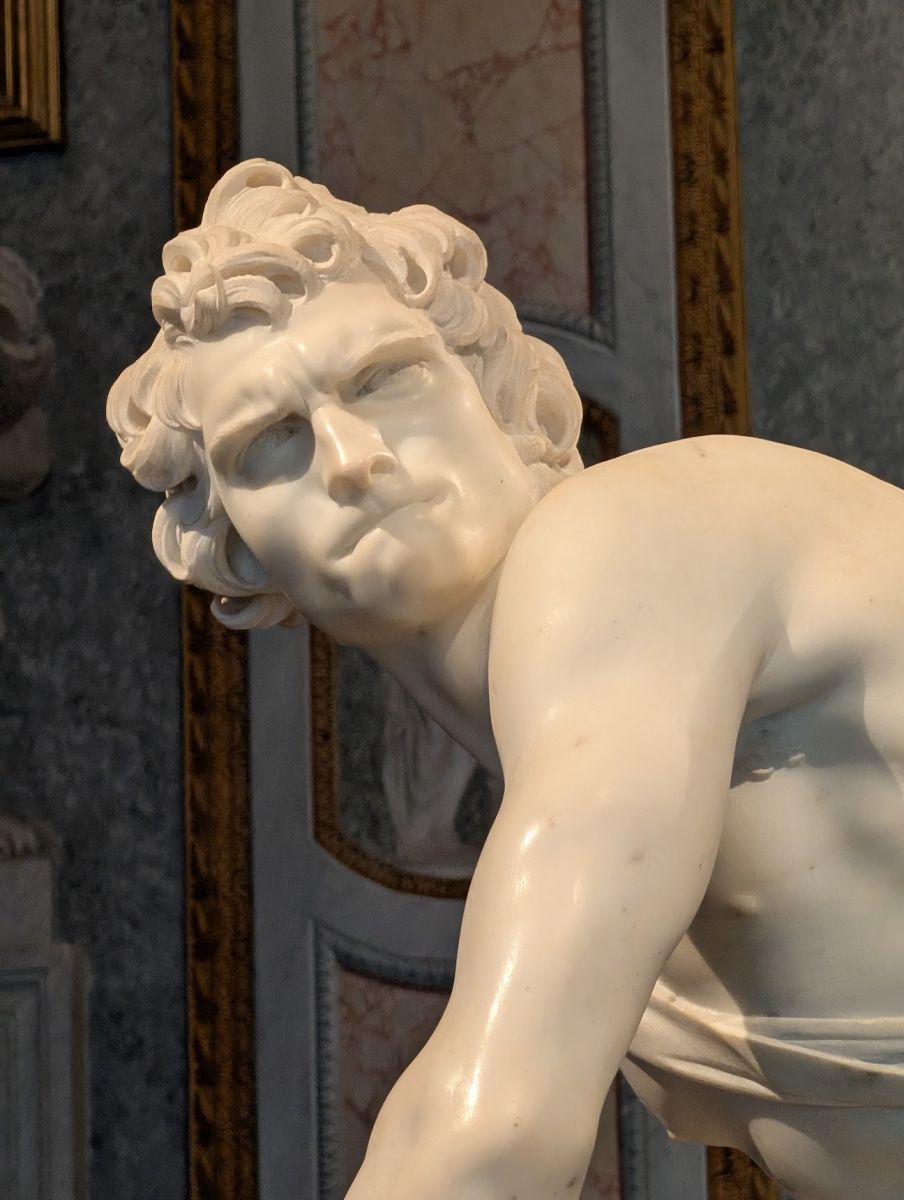
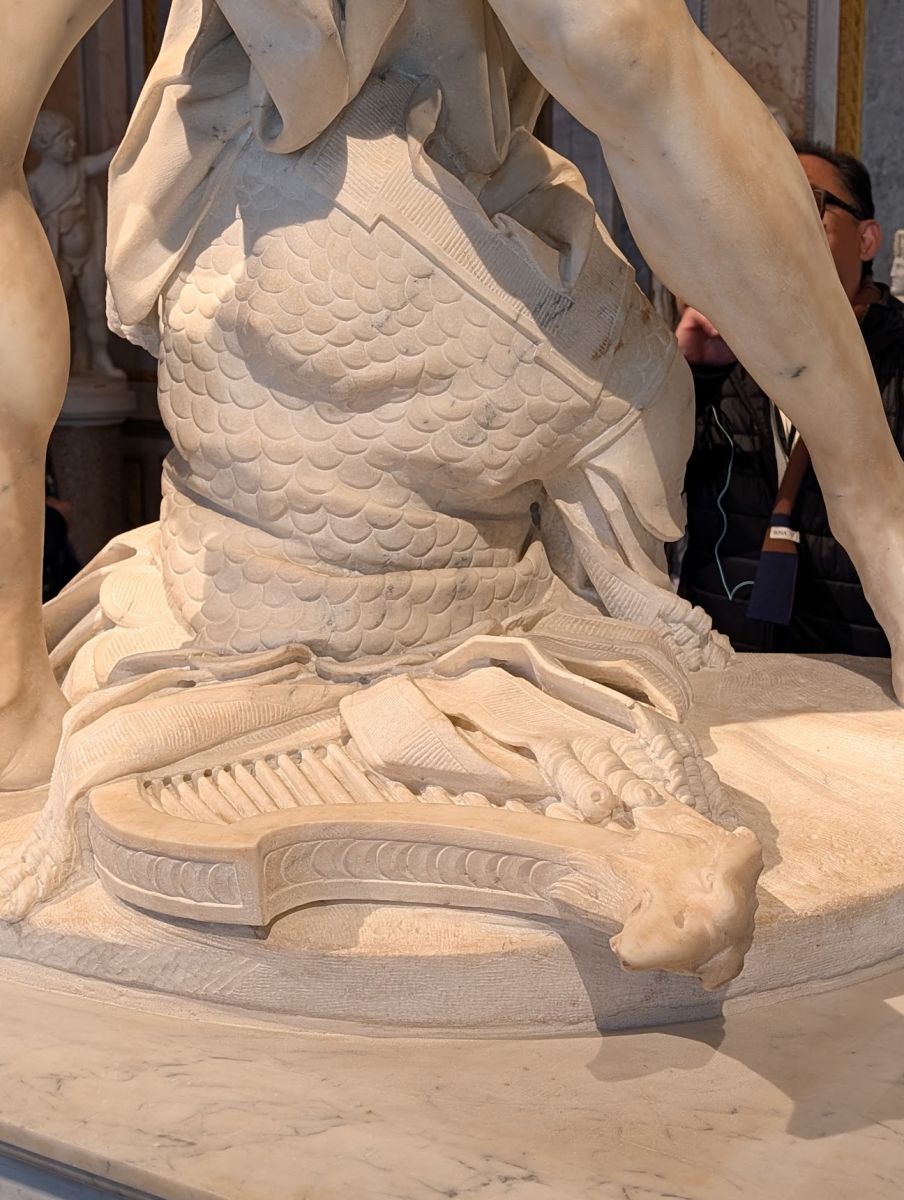
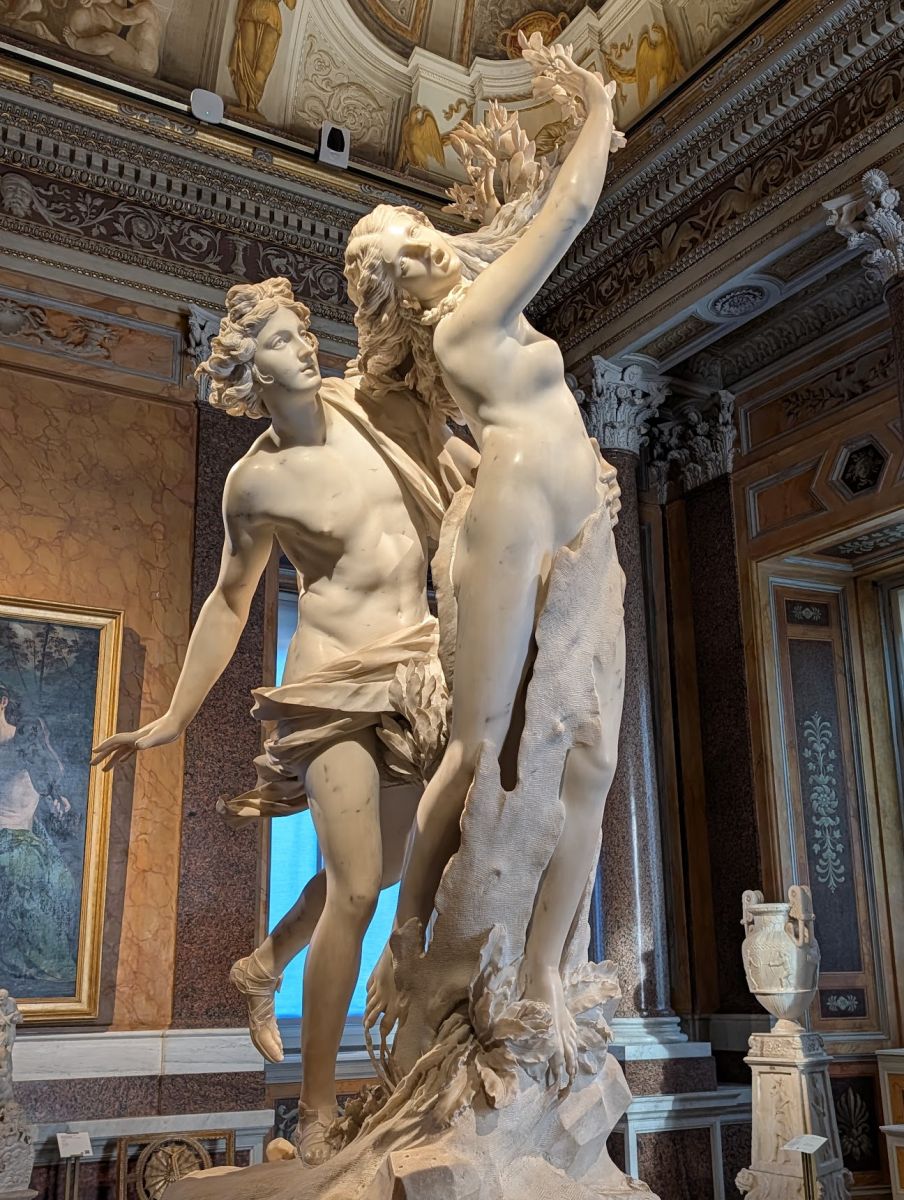
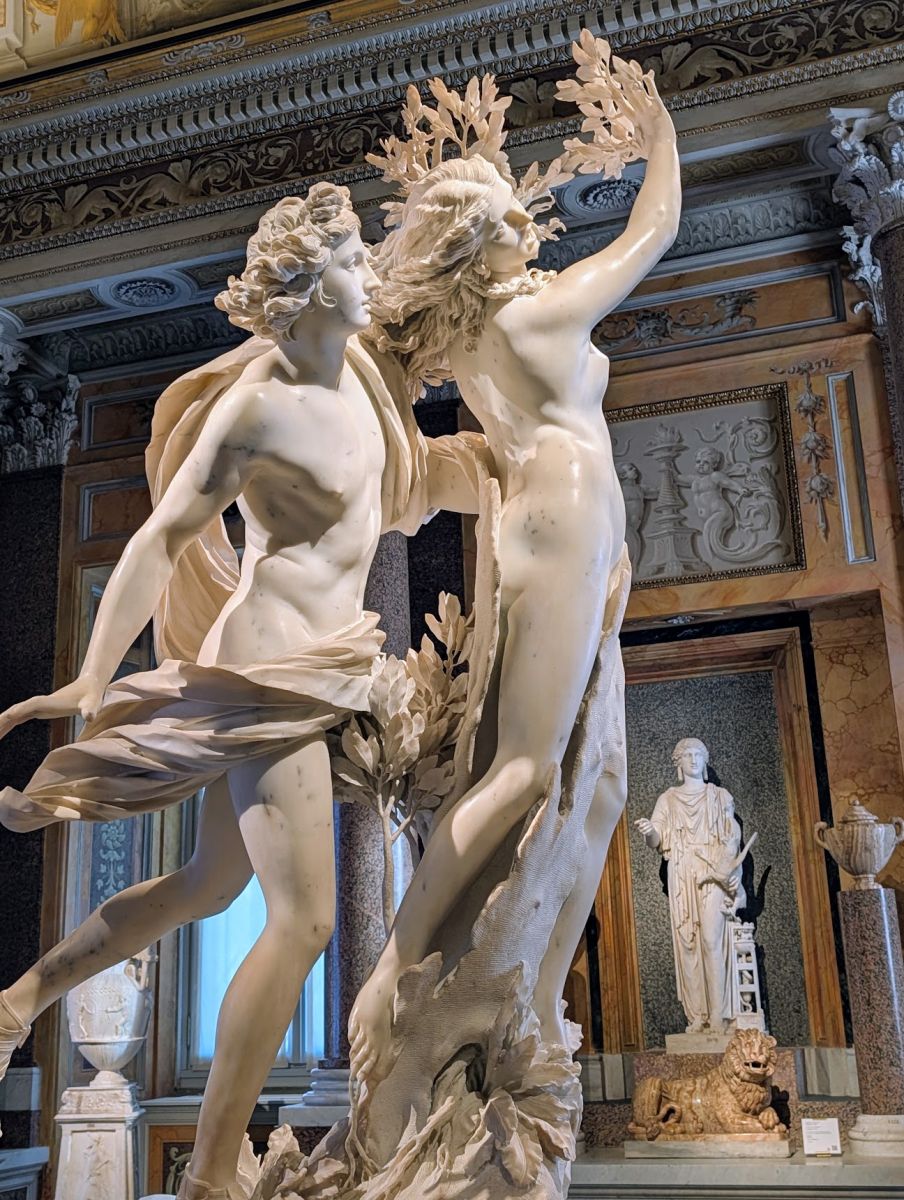
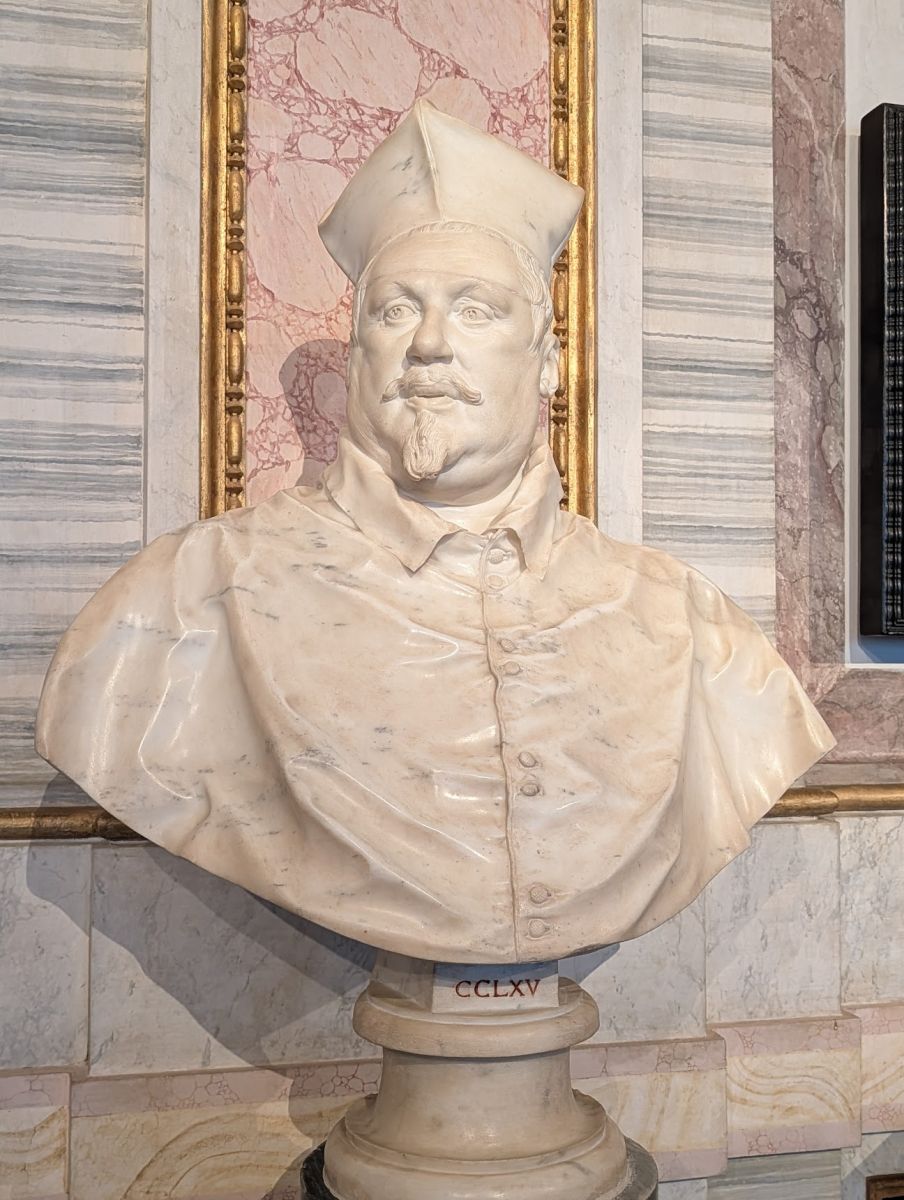
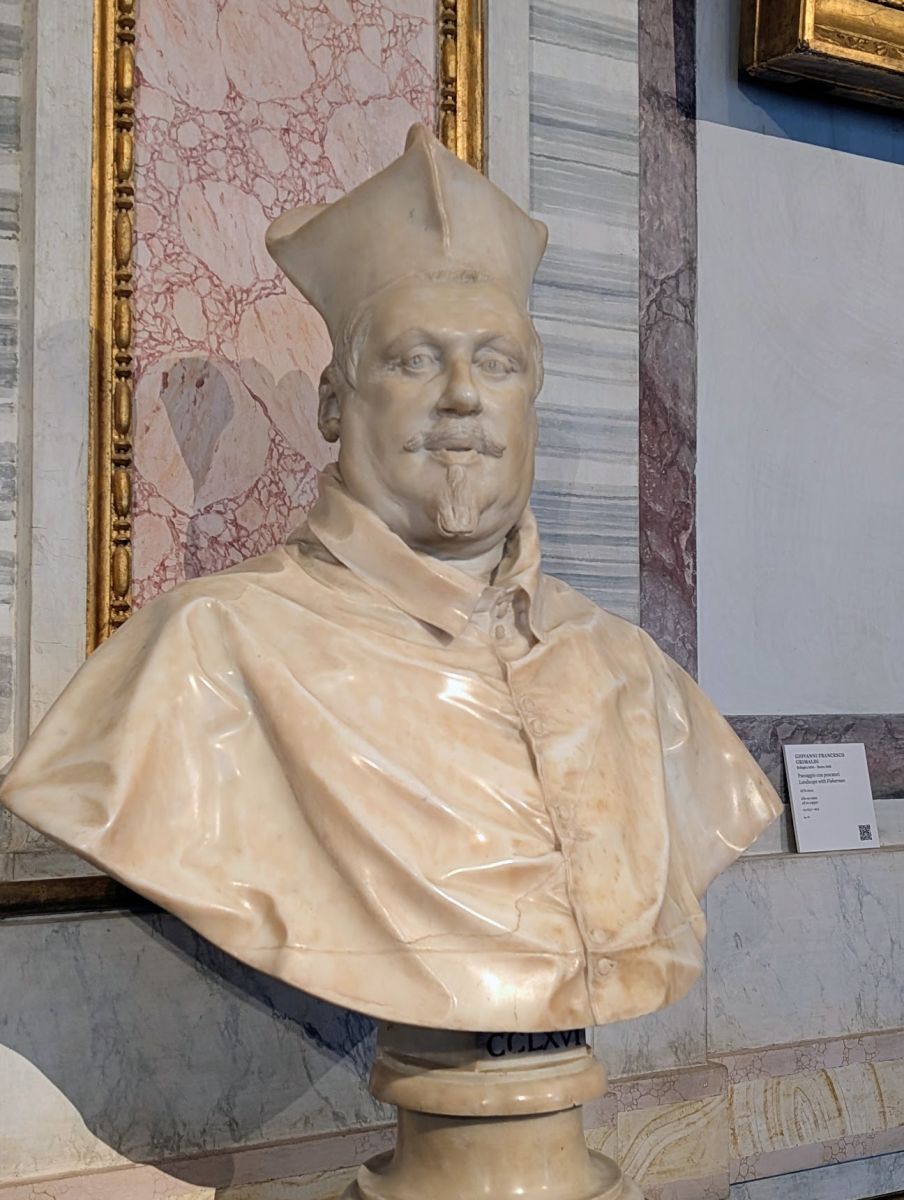
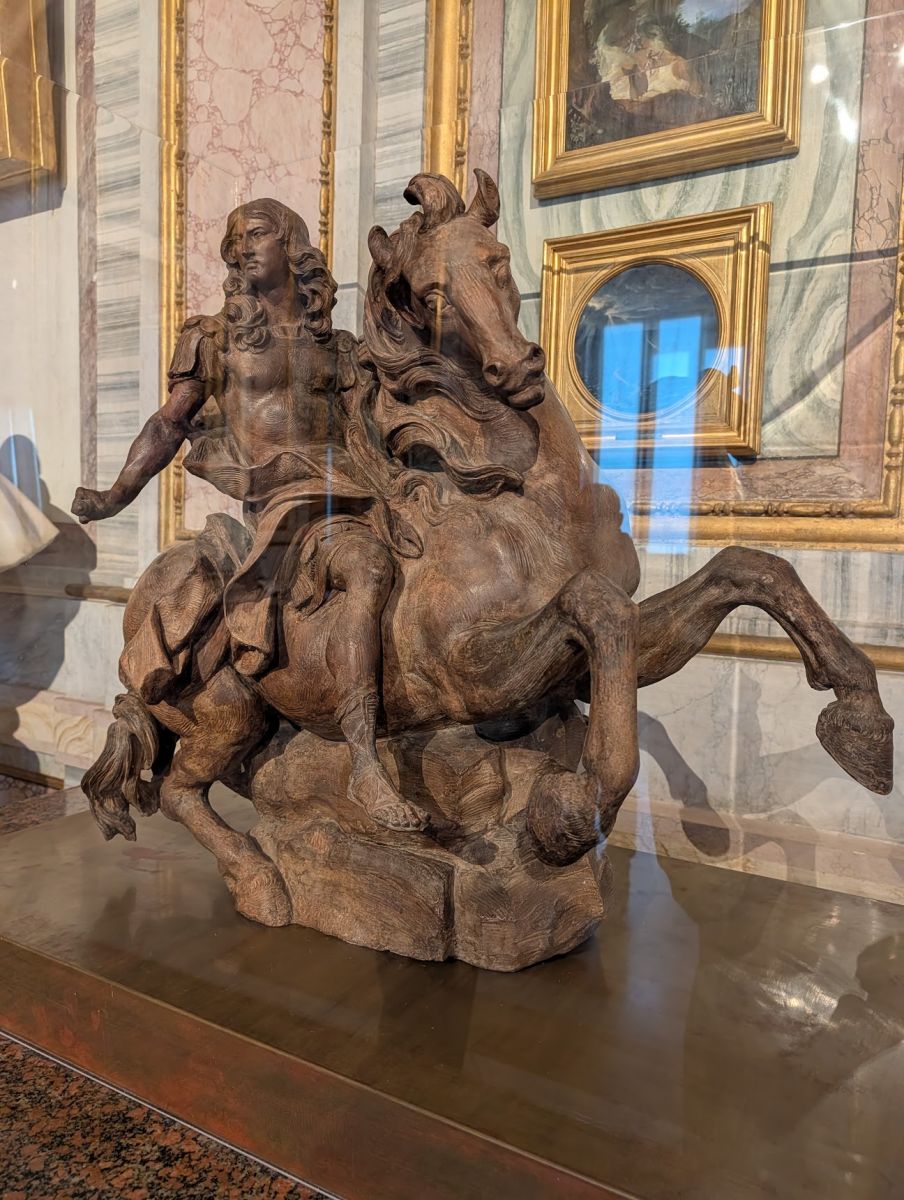
Here’s a gallery of more Bernini sculptures we really enjoyed, including his version of David, which is notable for being the only statue of David showing the hero in the act of attacking Goliath—others are either before the battle, or after the victory:
Caravaggio Paintings
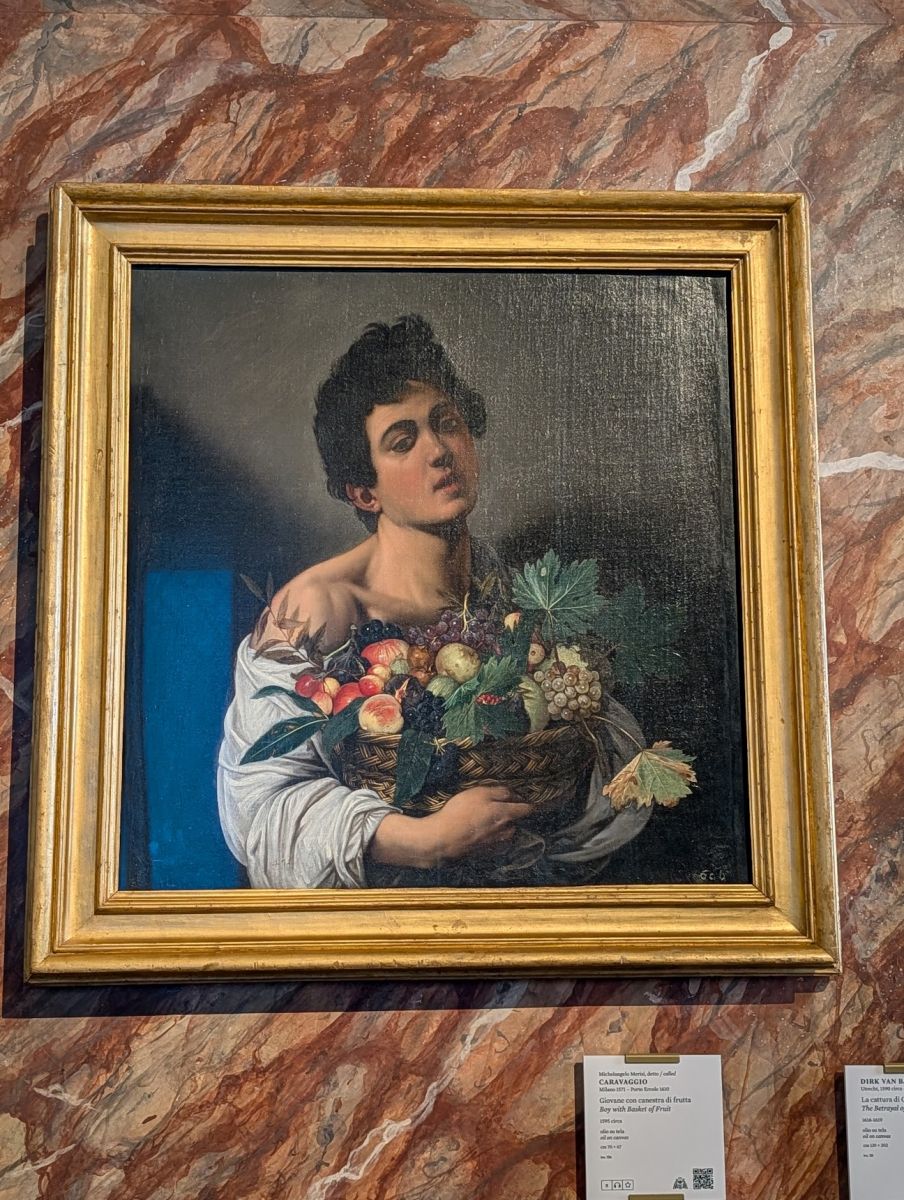
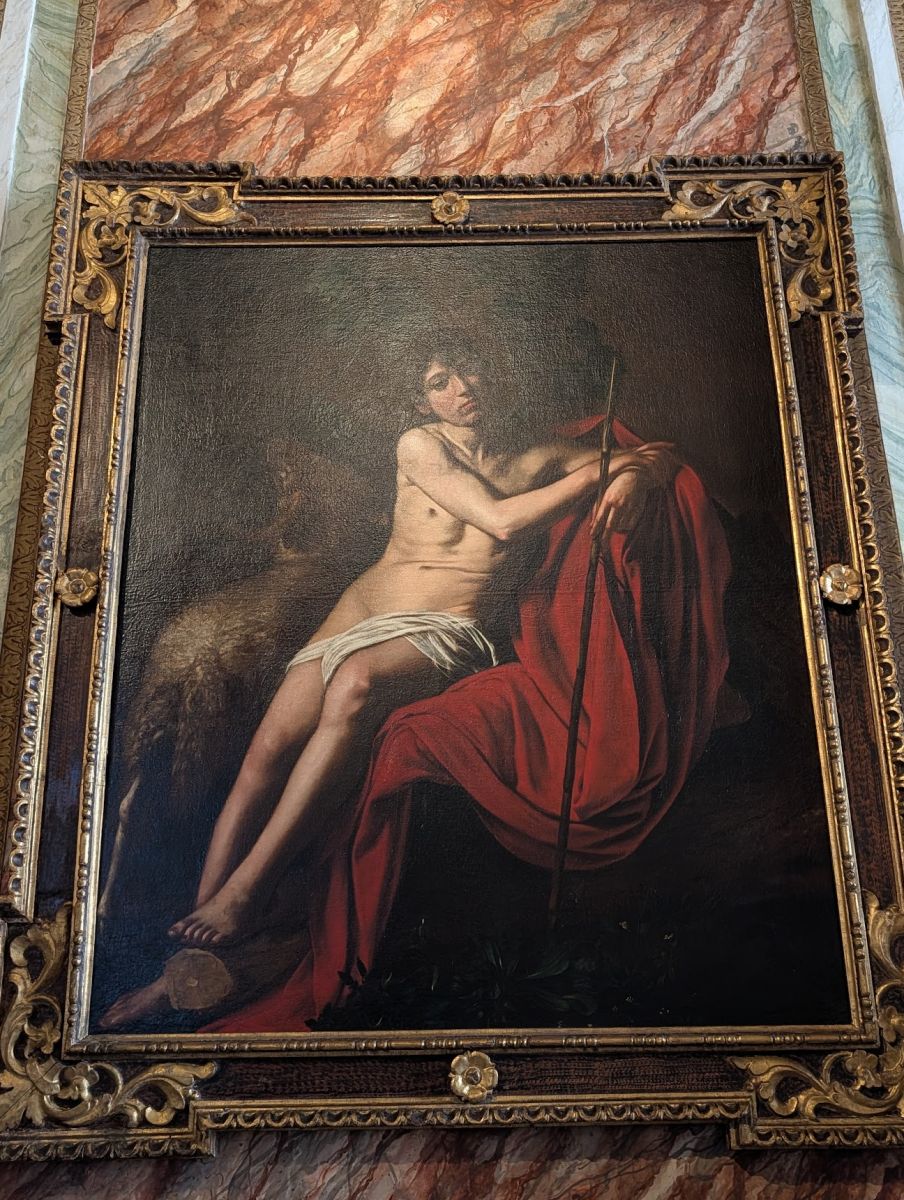
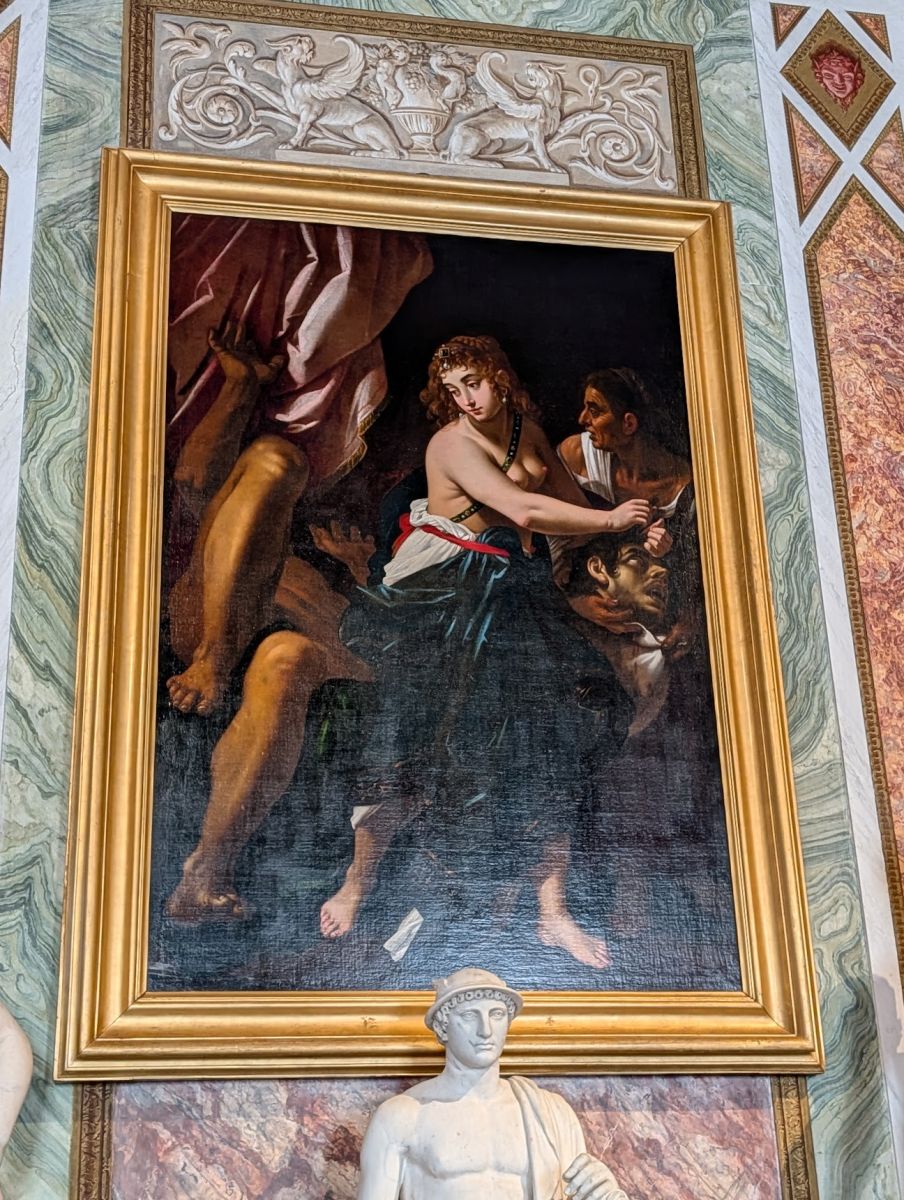
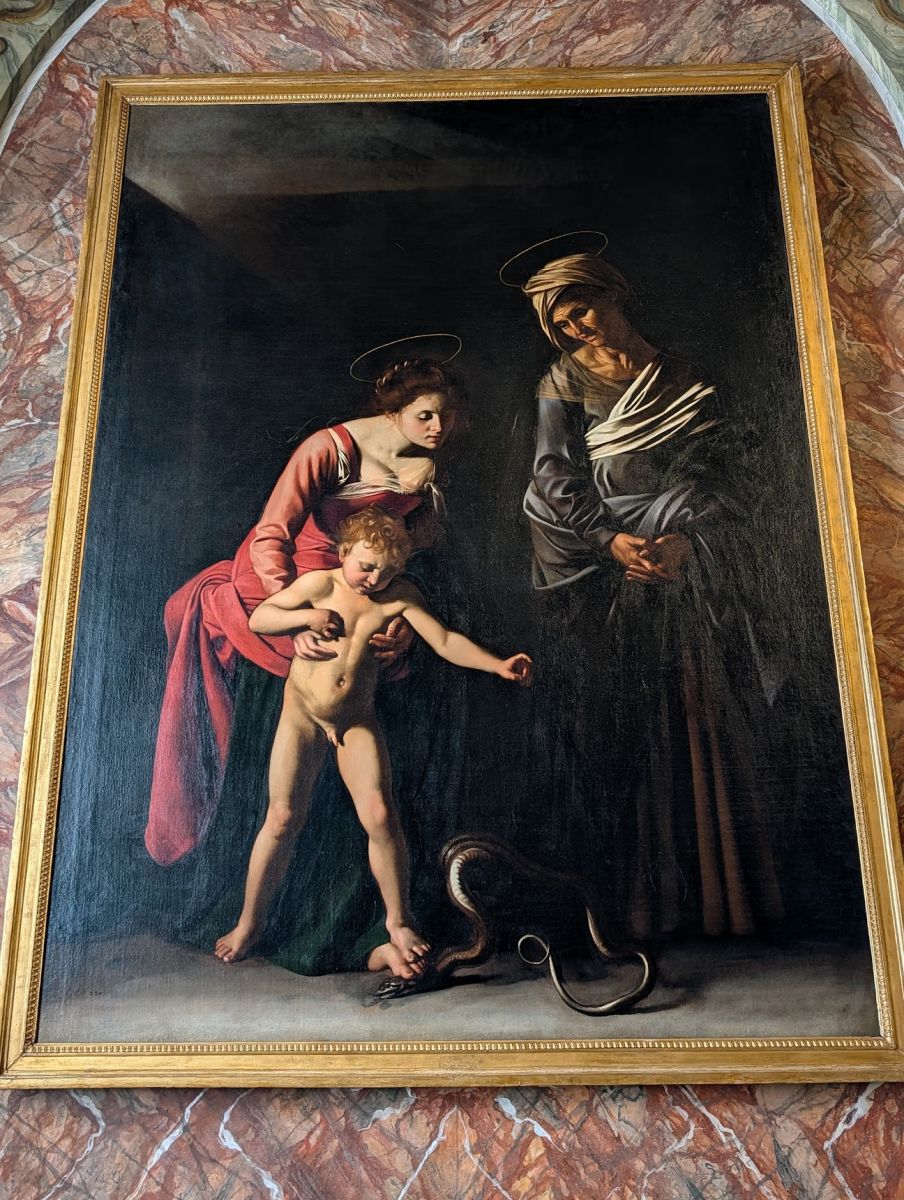
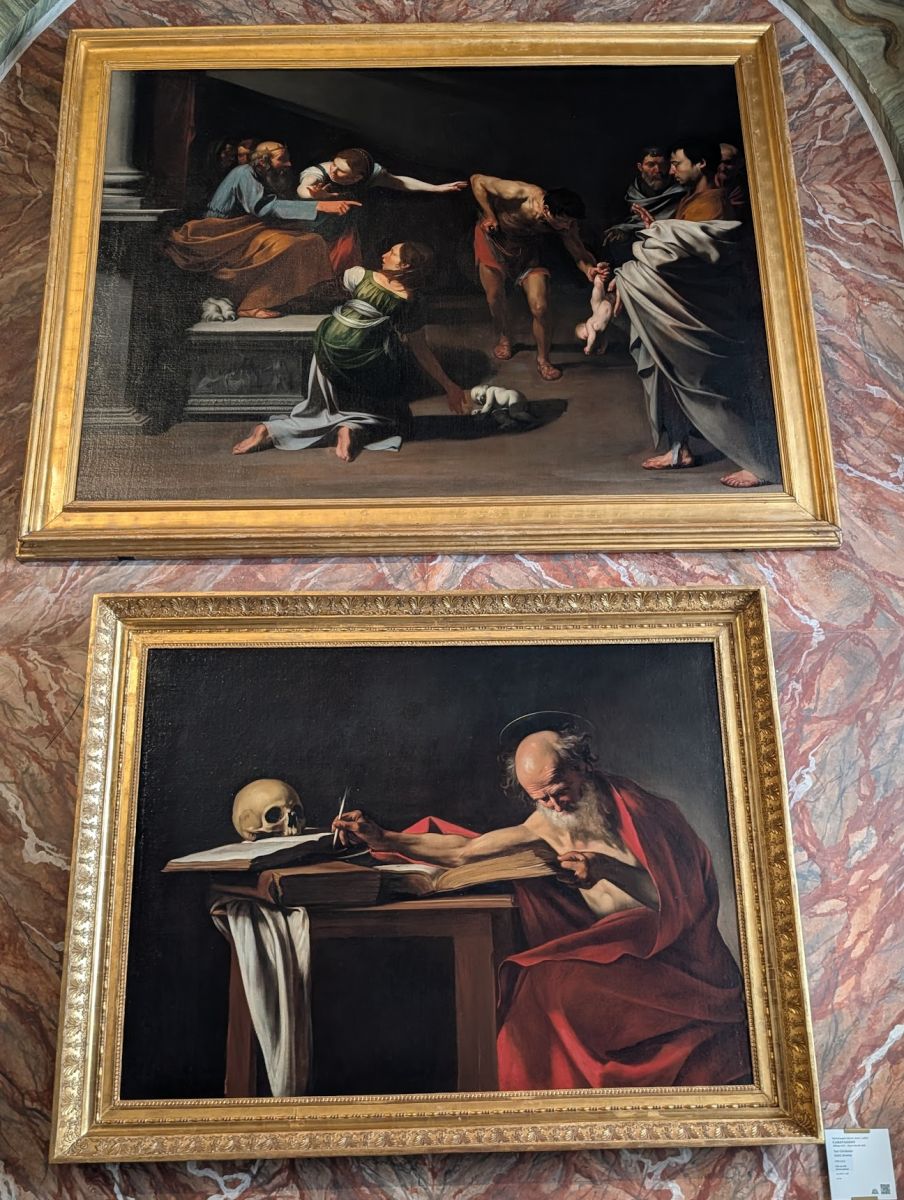
The gallery also features quite a few paintings by Caravaggio (whose real name was Michelangelo Merisi, but since Michelangelo was taken, he went by the town he was from: Caravaggio). His paintings have been characterized as combining a realistic observation of the human state, both physical and emotional, with a dramatic use of lighting, which had a formative influence on Baroque painting. He was also a scoundrel, frequently jailed for fighting, dueling, harassing city guards, possession of illegal weapons, and was once sued by a tavern waiter for having thrown a plate of artichokes in his face.
In 1606, Caravaggio killed a young man—a gangster from a wealthy family who Caravaggio had fought with many times—although the killing may have been unintentional. He was forced to flee Rome with a death sentence hanging over him. He fled to Naples, then Malta (where he was forced to flee to Sicily after wounding a Knight of Malta in a fight), then back to Naples.
David with the Head of Goliath
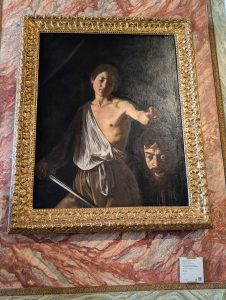
While in Naples, Caravaggio was attacked, ambushed perhaps by men of the Knights of Malta in retribution for wounding one of theirs. Caravaggio’s face was severely disfigured. A short-while later he painted David with the Head of Goliath, showing the young David with a sorrowful expression gazing at the severed head of Goliath, which is a self-portrait of Caravaggio. He reportedly sent the painting to his patron, Cardinal Scipione Borghese, who had the power to grant pardons. Caravaggio hoped Borghese could mediate a pardon in exchange for this and other paintings.
Young Sick Bacchus (aka Self-Portrait as Bacchus)
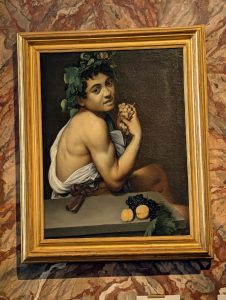
This is an early painting by Caravaggio, dated shortly after his arrival in Rome in 1592. At one point, Caravaggio fell extremely ill and spent six months in the hospital. Scholars believe he may have had malaria. The painting, which is a self-portrait depicting a young Bacchus with yellowish skin and eyes, adds to that theory. This painting was among the many works in the collection of Giuseppe Cesari, one of Caravaggio’s early patrons, which was seized by the Cardinal Scipione Borghese in 1607, together with the Boy Peeling Fruit and Boy with a Basket of Fruit. Cardinal Borghese’s uncle, the Pope, had Cesari jailed on made-up charges so that his art collection could be seized.
More Caravaggio Paintings
Pauline Bonaparte as Venus Victrix (“Venus Victorious”)
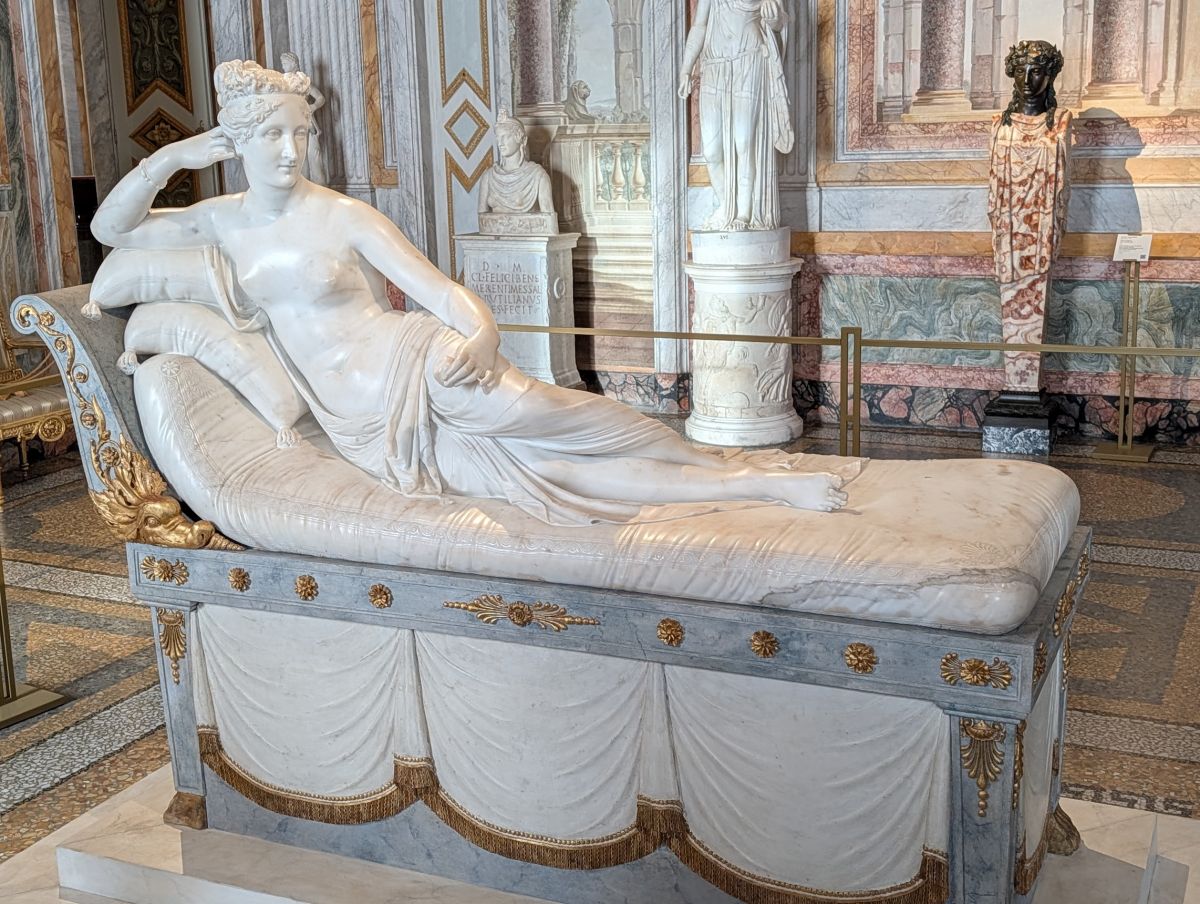
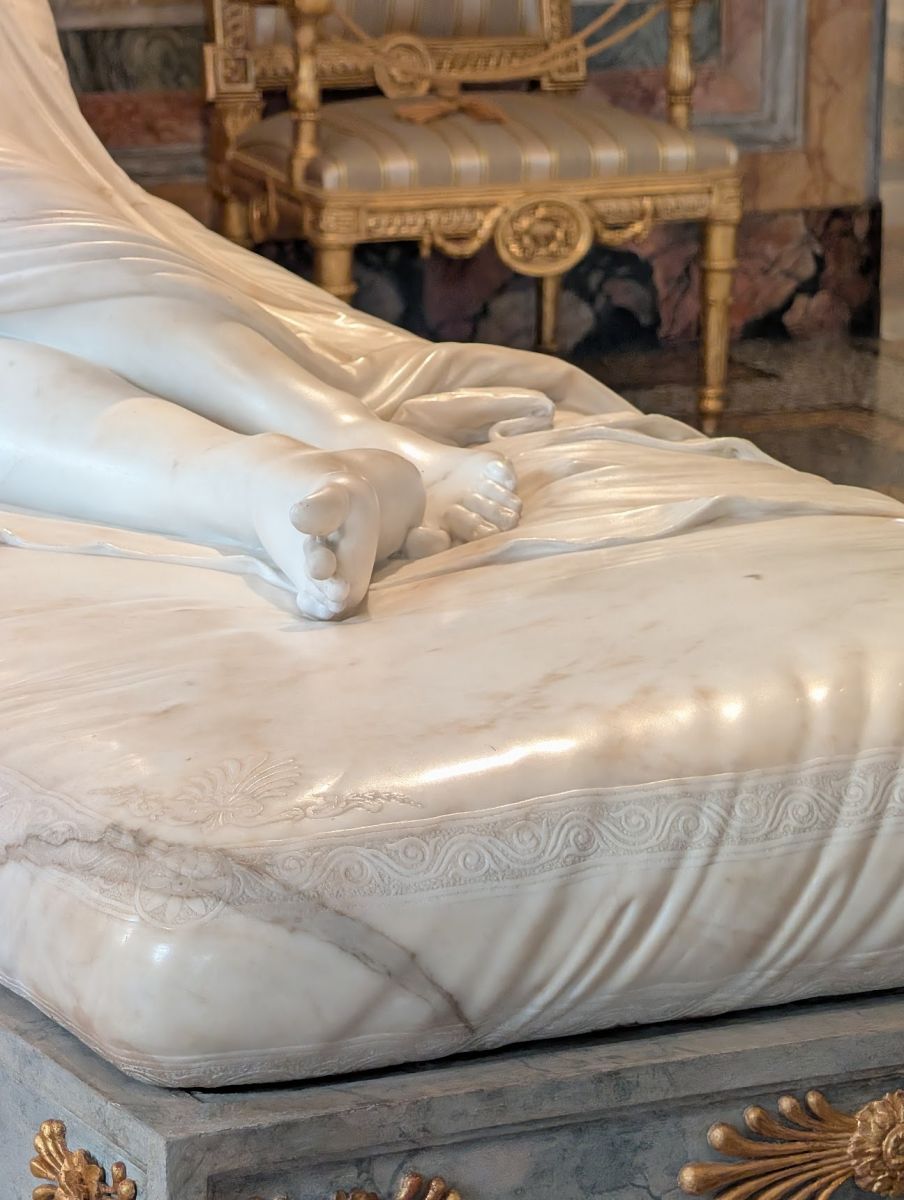
This sculpture by Canova depicts Pauline Bonaparte, sister of Napoleon and wife of Camillo Borghese, as a nude Venus. At the time, nude sculptures were rare, particularly depicting those of high rank. Some believe she didn’t actually pose nude, as only the face is a realistic depiction while the body is more conforming to an idealized form. Pauline, however, was not one to dissuade the idea that she posed nude, once quipping that posing naked in front of Canova wasn’t a problem because Canova “was not a real man”, and that the room was too warm to pose dressed.
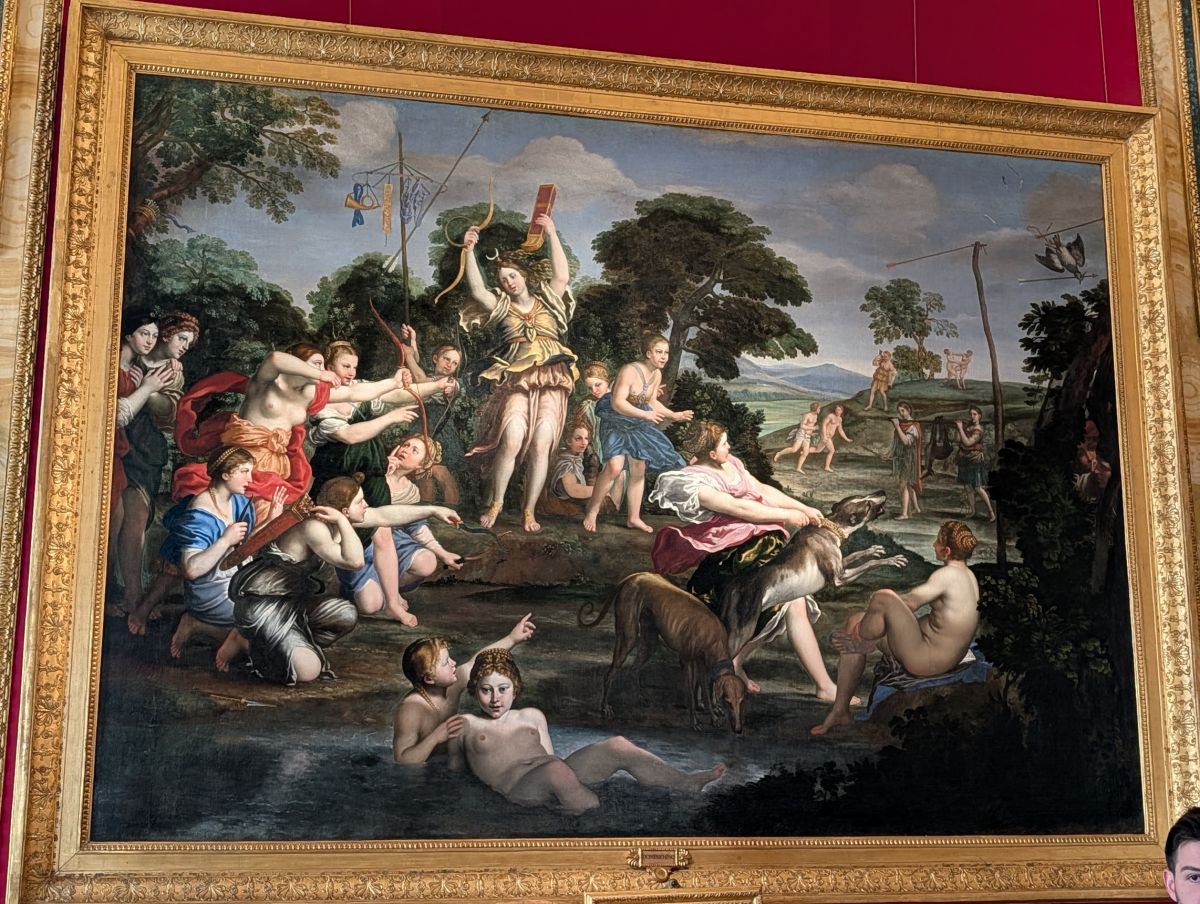
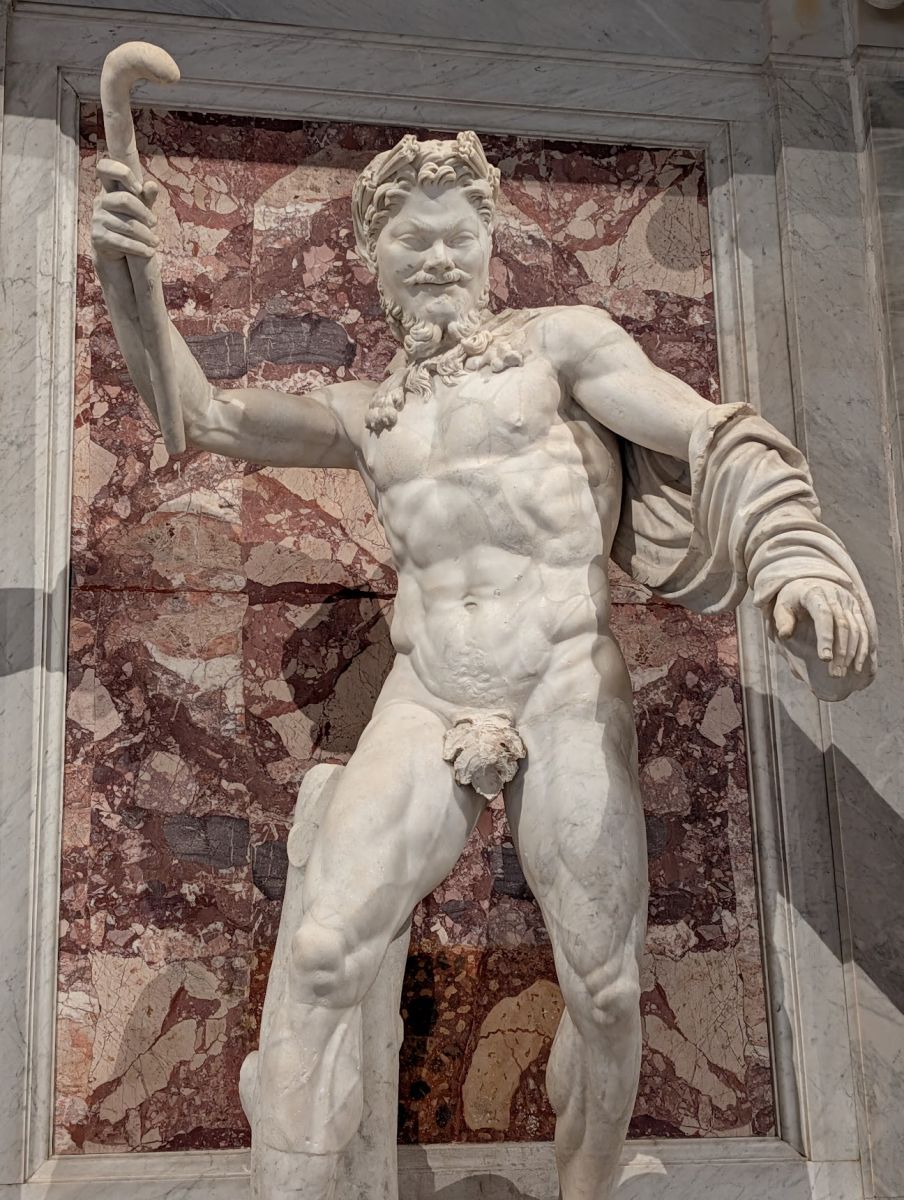
There are more photos from the Borghese Gallery at the end of the post.
Villa Borghese (public park)
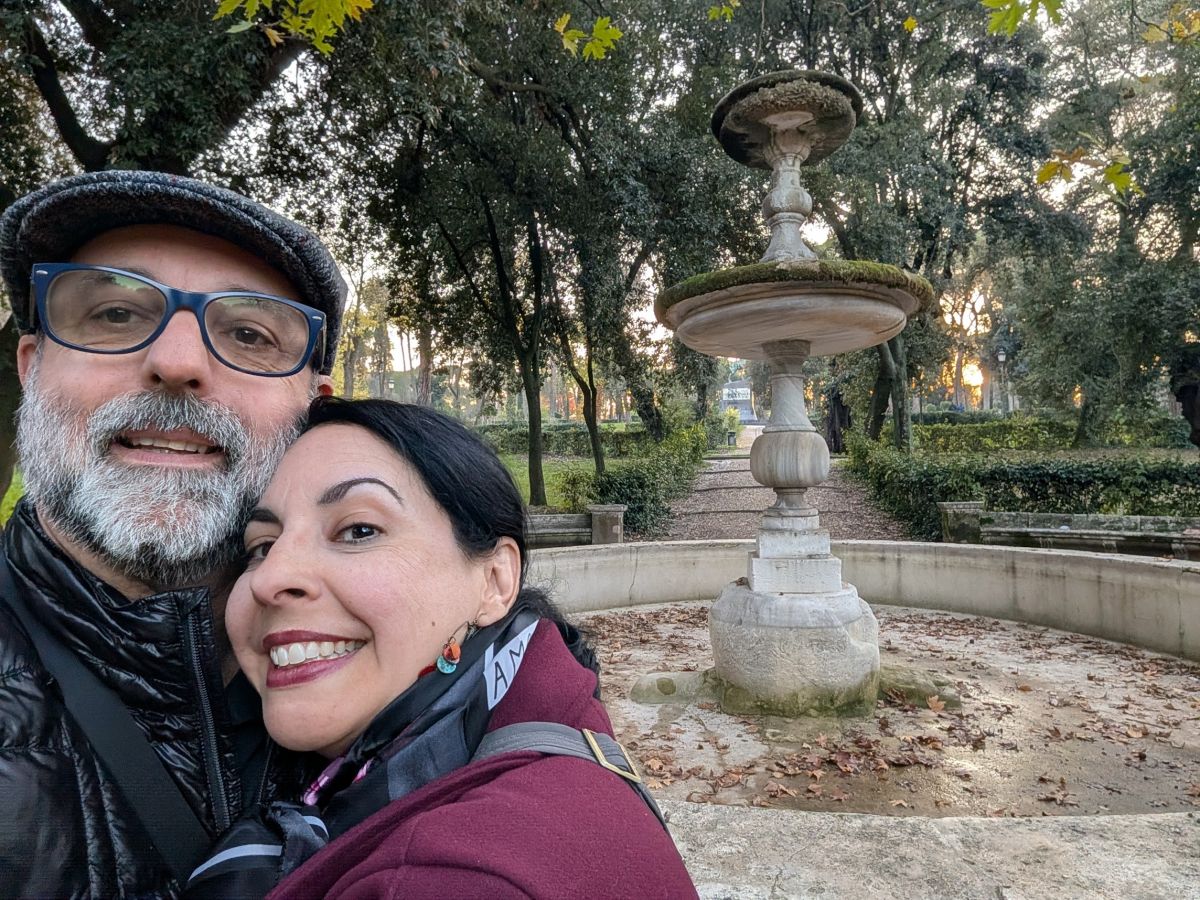
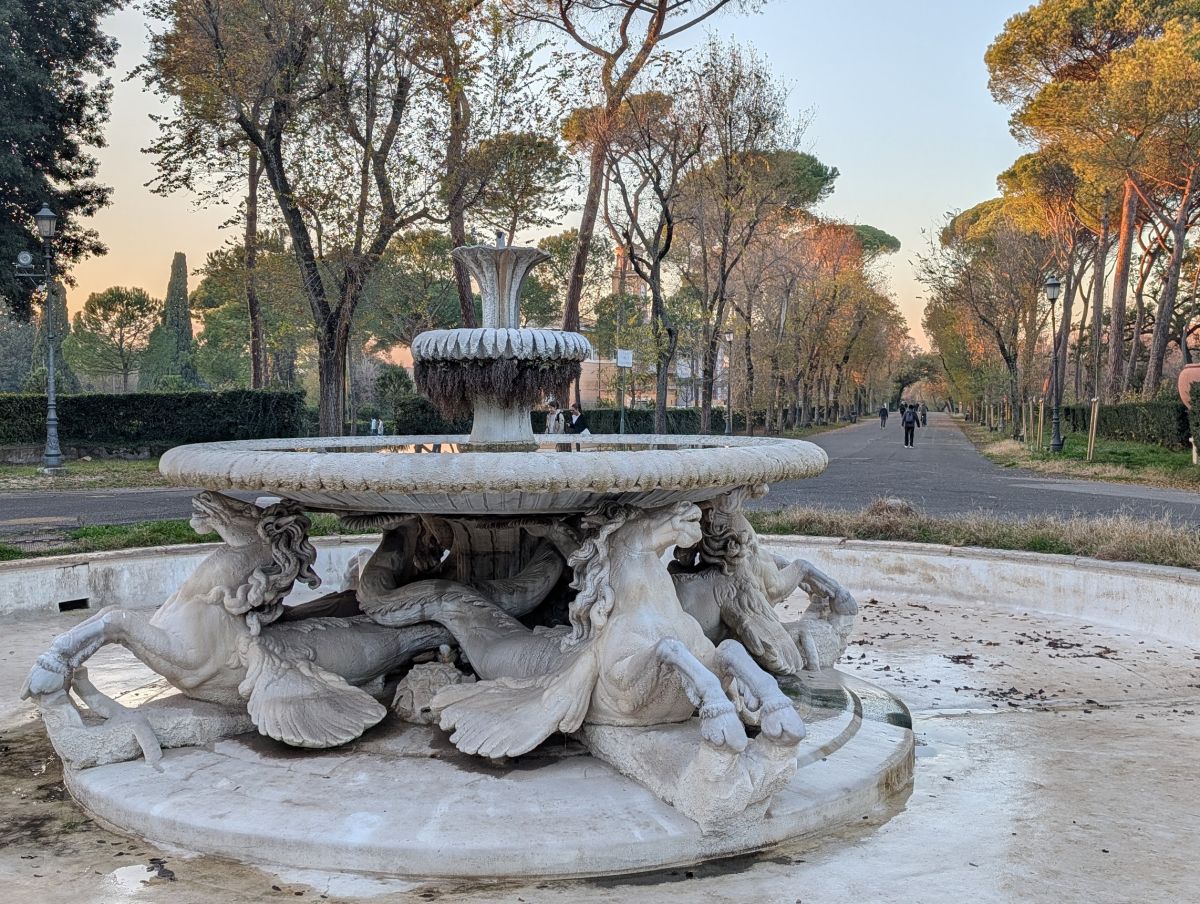
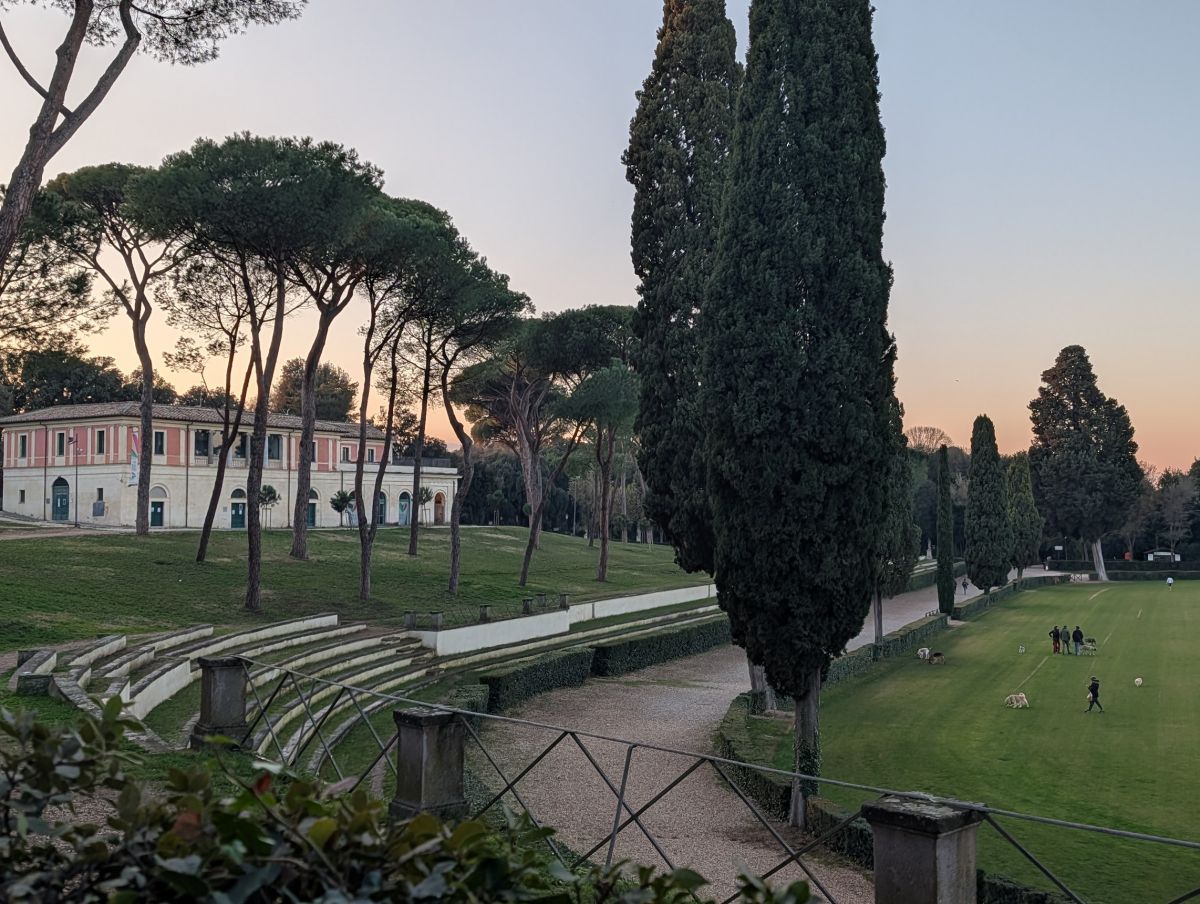
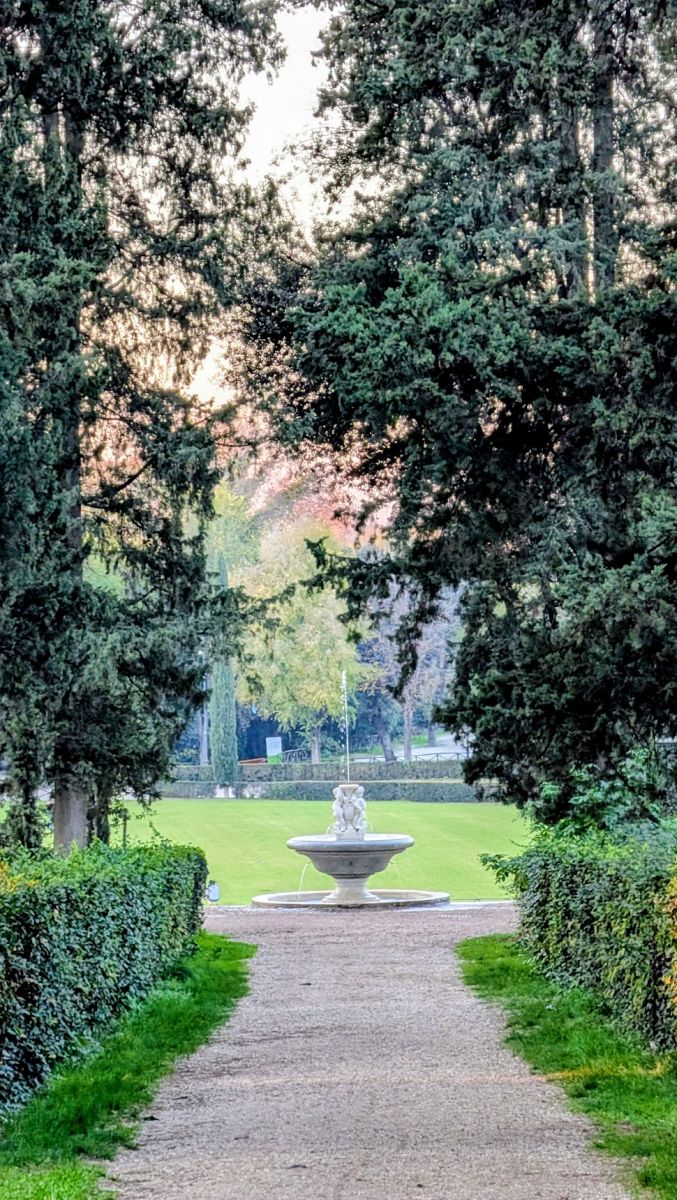
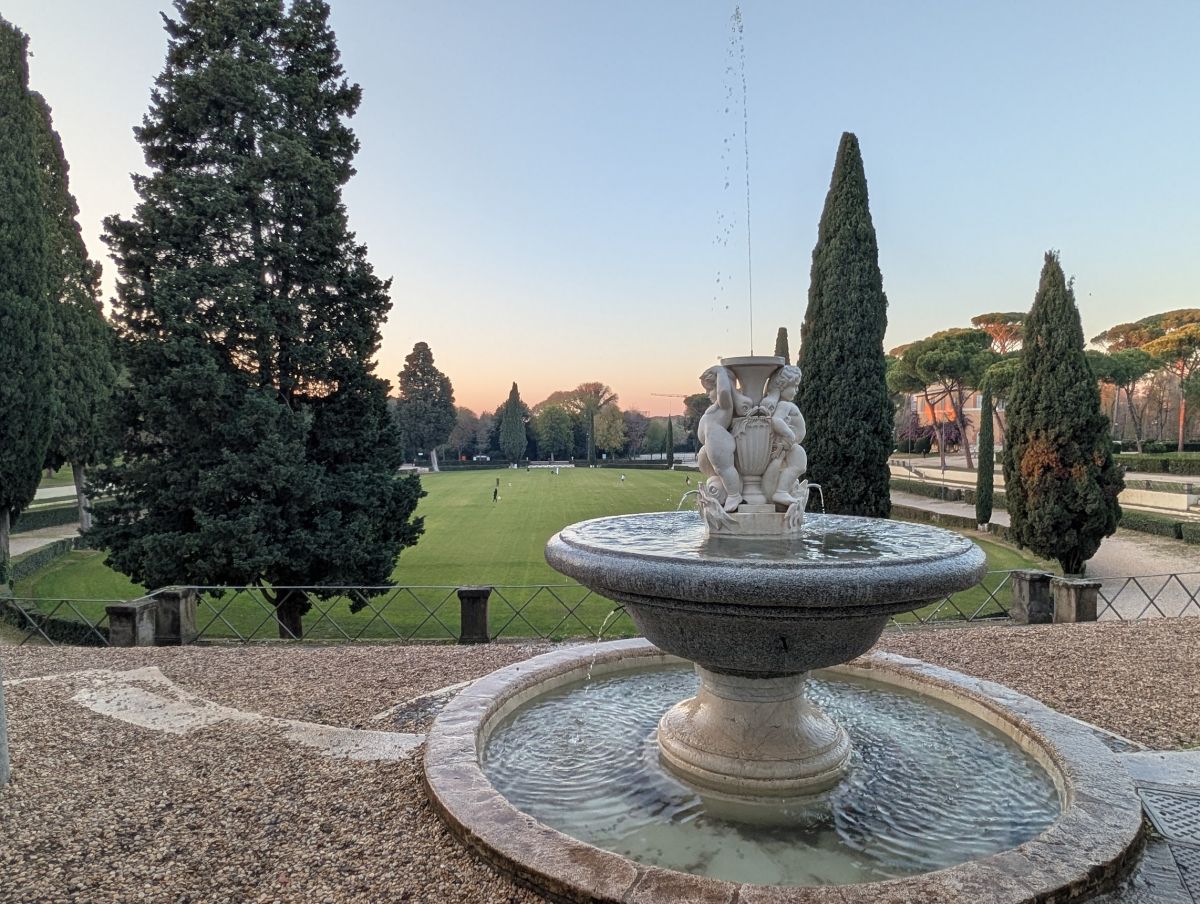
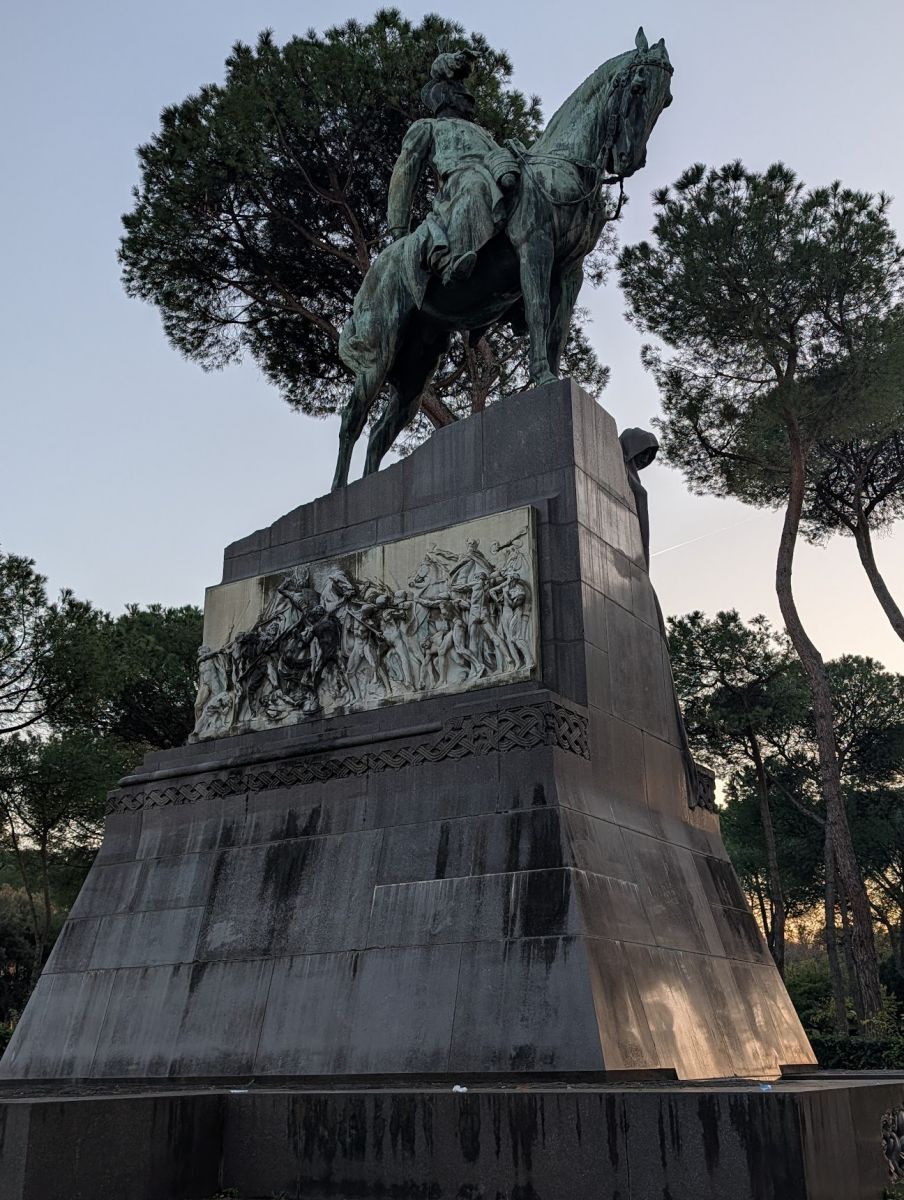
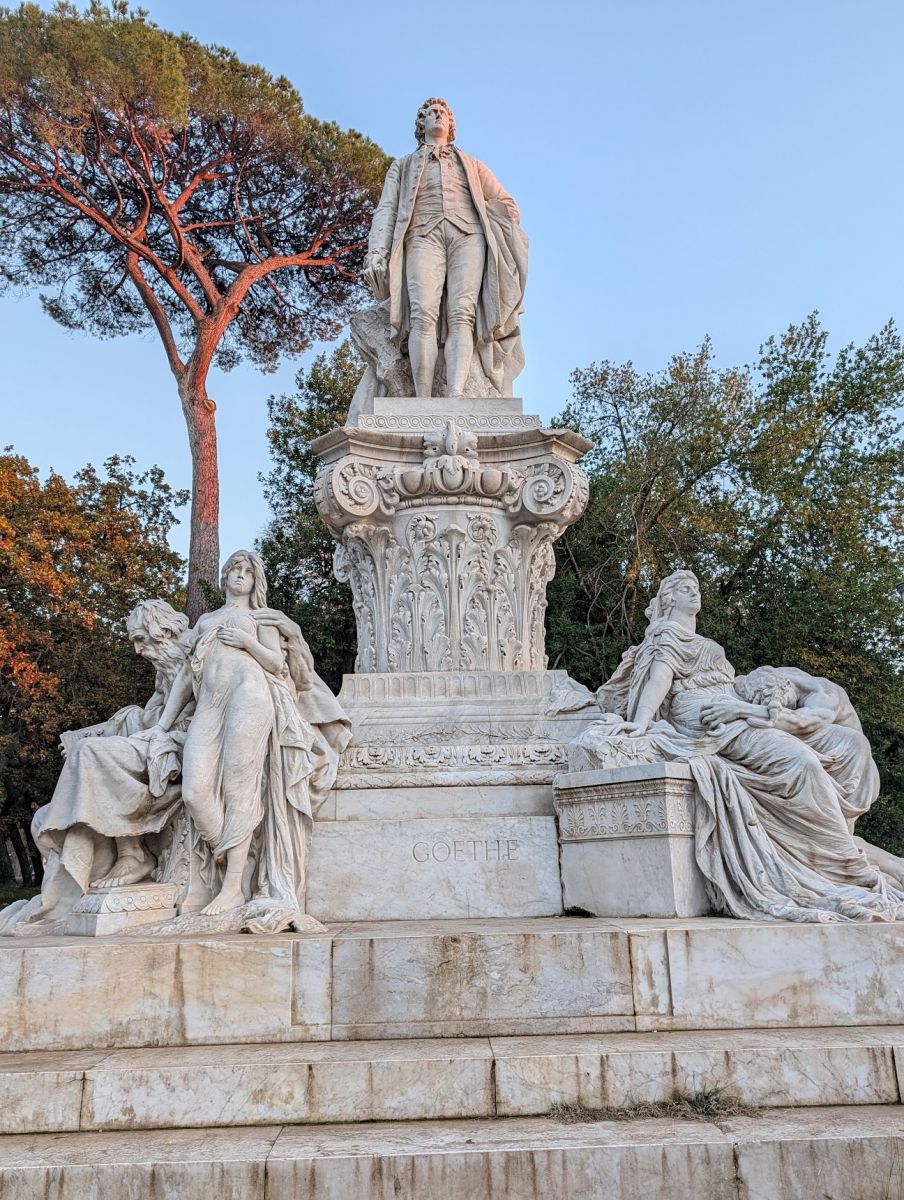
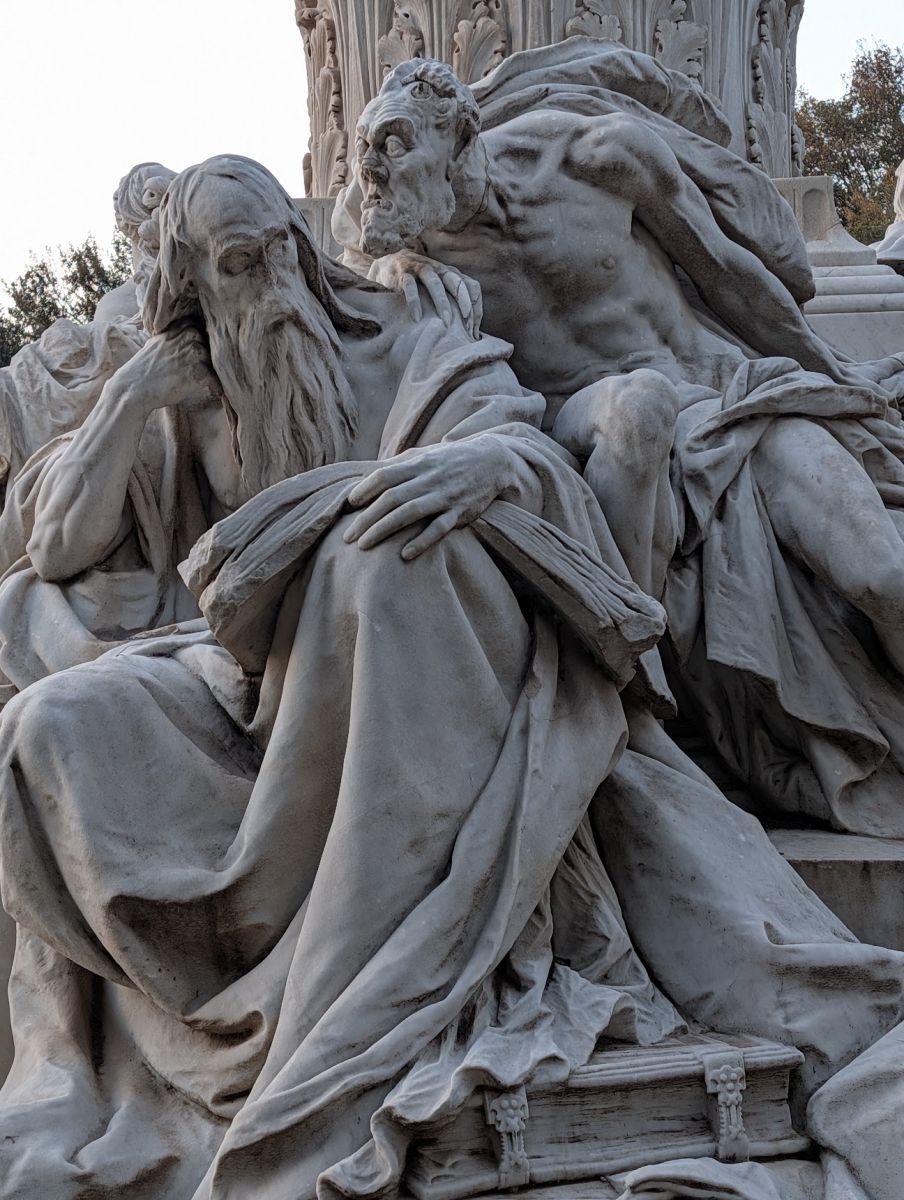
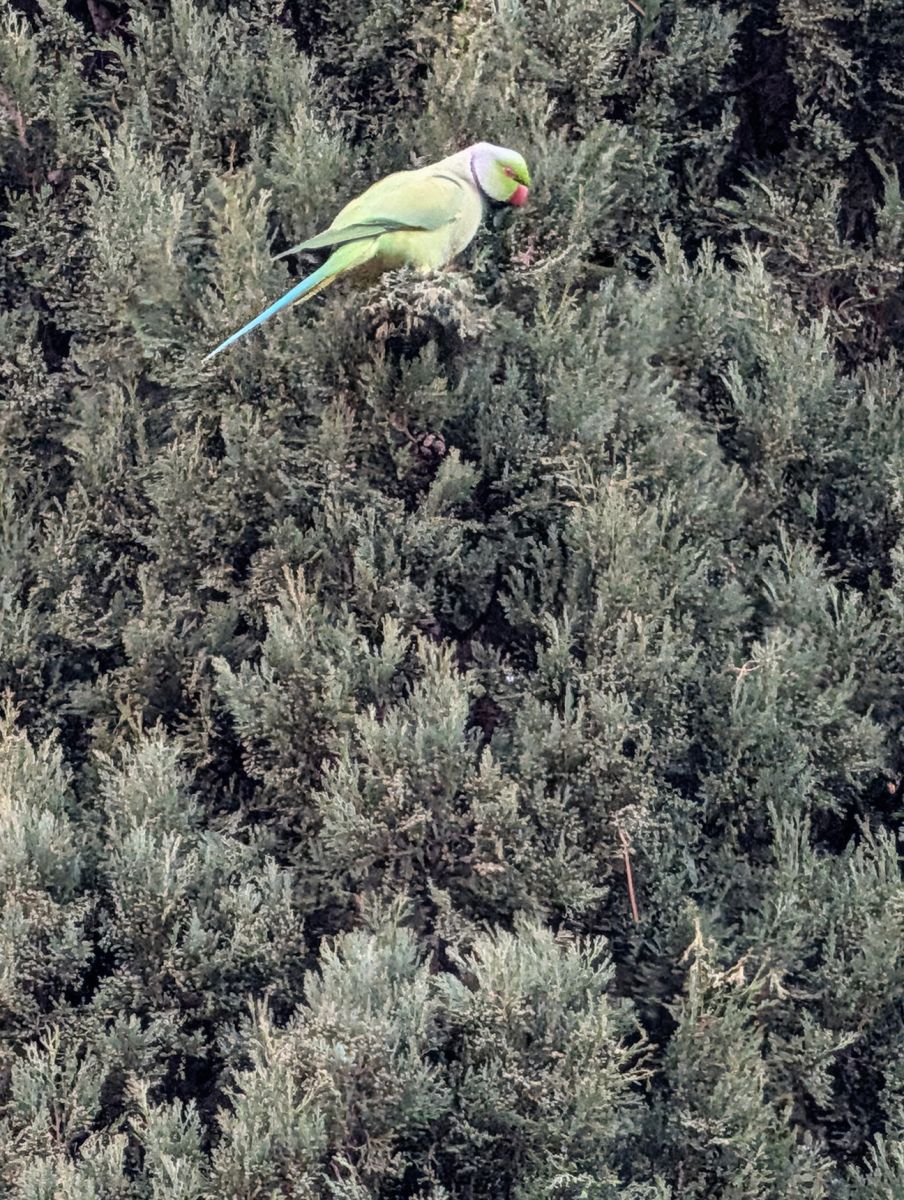
The park in which the Borghese Gallery is located is Villa Borghese, the third largest public park in Rome. It became a public park after the Borghese family was forced to sell all their holdings to the city of Rome due to mounting debt. If you visit the Borghese Gallery, be sure to leave time to walk through the park.
After Borghese, we went to San Marco Ristorante. The food was good, especially the Argentinian beef, but the service wasn’t. Our waiter went home part way through and forgot to tell his colleagues the rest of our order. We never received our wine or water, and had to hunt someone down to get the bill.
Photo Galleries
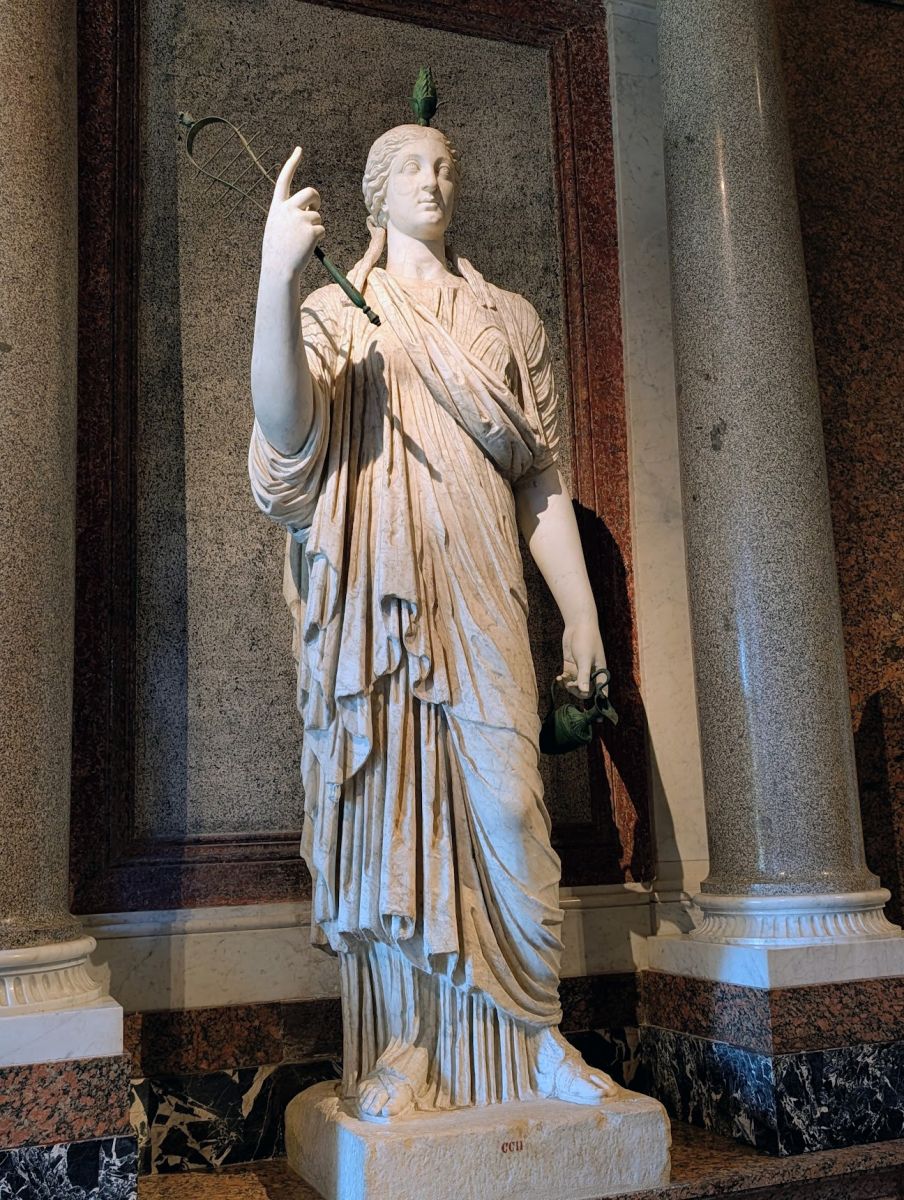
Borghese Gallery Photos
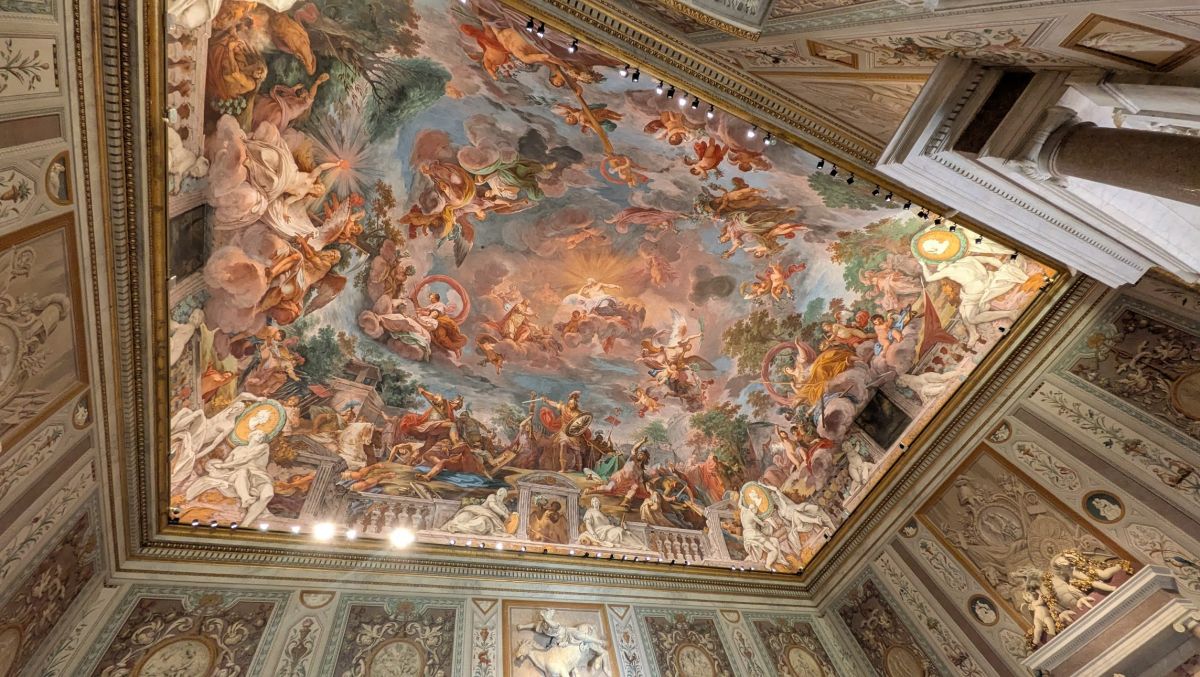
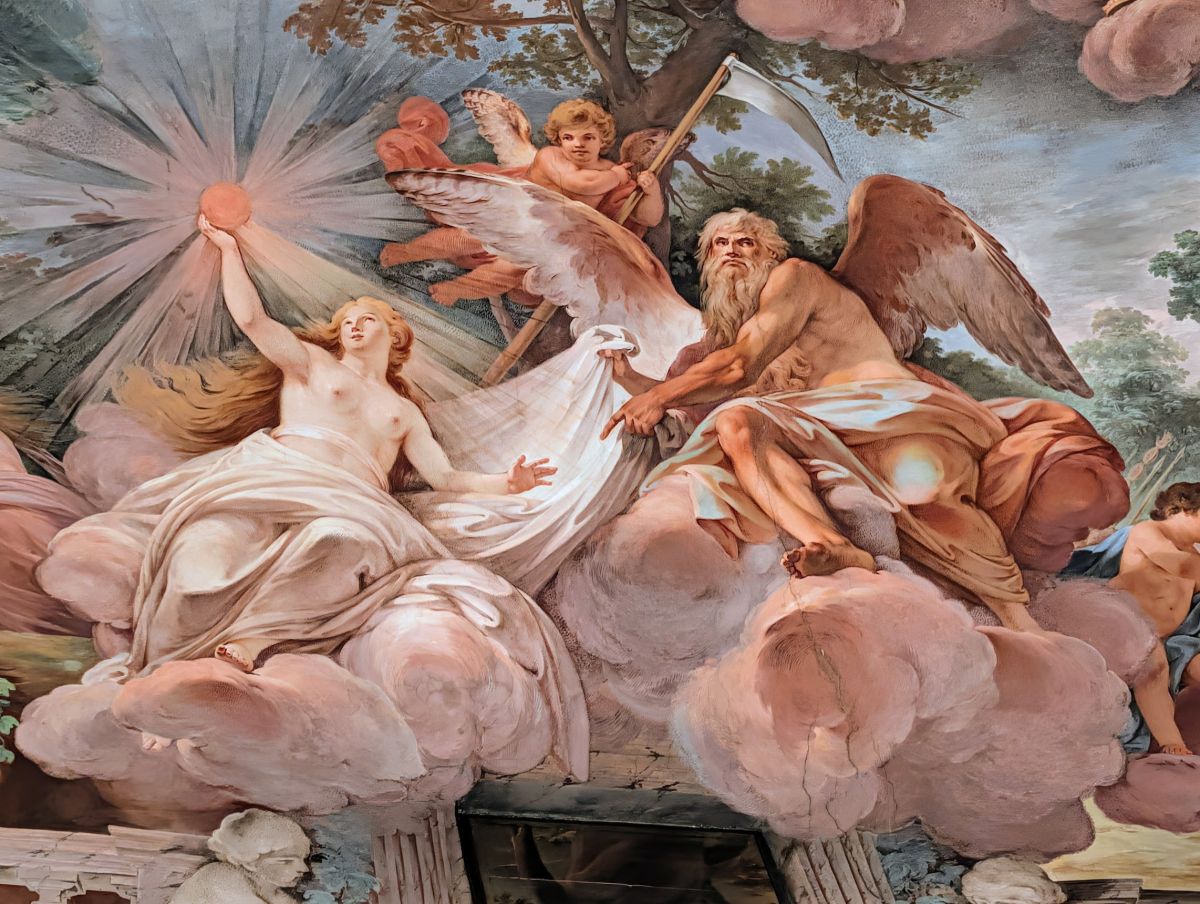
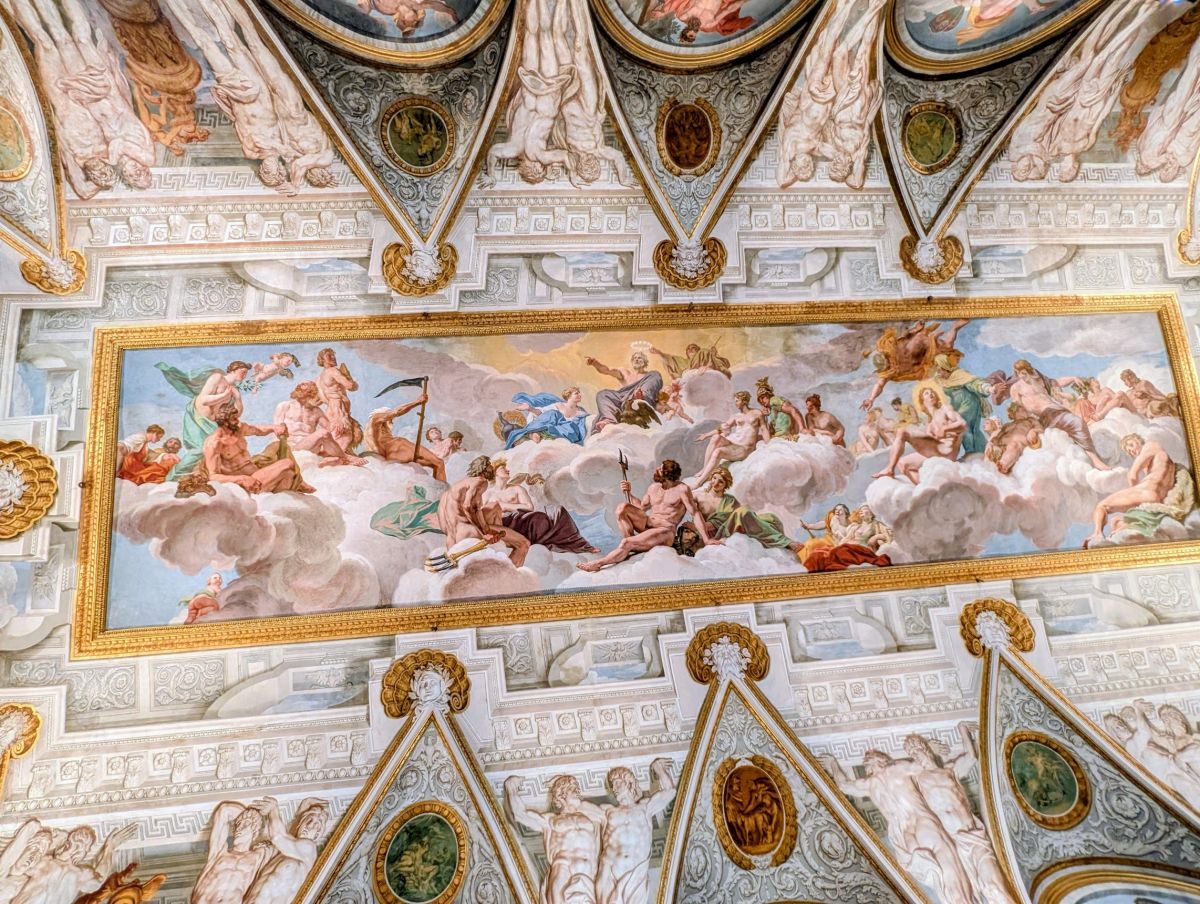
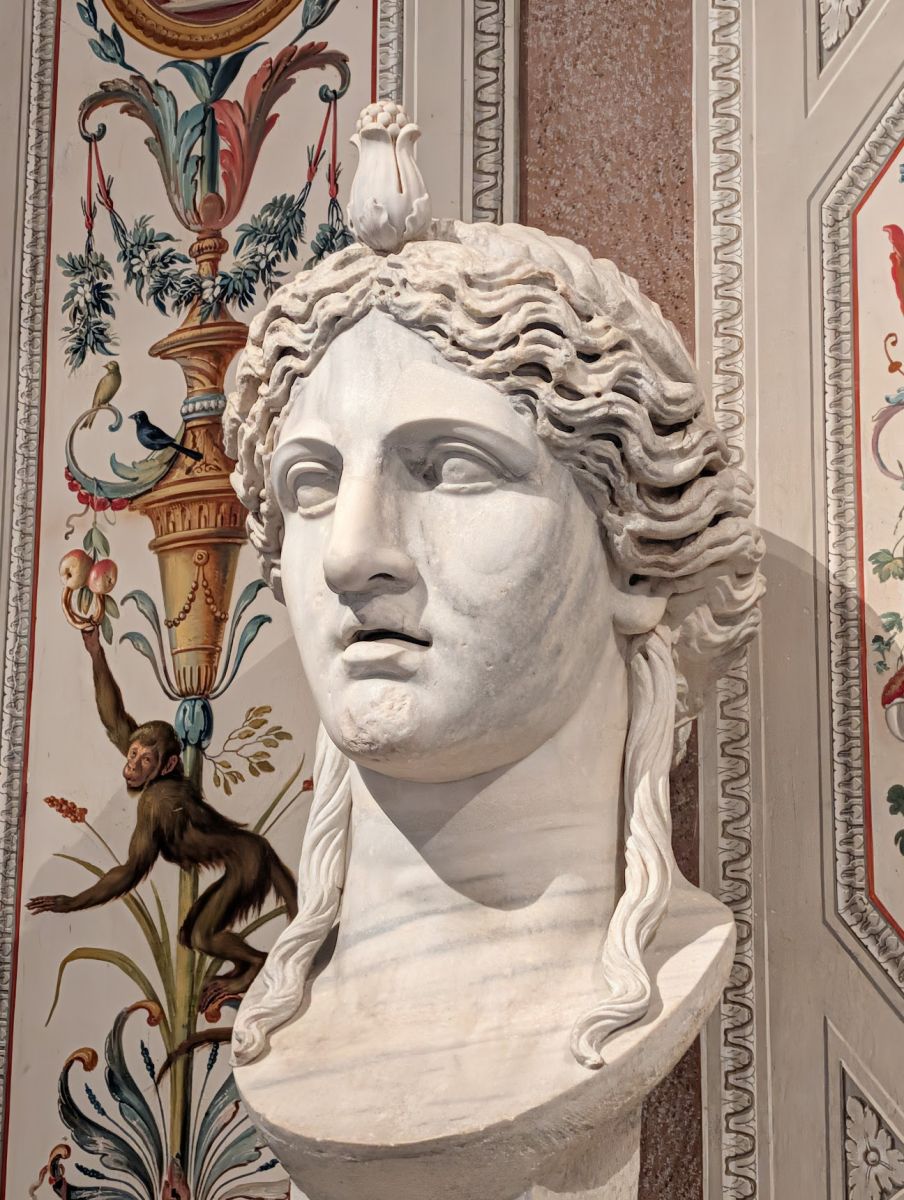
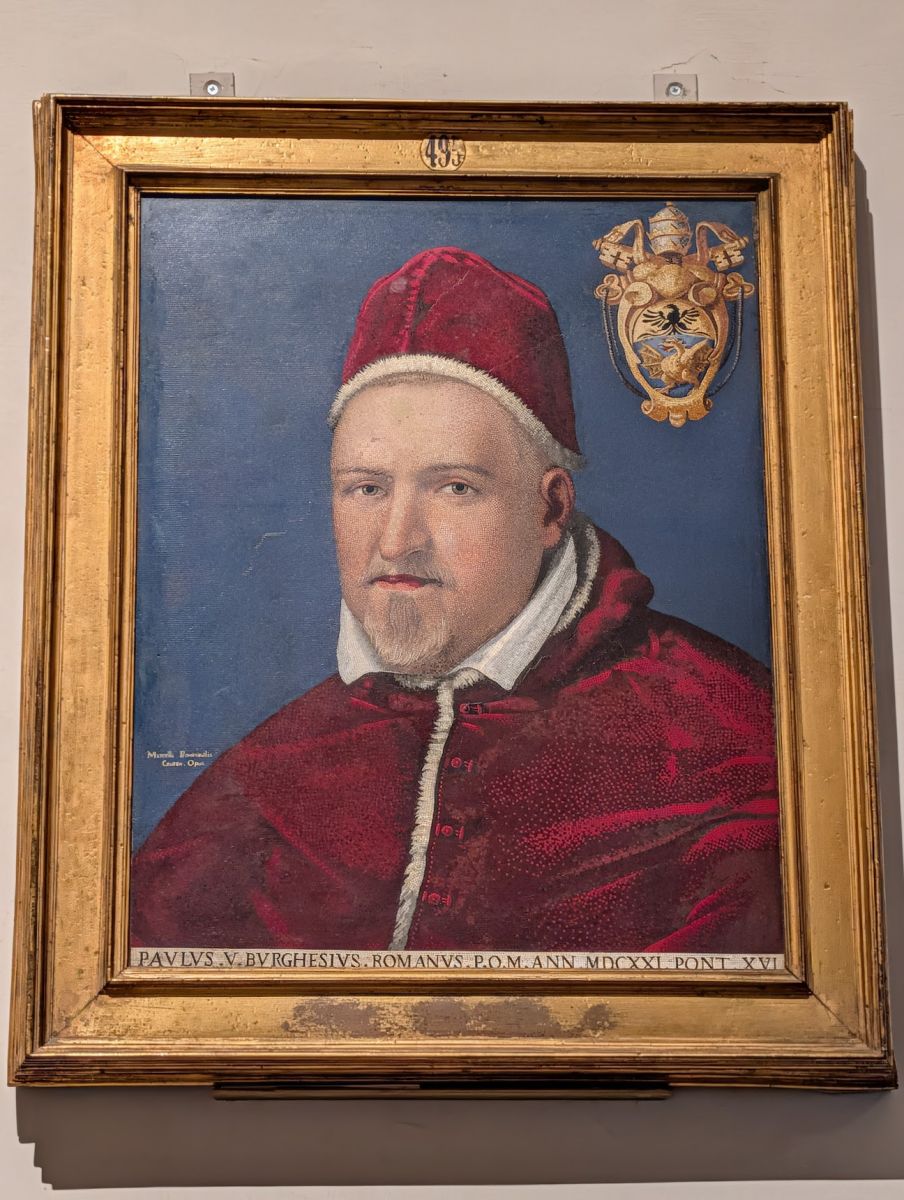
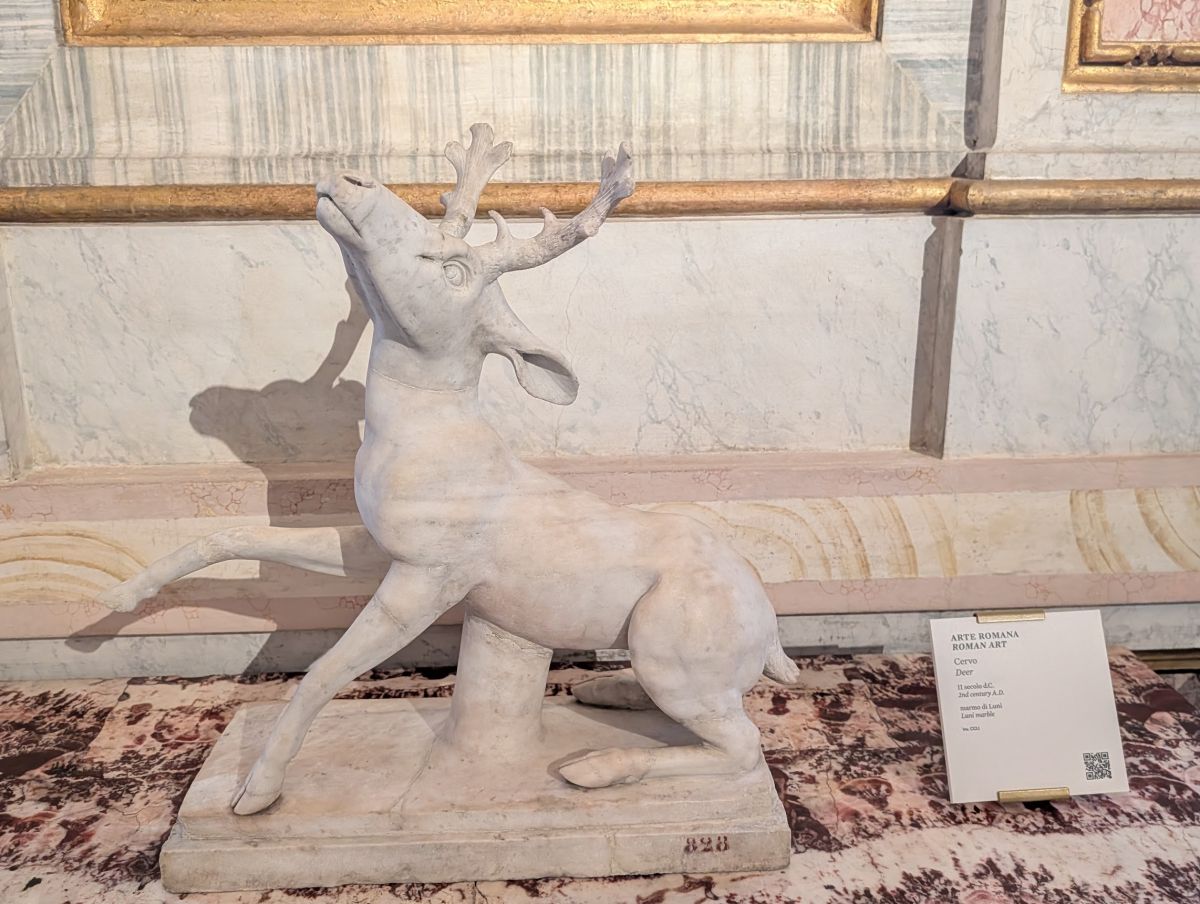
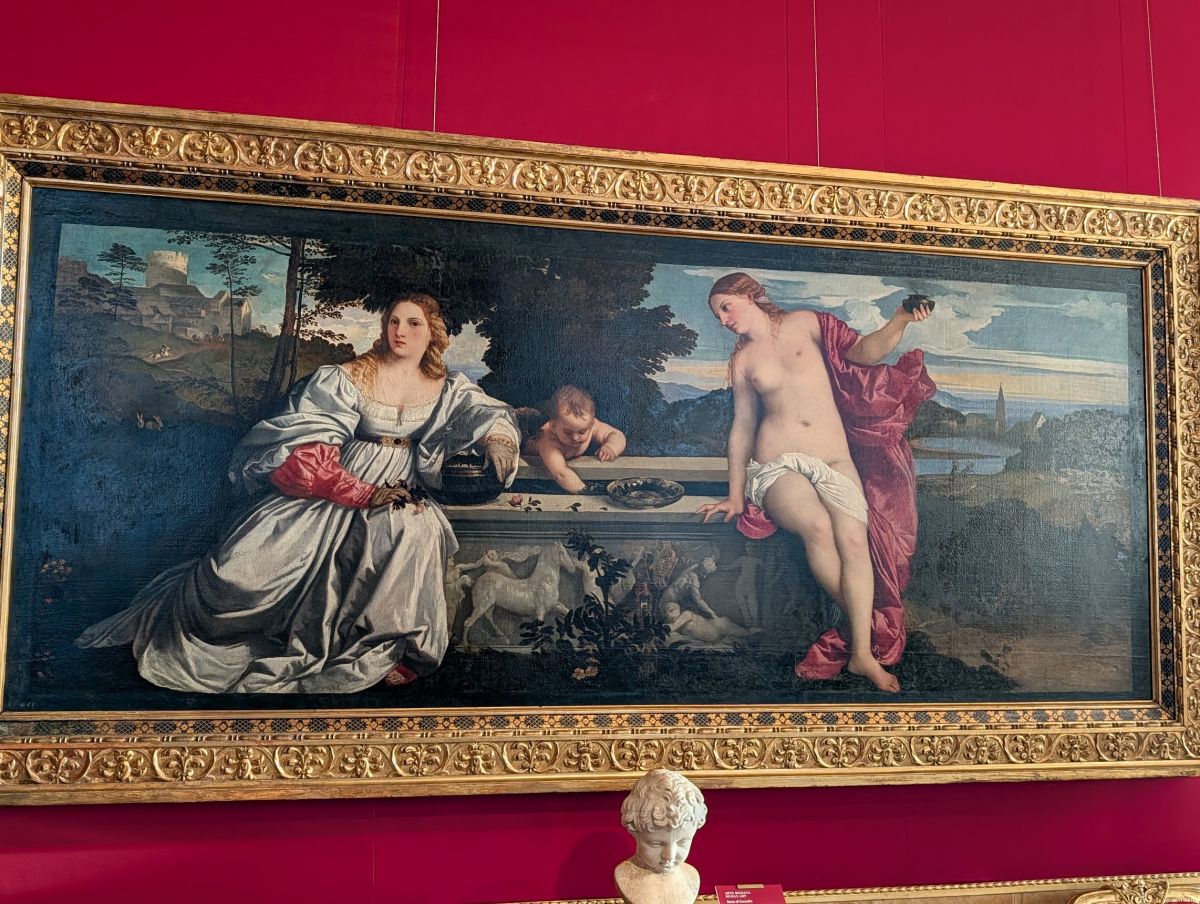
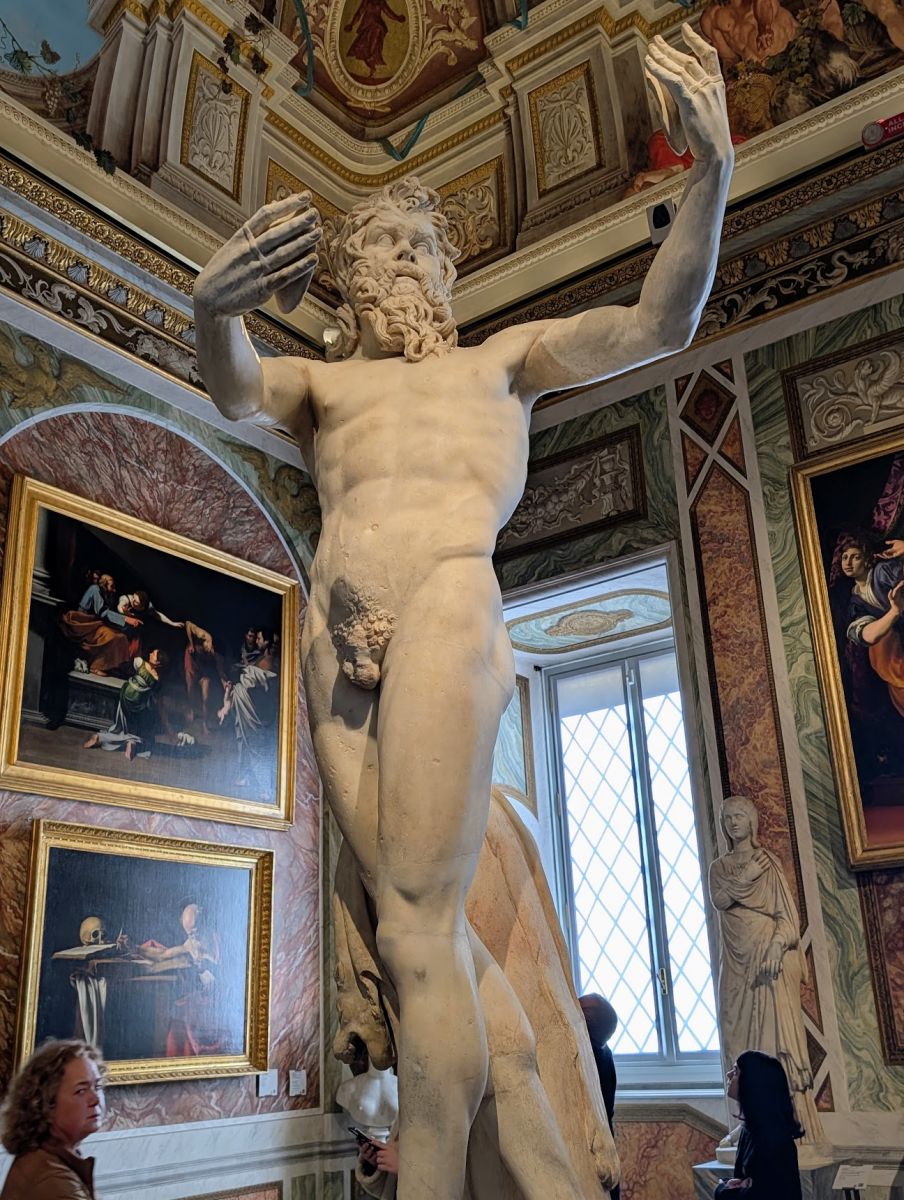
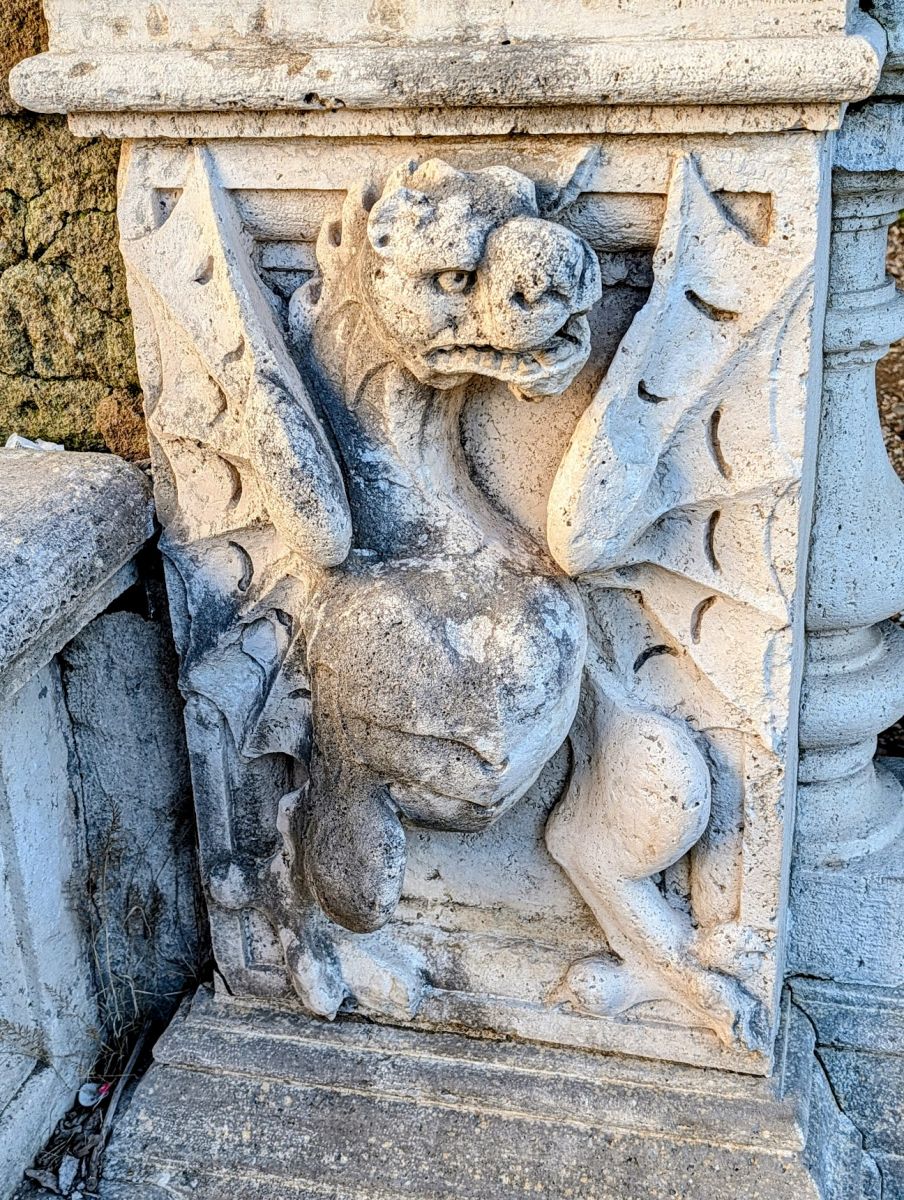
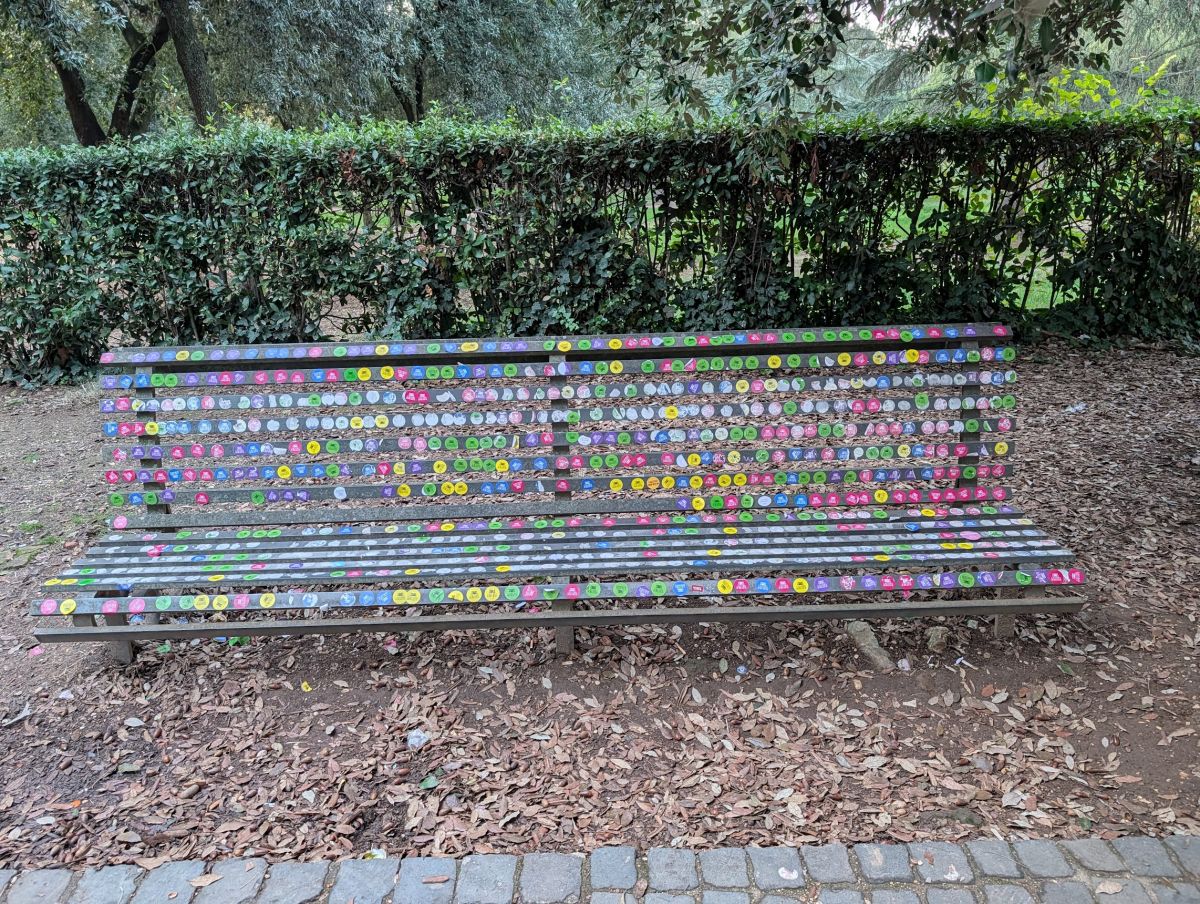
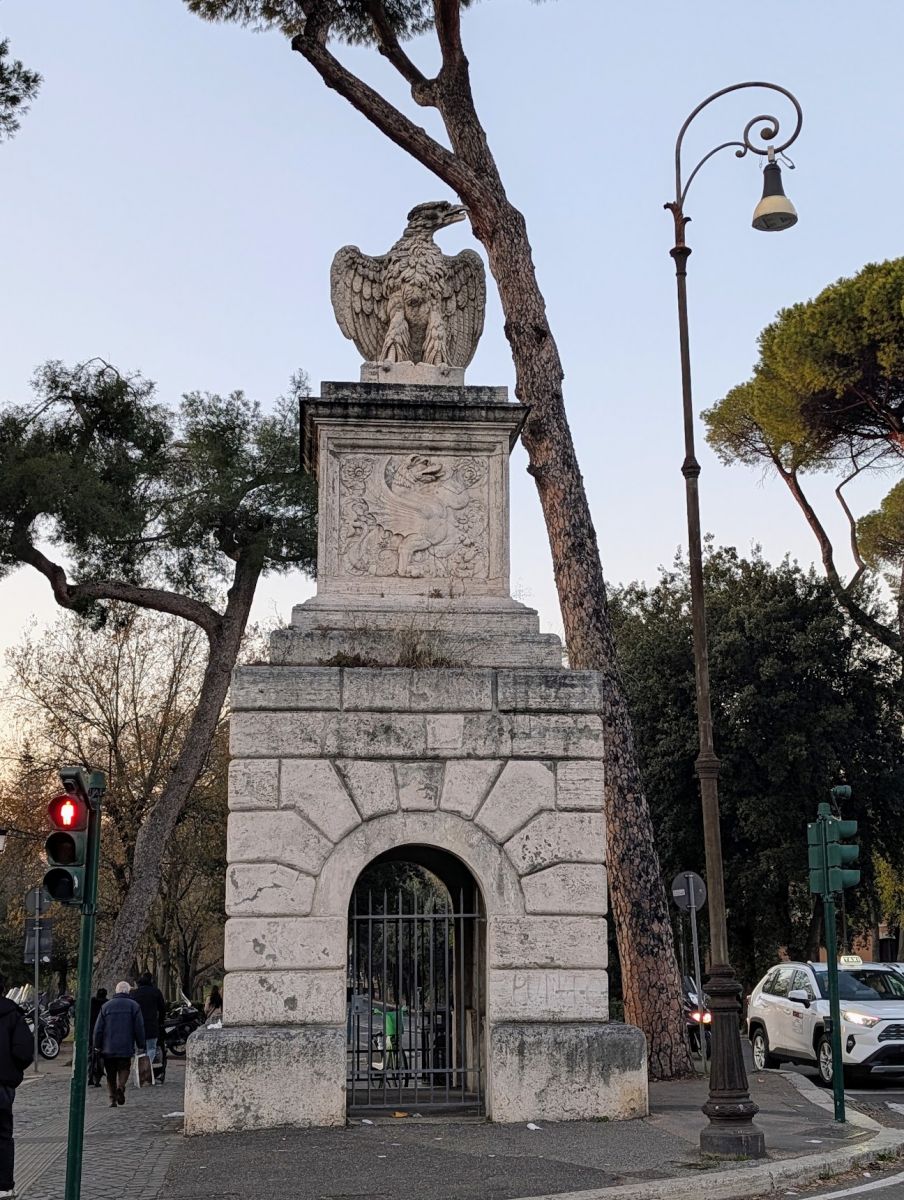
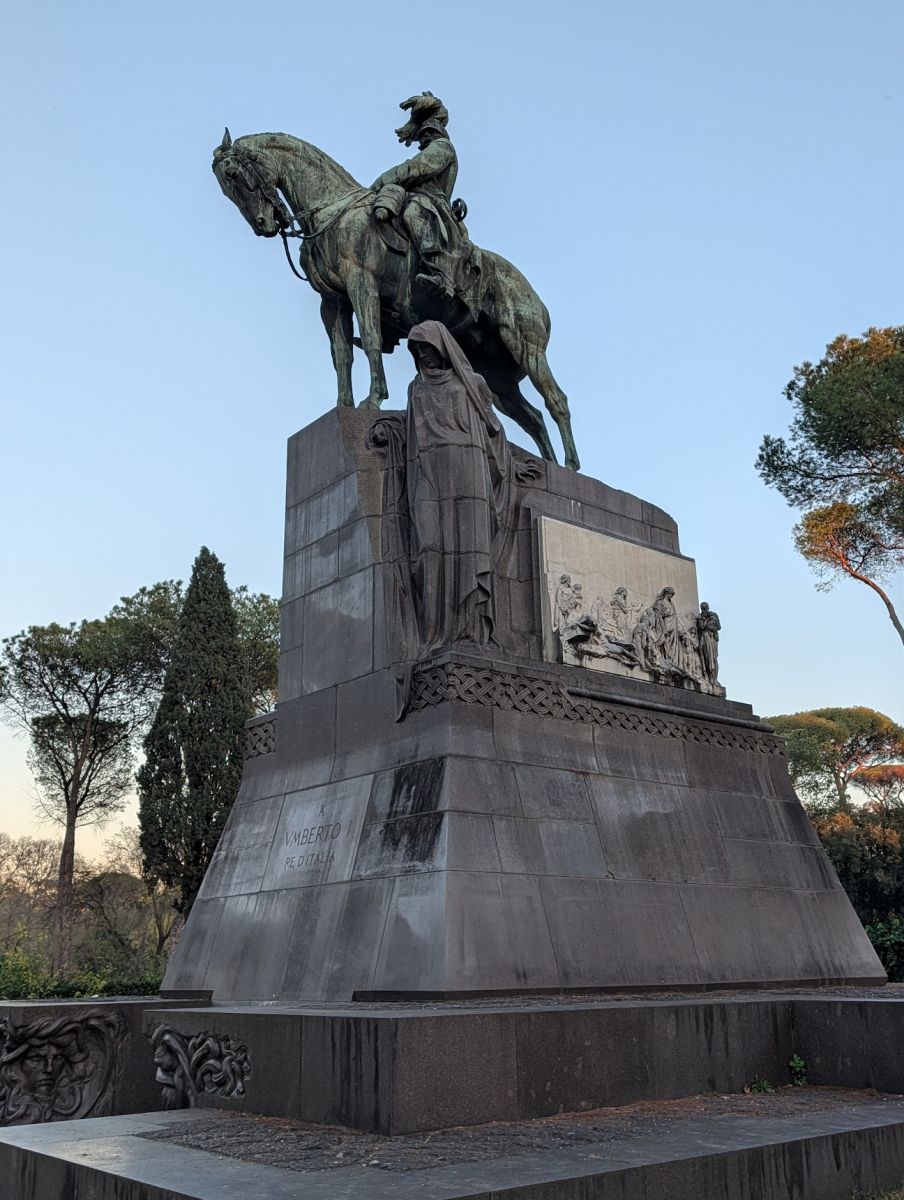
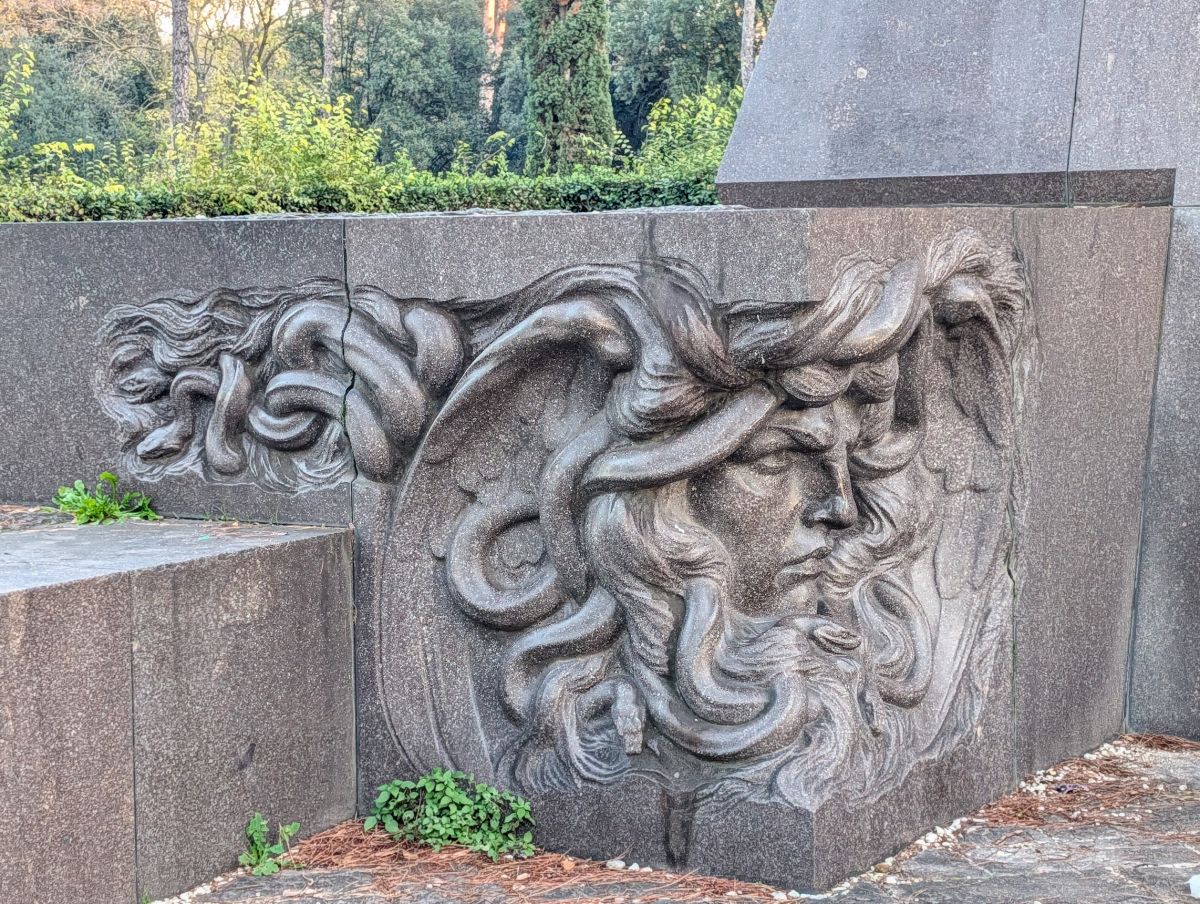
Villa Borghese Photos
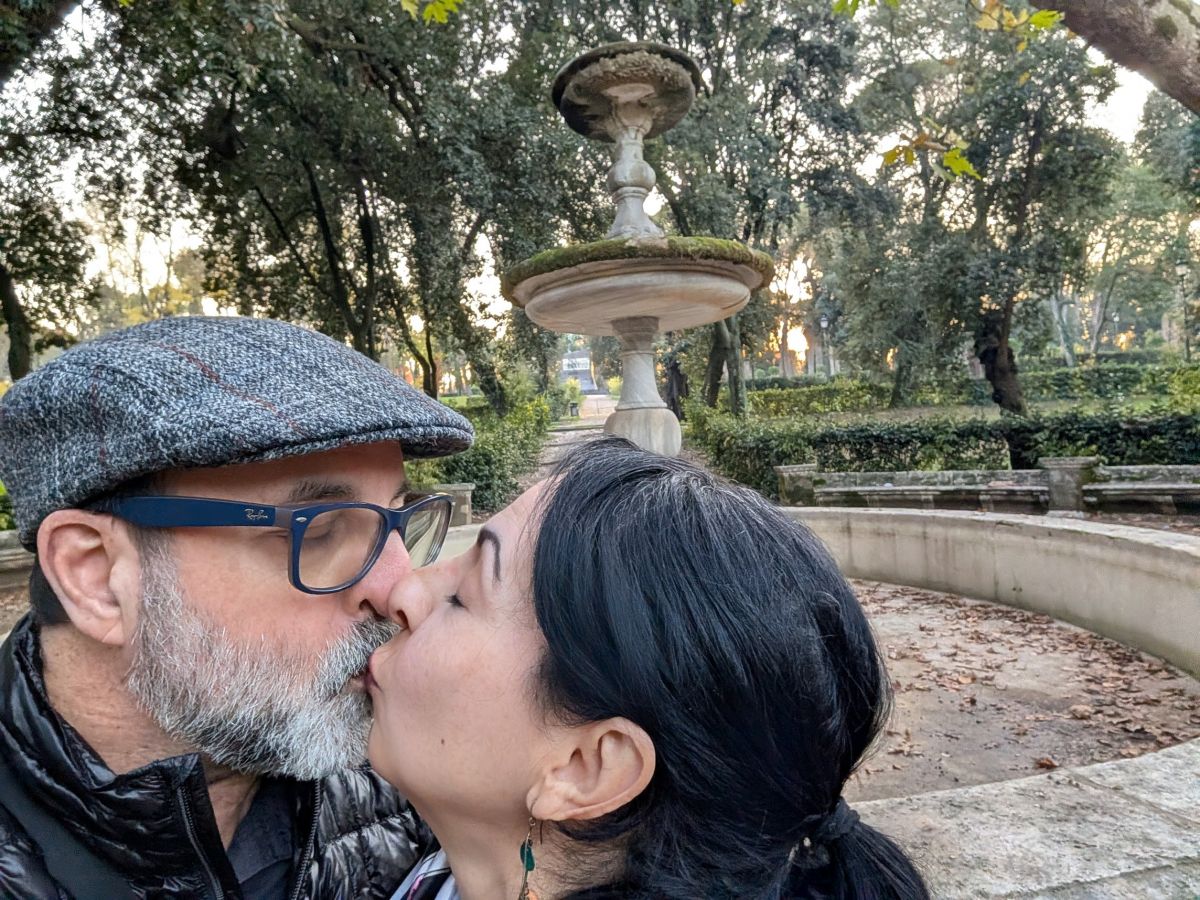
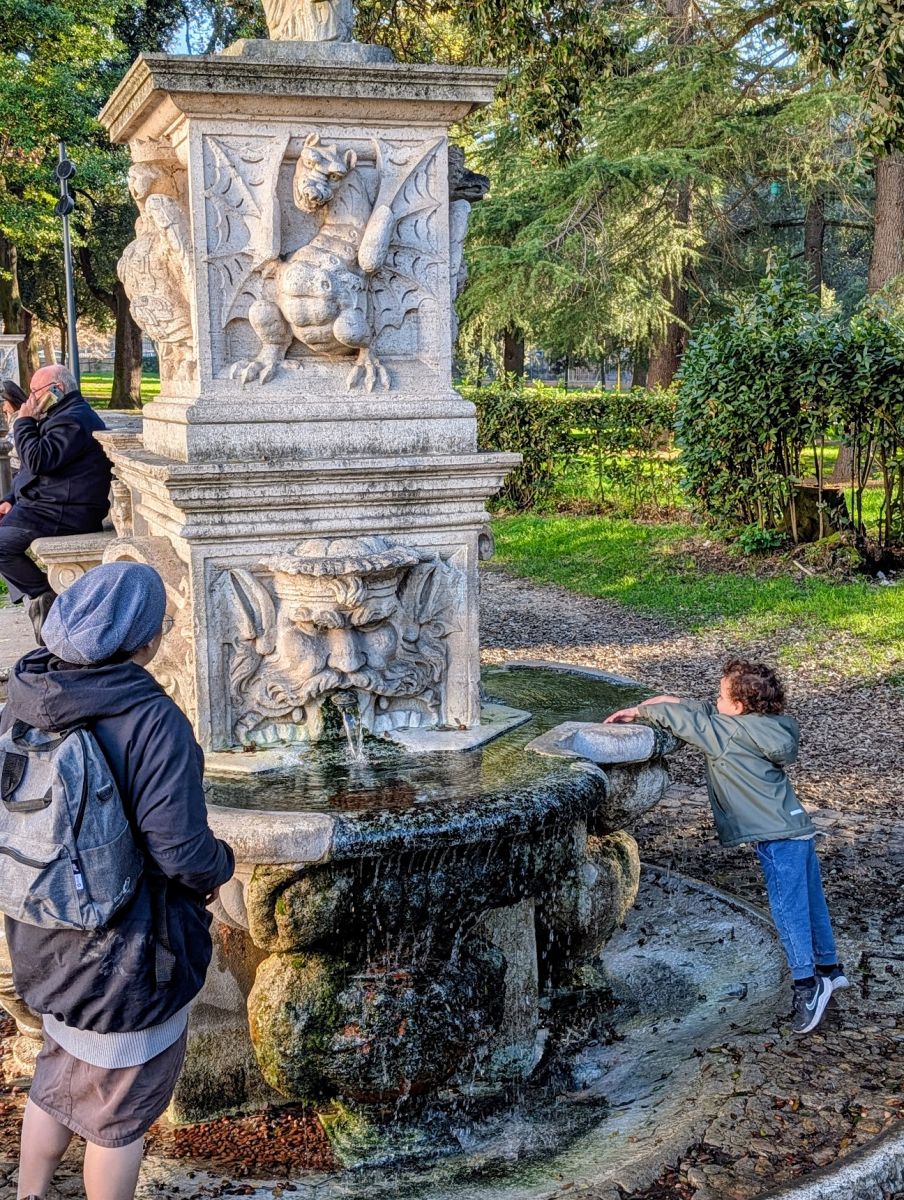
Out and About in the Area Around Villa Borghese
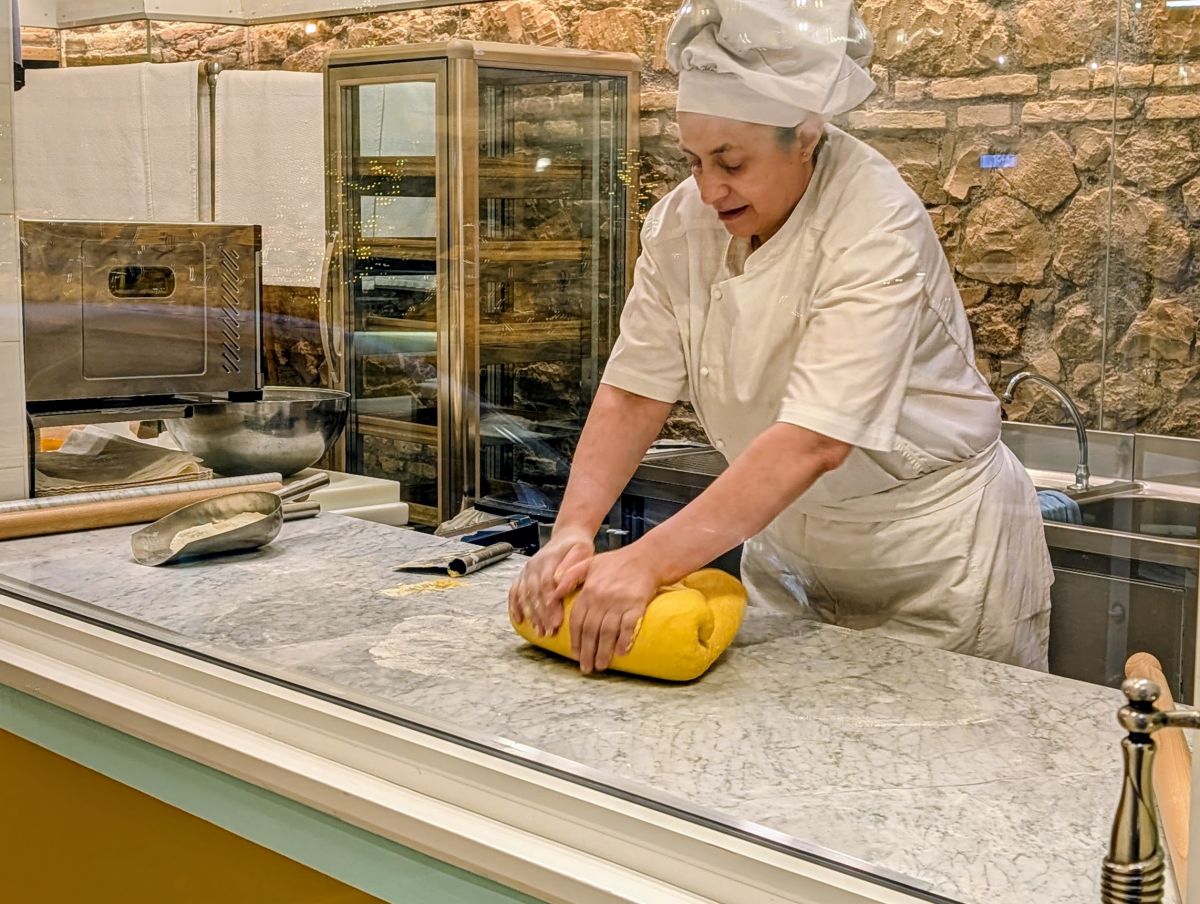
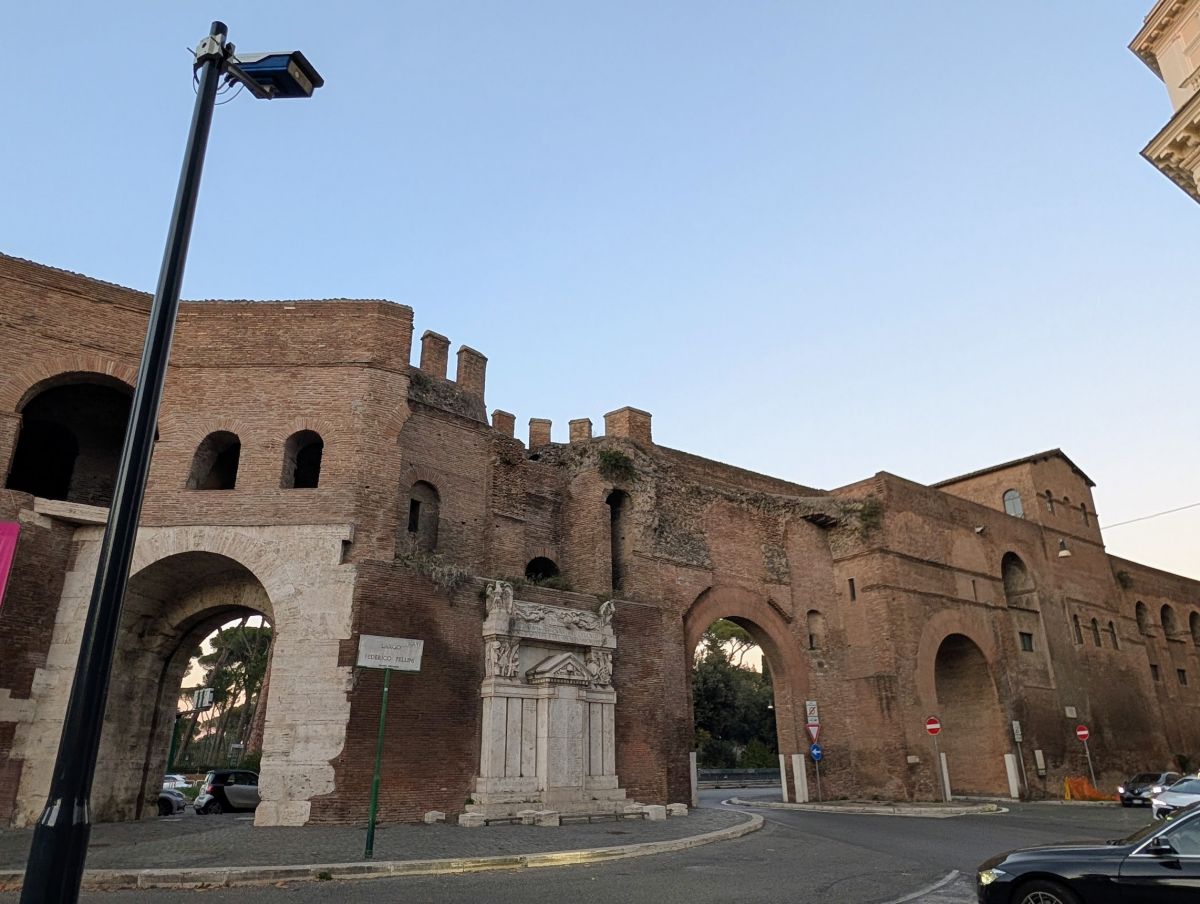
The best day ever! Gorgeous 🥰
Amazing!