


As we explored Montevideo (and Punta del Este) for two weeks, I jotted down notes and observations so that next time we can review them and not have to re-learn everything. If you’re heading to Uruguay, you might find these helpful.
- Buses: unless you’re staying in one area (Ciudad Vieja, Positos, etc.) the entire time, you’re going to want to take a bus. We took several buses a day on most days. Locals have a special card they use, but tourists will need to pay cash – and the drivers don’t carry a ton of change, so make sure you have smaller bills. Each one-way bus ride within Montevideo was 63 UYU (about $1.50). We had no problem using a $200 UYU note for the two of us, but sometimes ran into trouble when trying to use a $500 UYU note. So, make sure to break down larger bills that you’ll inevitably get from the ATM. Also, the buses run regularly, and Google Maps was pretty good at giving transit directions so we’d know what bus to take, but they weren’t always on time. Be patient. Another bus will be coming along eventually.
- Yellow Crosswalk Lights: When crossing a street while walking, be wary of the yellow light – it only lasts three seconds before turning red. (Literally three seconds…) So, if you’re approaching a crosswalk and it’s been green/white for a while, it’s probably best to wait, as it’ll likely turn red while you’re in the middle of the crosswalk, and the drivers are likely to take off anyway.
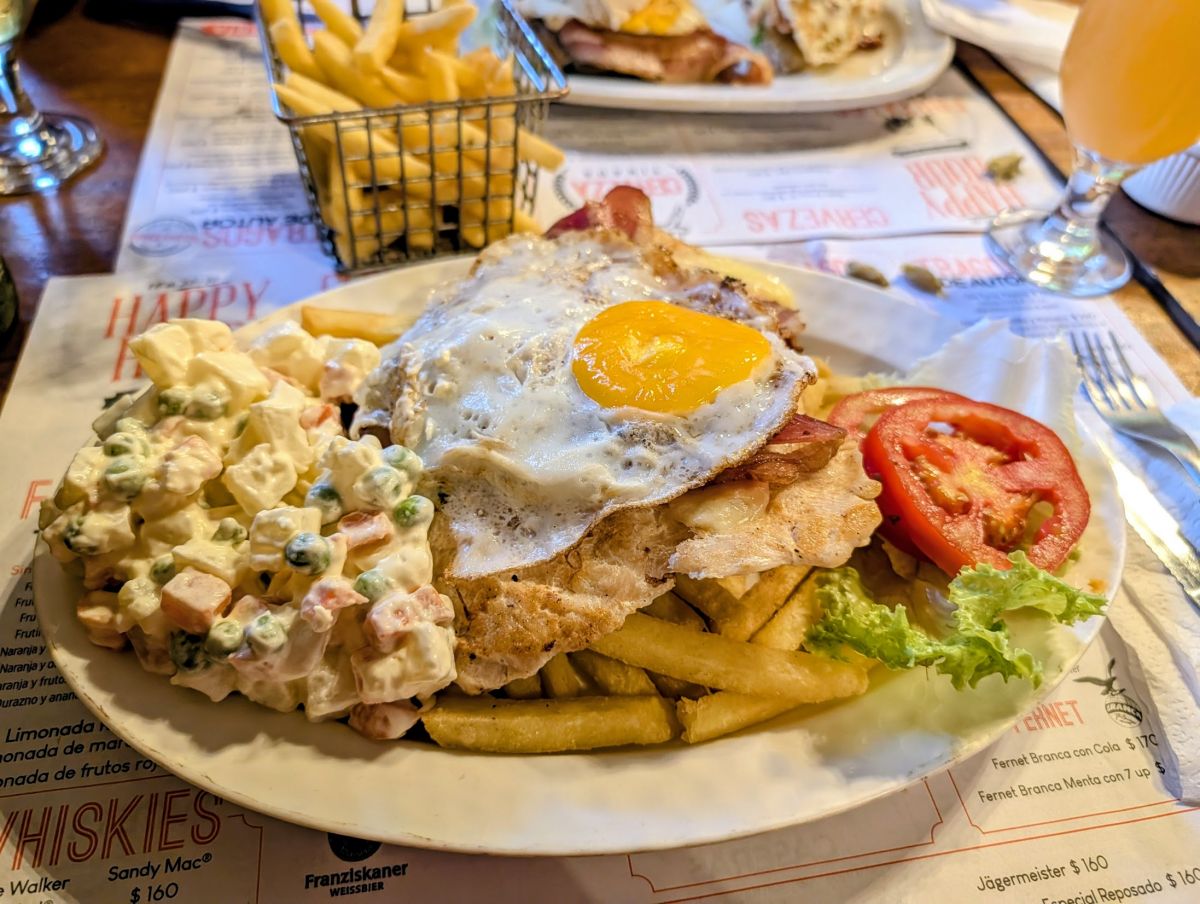
- Chivito vs Chivito al Pan: When you see Chivito on a menu (and you’ll see it a lot – it’s the national dish), be aware that if it just says Chivito, then it’s a Chivito Plate. If you see Chivito al Pan that’s the sandwich version (al pan = with bread).
- Pork Chop vs Ribs: Be careful when using Google Lens to translate menus. Often, what’s actually a pork chop will be translated as “ribs” or “pork rib”. You will find actual ribs at parillas (restaurants using a parilla to grill various meats).
- Tipping: Servers will often ask if you’d like to leave a tip. For bars and restaurants, 10% is customary, but not required. They won’t be offended if you don’t tip, but will definitely appreciate it if you do. If you’re just ordering a drink, you can just round up and be fine. For hotel cleaning staff, 20-40 UYU per day is fine. Same amount if a bellhop carries your bags for you. For tour guides, 5-10% is good. Oddly enough, Uruguayans generally don’t tip taxi drivers, and no tip is expected. If the driver helps with your luggage, then 20-40 UYU would be appreciated.
- Bookstores: Bookstores are everywhere. We saw so many cute little bookstores, some with cafés, some without. Although most books will be in Spanish, with a few English titles being the exception, don’t let that stop you from stopping. Those with cafés are a great place to stop for a light snack (or even a full lunch, dpending on the store). Some of the best cafés we found were in bookstores.
- Milanesa: Like the Chivito, Milanesa is another staple that you’ll see on nearly every menu. It’s a cutlet of beef or chicken, pounded thin, dredged in a mixture of egg, garlic, and parsley, then breadcrumbs, and pan fried. It’s often served with a side of fries or mashed potatoes. There are many variants, including the popular Milanesa Napolitana, which adds tomato sauce, ham, and melted mozzarella cheese. Milanesa traces its origins to Italian immigrants who brought the cotoletta alla milanese to Uruguay in the late 19th century, which evolved into a uniquely Uruguayan dish.
- Pasta, Pasta, Pasta: In addition to the Italian inspired milanesa, you’ll see pasta, gnocchi, and risotto on a lot of menus. There’s a long history of Italian immigrants in Uruguay, so it’s no wonder Italian food is so prevalent.
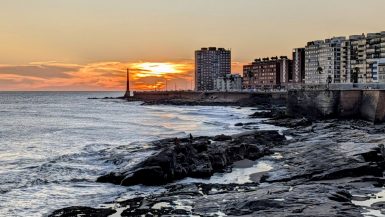
- Rio de la Plata: Montevideo is on the Rio de la Plata, which is a large estuary formed by the confluence of the Uruguay and Paraná rivers. While it is often referred to as a river, the Río de la Plata is technically an estuary—a mixing zone of freshwater and saltwater—where the river meets the Atlantic Ocean. Some cartographers call it a marginal sea or a gulf. But, because it’s 120 miles across, when you’re at the beach in Montevideo, it’ll look and feel like the ocean.
- Loose Tiles: Teresa touched on this in her recap. Be careful when you see moisture around sidewalk tiles. Many of the tiles are loose, and if you step on one that has water trapped underneath, your shoes and pant legs (or bare legs) are likely to be sprayed with muddy water.
- International Credit Cards: Restaurants in Uruguay give an automatic discount when using a foreign credit card. This is a reduction in the VAT (Value Added Tax) that’s normally charged, as a way to attract foreign tourists (mostly from Argentina and Brazil). Technically, it’s supposed to be a 9% reduction on the pre-tax amount, but we found it was 20% most places. If you get a 20% reduction, be happy that you got higher than the current amount. If you get a 9% reduction, don’t think it was a mistake. Either way, meals are always less than they appear on the menu.
- Chau: Like Italians, many Uruguayans say “chau” or “chau chau” when greeting or saying goodbye. They spell it “chau” instead of “ciao”, but the meaning is the same. Also like in Italy, it’s informal, mostly used by friends. But, if a shop keeper or restaurant server says “chau” to you, feel free to return the greeting.
- Buen Dia or Buenas: The greetings you’ll most often hear in Uruguay are “buen dia” or “buenas”. Both are shorthand. Buen dia is short for buenos dias (good morning), and buenas is short for both buenos dias and buenas tardes (good afternoon). If you want to keep it simple and not have to remember different greetings for different times of day, just use “buenas” – it’s good anytime!
That’s it! Until next time, chau chau.






Good stuff!